FiiO has a new desktop headphone amplifier with no model number. It is called Class A, it costs $380, and FiiO’s launch text says it "adopts a fully discrete Class A amplification circuit". On 7 October a FiiO representative and then FiiO’s founder, James Chung, answered a question on Head-Fi about how that works into low-impedance headphones. The short version, as John Darko reported it on 8 October: into 16 ohm headphones the amplifier stays in Class A up to about 0.14 watts, into 32 ohm headphones up to a little over half a watt, and above that it moves into Class A/B with no switch to stop it. FiiO rates it at 4 watts into 32 ohms. Chung’s own words were that a version that never left Class A would have made only 1 watt, so FiiO chose the power. That is a reasonable engineering choice. It is also, by definition, a Class A/B amplifier with a high bias, and the name on the box says something else.
We hold no headphone amplifiers of that kind, so this is not a post about the FiiO Class A. It is about what the word means, because it sent me back to our own table. Every stereo amplifier we hold has a field for the class the maker prints, and I had never added it up. So I did.
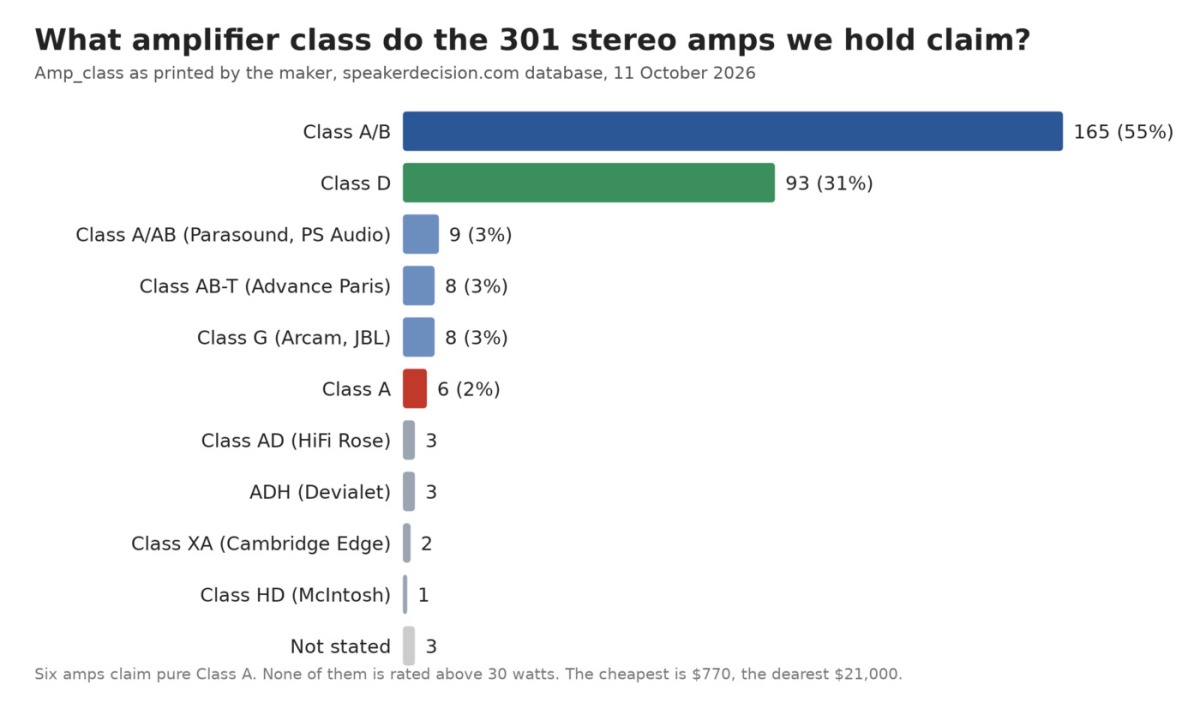 Amplifier class as printed by the maker across the 301 stereo amplifiers in the Speaker Decision database
Quick facts
- 301 stereo amplifiers, 11 different class labels. 165 say Class A/B (55%), 93 say Class D (31%). Six say pure Class A. The remaining 37 carry a maker’s own name for an A/B or D variant, or no class at all.
- No pure Class A amplifier we hold is rated above 30 watts. The six run from the FiiO EA13 at $770 to the Esoteric F-01 at $21,000, and from 10 to 30 watts.
- Class A is heavy and expensive per watt. The six average 20 kg for 25 watts. Across the table, Class A works out at about 90 kg per 100 watts, Class A/B at 17 kg, Class D at 7 kg.
- At the same power, Class D costs less than half. Among amps rated 80 to 120 watts, the 47 Class A/B units average $4,233 and 15 kg; the 24 Class D units average $1,759 and 6 kg.
- The class tells you about heat, weight and price. It does not tell you how an amplifier sounds, and it does not tell you how many of its watts are honest. The FiiO story is about the second of those.
What the classes mean, in one paragraph each
Class A. The output transistors (or tubes) carry a large current all the time, music or no music, and that idle current is big enough to cover the loudest peak the amplifier will ever deliver. Nothing ever switches off, so there is no handover between the halves of the output stage and none of the small distortion that a handover can add. The cost is that the amplifier turns most of what it draws from the wall into heat, whether you are playing anything or not. The Esoteric F-01 prints 230 watts of consumption with no signal, for 30 watts of output. That is Class A in one line: it is a heater that also plays music.
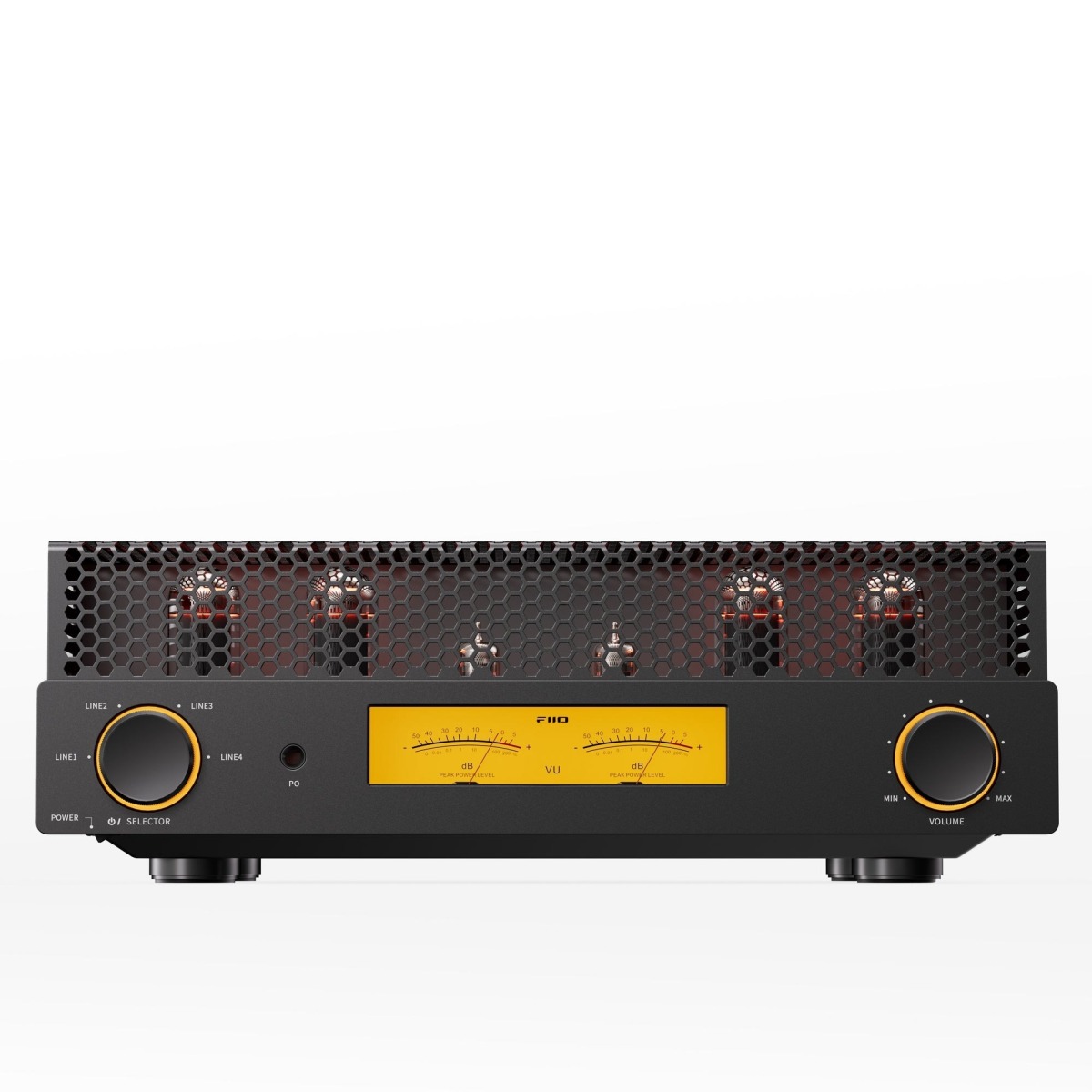 FiiO EA13 EL34 tube amplifier, the cheapest of the six pure Class A amplifiers we hold
Class A/B. The same two halves, but with a much smaller idle current. At low volume both halves conduct and the amplifier is, in that window, running in Class A. Turn it up past the point where the idle current can keep up and each half switches off during the part of the wave it is not responsible for. The designer picks the size of the Class A window by picking the bias. Most designs keep it tiny, because bias is heat. A few run it high, which is what FiiO did with its headphone amplifier and what Parasound does in its Halo range, and both are still Class A/B amplifiers. Class A/B is 55% of our table and covers everything from a $300 Yamaha receiver to the 1,100 watt Hegel H30A. Twelve of the 165 are tube amplifiers, mostly PrimaLuna, and seven more are hybrids.
Class D. The output stage switches fully on and fully off hundreds of thousands of times a second and a filter turns that into the music waveform. Because the transistors spend almost no time half-on, almost no power becomes heat, so the amplifier can be small, light and cheap for its power. The letter does not stand for digital. Class D is 31% of our table and the share is not rising as fast as you might think: of the amplifiers we hold dated 2021 or later, 61 are Class D and 82 are Class A/B. NAD alone accounts for 28 of the 93, which says as much about NAD as about the market. We wrote about weight in the TAD A1000D post: 600 watts a channel in 12 kg (the PS Audio Stellar M1200) is only possible in Class D.
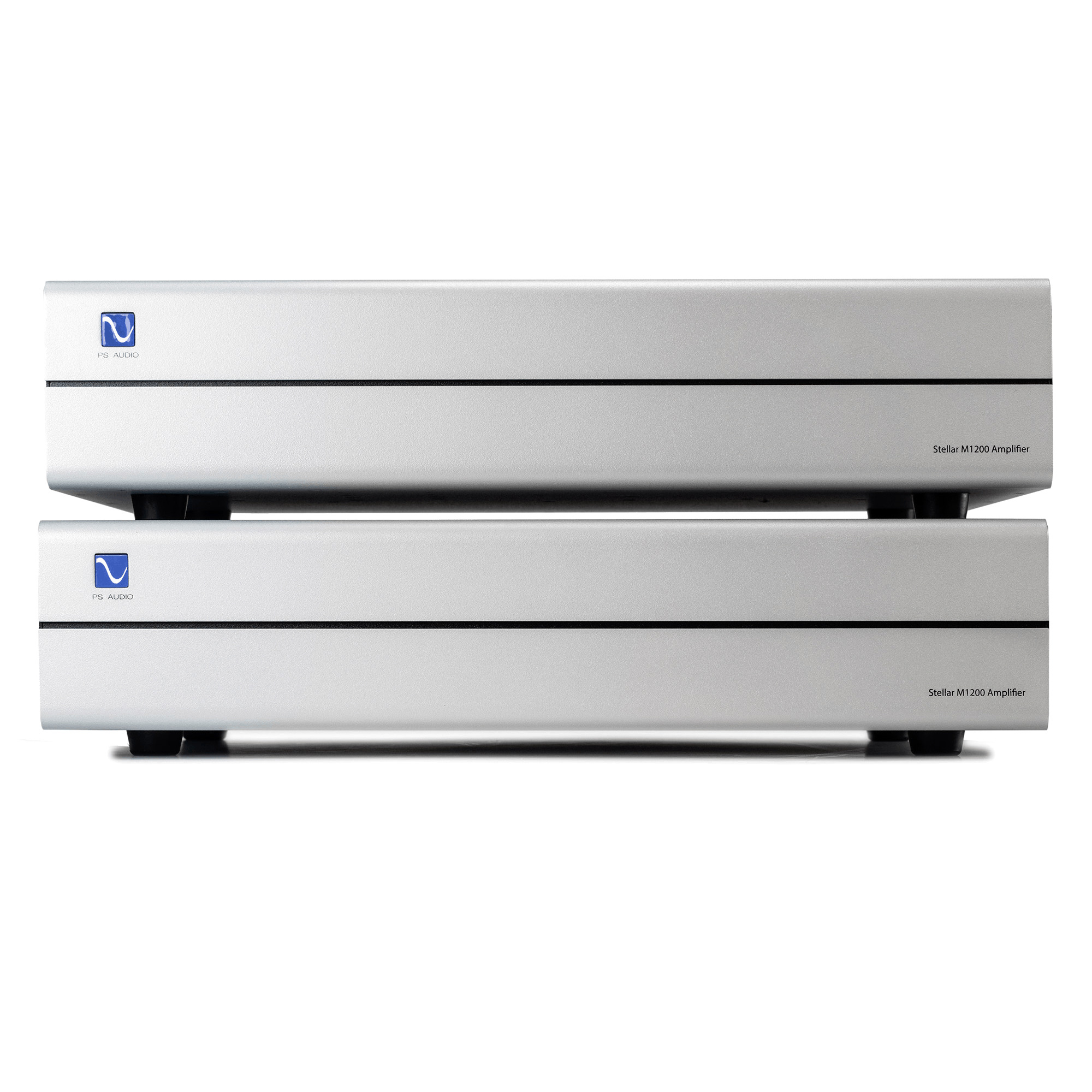 PS Audio Stellar M1200, 600 watts a channel of Class D in 12.2 kg
Class G. An A/B stage with two power supplies. The amplifier runs from the lower one almost all the time and switches to the higher one only for loud peaks, so it wastes less than a plain A/B design of the same peak power. Arcam has used it for years, from the A25 and SA30 to the SA45, and the JBL SA550 Classic and SA750, which come from the same parent company, print it too. Eight rows in our table.
The maker’s own labels. Nine rows say "Class A/AB", which is Parasound’s and PS Audio’s way of saying high-bias A/B with the first few watts in Class A. Eight say "Class AB-T", which is what Advance Paris prints on its A/B amplifiers, seven of which have a valve input stage. Devialet prints ADH, Analog Digital Hybrid, for a design where a small Class A stage sets the voltage and Class D stages supply the current; three rows. HiFi Rose prints Class AD on three, including the 400 watt RA180. Cambridge Audio prints Class XA on the two Edge amplifiers, its own A/B variant that moves the handover point away from the quiet part of the signal. McIntosh prints Class HD, Hybrid Drive, on the MA252, which names the tube-and-transistor arrangement rather than the output class. Every one of these is a variant of A/B or D with a trade name. None of them is a new class of amplifier, and none of them should be read as a claim to Class A.
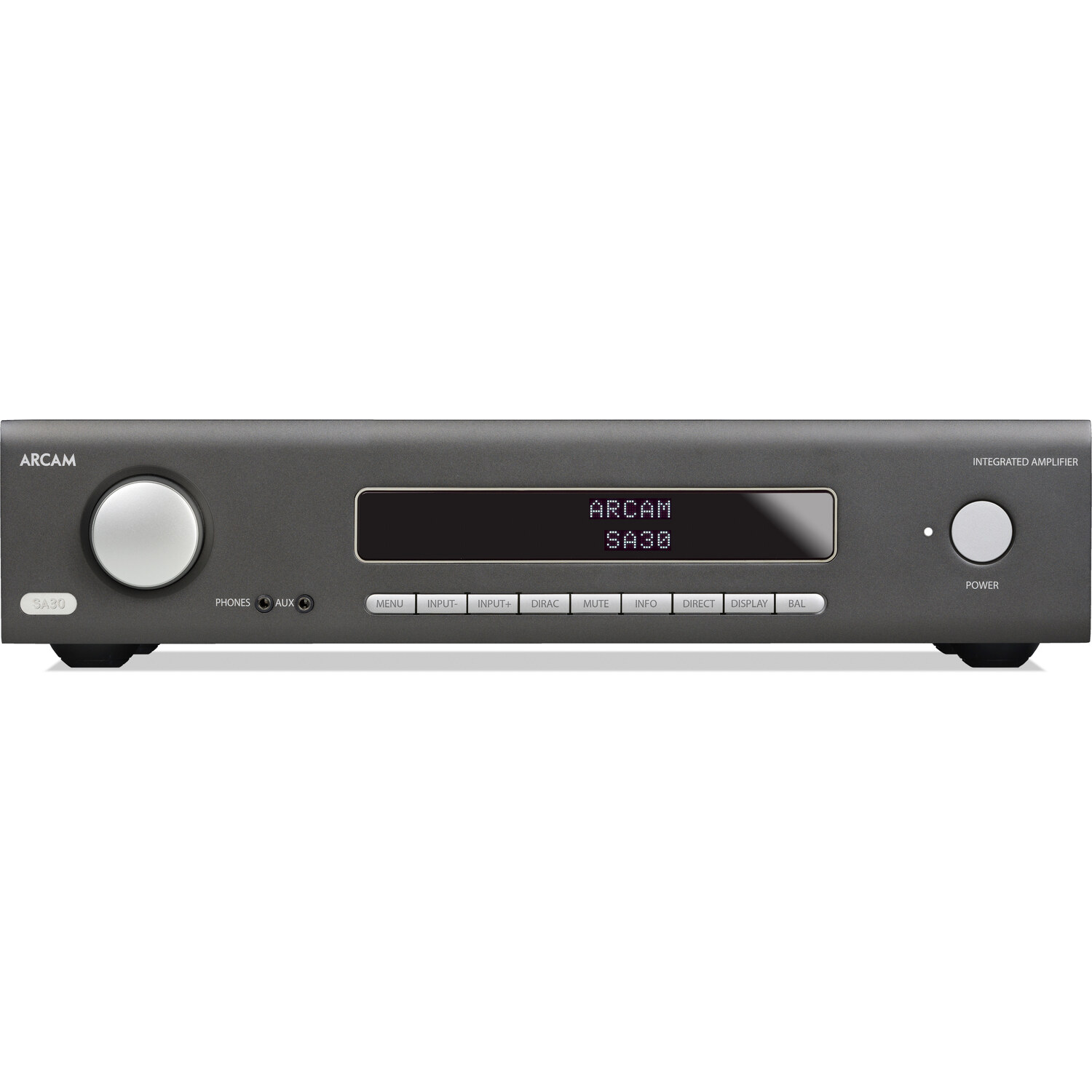 Arcam SA30 integrated amplifier, one of eight Class G amplifiers we hold
The six that claim pure Class A
Here they are, from the makers’ own pages. The power figure is the maker’s 8 ohm rating.
Three things stand out. First, the ceiling: 30 watts. Nobody we hold sells a 100 watt pure Class A amplifier, because the idle current for 100 watts into 8 ohms would turn the chassis into a radiator the size of a suitcase. Pass Labs sells bigger Class A amplifiers than the XA25, and we do not hold them, but they weigh 40 kg and up, and the point stands. Second, the weight per watt: 22 kg for 25 watts at Pass Labs, 32 kg for 30 watts at Esoteric. The NAD M33, a Class D integrated, is 200 watts in 9.7 kg. Third, the price spread. $770 to $21,000 for the same 10 to 30 watts means the class is not what you are paying for. You are paying for the parts, the power supply, the casework and the name, as with any other amplifier.
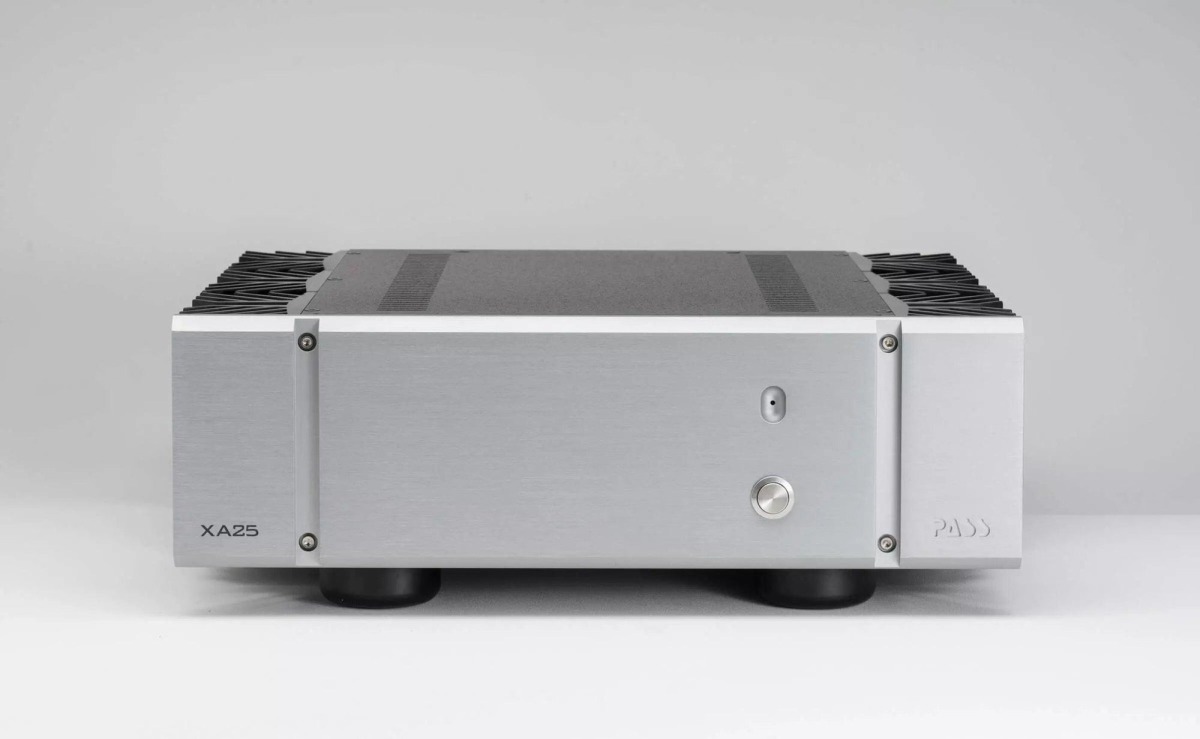 Pass Labs XA25, a 25 watt pure Class A power amplifier that weighs 22 kg
| FEATURE and SPECS COMPARISON | |  |  |  |
| Model | FiiO EA13 | Schiit Aegir 2F | Layer Audio Design Gen-300B |
| Type | Power Amplifier | Power Amplifier | Integrated Amplifier |
| Amplifier Class | Class A | Class A | Class A |
| Power into 8 ohms | 28 watts | 30 watts | 10 watts |
| Power into 4 ohms | 28 watts | 50 watts | - |
| THD | - | 0.005% | - |
| Signal to Noise Ratio | 97 | 122 | - |
| Frequency Bandwidth | 20 Hz-60 kHz | 20 Hz-20 kHz | - |
| Damping Factor | - | 10 | - |
| Built-in DAC | | | |
| Analog Inputs | 4 | 2 | 2 |
| Phono Input | | | |
| HDMI Input | No | No | No |
| XLR Input | No | Yes | No |
| Headphone Output | Yes | No | Yes |
| Bluetooth | No | No | Optional |
| Wi-Fi | No | No | No |
| Handheld Remote | | | |
| Height | 145.0mm | 98.4mm | 210.0mm |
| Width | 430.0mm | 228.6mm | 335.0mm |
| Depth | 339.0mm | 330.2mm | 265.0mm |
| Weight | 17.69kg | 9.53kg | 16.00kg |
| MSRP | 770 USD | 949 USD | 1499 USD |
| Check Current Price | Amazon, B&H Photo | Amazon, B&H Photo | Amazon, B&H Photo |
The Esoteric pair is the cleanest illustration we have. The F-01 and the F-02 cost the same $21,000 and sit in the same case. One is 30 watts of Class A, the other is 120 watts of Class A/B. We wrote that one up last week. Esoteric is one of the few makers to put the choice in front of the buyer so plainly.
What the FiiO EA13 tells you about watts and class
The EA13 is the FiiO we do hold, and it is worth a closer look because it shows the other way a spec sheet can flatter. FiiO rates it at 28 watts per channel into 4 or 8 ohms, and that is the figure on our page. Read the small print and it is 28 watts at under 5% distortion. At under 1%, the figure most makers quote, it is 18 watts. ecoustics made the same point this week in its comparison with the Eversolo AMP-F8. Both numbers are true. Only one of them is comparable with the 30 watts of a Schiit Aegir 2F or the 25 of a Pass XA25.
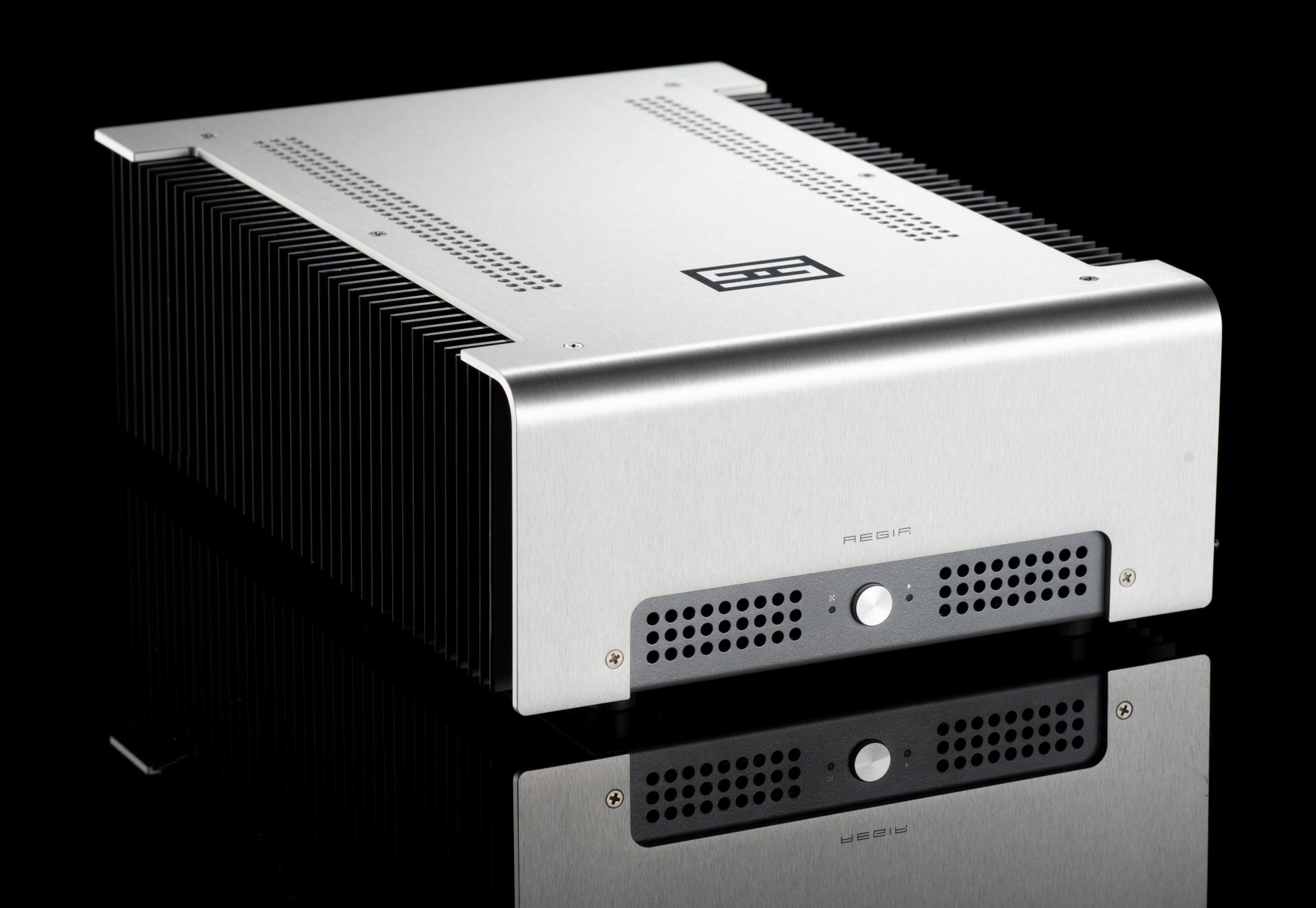 Schiit Aegir 2F, 30 watts of pure Class A for $949
So when you compare amplifiers on this site, or anywhere, the class is the third thing to look at, not the first. The first is the power into the impedance of your speakers, at a stated distortion. The second is whether the maker rates it with both channels driven. Our amp and speaker matcher works from the power and the speaker’s sensitivity and impedance, and it does not ask about class at all, because class does not change how loud a speaker gets.
What class does change, and what it does not
Heat and electricity. A Class A amplifier draws close to its full power from the wall all the time it is switched on. The Esoteric F-01’s 230 watts at idle is about 5.5 kWh a day if you leave it on. A Class A/B amplifier of similar size idles at a tenth of that or less, and a Class D amplifier at a few watts. In a small room in summer, this is not an abstract point.
Weight and size. Class A needs the biggest power supply and the biggest heatsinks for the fewest watts. Class D needs the smallest. The averages above, 90 kg against 17 against 7 per 100 watts, are the whole story.
Price per watt. Across our table Class A averages about $245 per rated watt, Class A/B about $35, Class D about $22, Class G about $21. That is a statement about what people charge for each design, not about value, and the cheapest watts are not automatically the best ones.
Sound. This is where I will disappoint anyone looking for a rule. A well-made amplifier in any class drives a speaker it is suited to without audible distortion. The reasons people buy Class A today are low-level detail and a particular presentation they like, and those are things to hear, not things a table can settle. The reasons people buy Class D are power, size and running cost, and those a table can settle. Class is a design choice with practical consequences, and the practical consequences are what this site can measure.
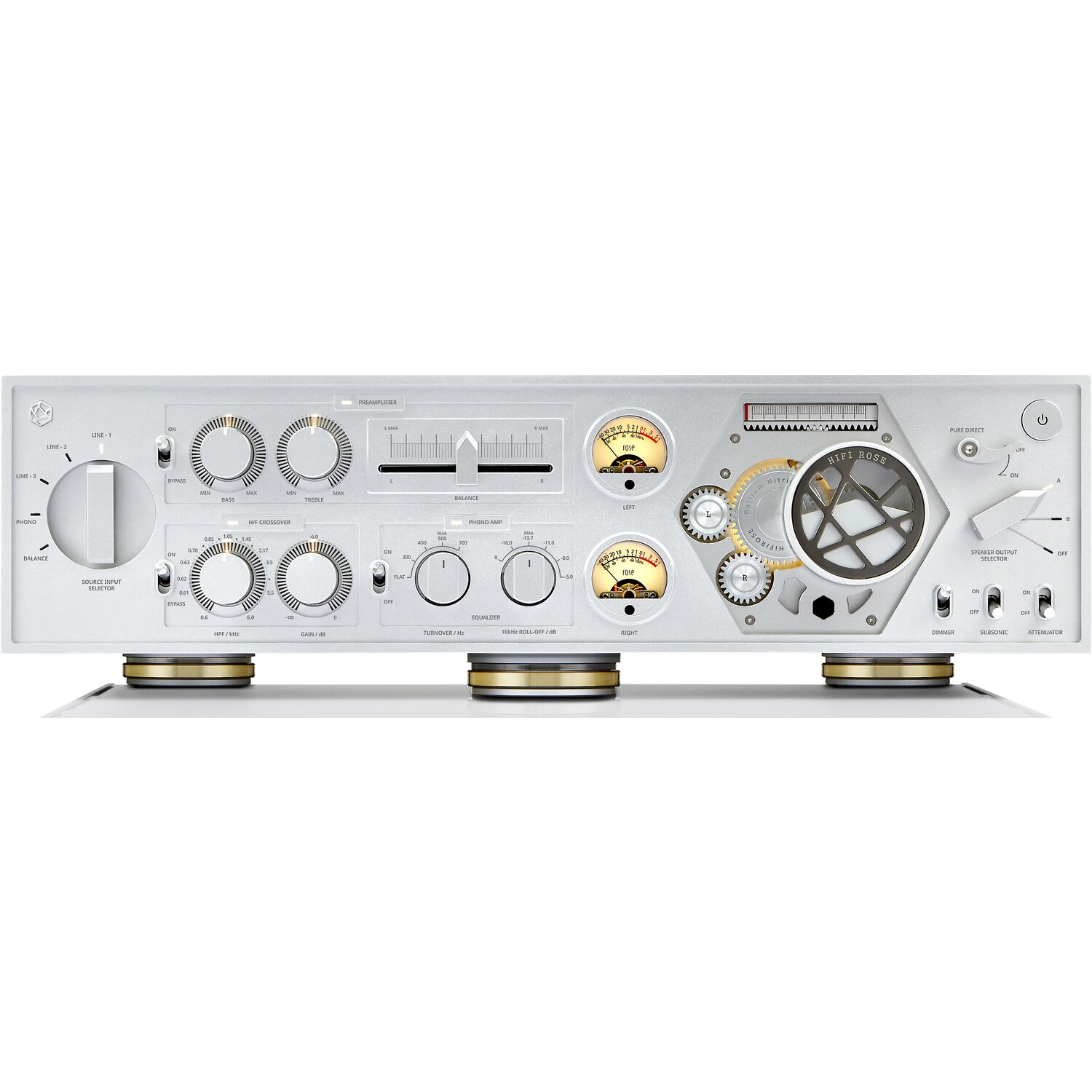 HiFi Rose RA180, 400 watts a channel in 16.7 kg, printed as Class AD
The weak point in our own table
Three amplifiers in the table carry no class at all, because the maker does not print one on its product page: the Yamaha WXA-70A, the Marantz MCR 60n and the Yamaha R200A. Reviews describe the WXA-70A as Class D, and I will fill the field when Yamaha confirms it rather than copy a review. A fourth row, the Onkyo Icon P-80, has no class because it is a preamplifier, which is why this post counts 301 amplifiers in a table of 302 rows.
More important: the field records what the maker printed. It is a claim, not a measurement. The FiiO Class A headphone amplifier is a reminder that the label and the behaviour can differ, and Darko’s piece notes that Aune made the same claim for its N7 headphone amplifier, had it tested, and withdrew the "pure Class A" wording in writing. None of the six Class A amplifiers we hold has been shown to leave Class A within its rating, as far as I can find. But I have not measured them, and neither has anyone who writes a database field. If a maker publishes the output level at which an amplifier leaves Class A, we will add a column for it. So far only FiiO has, and only on Head-Fi.
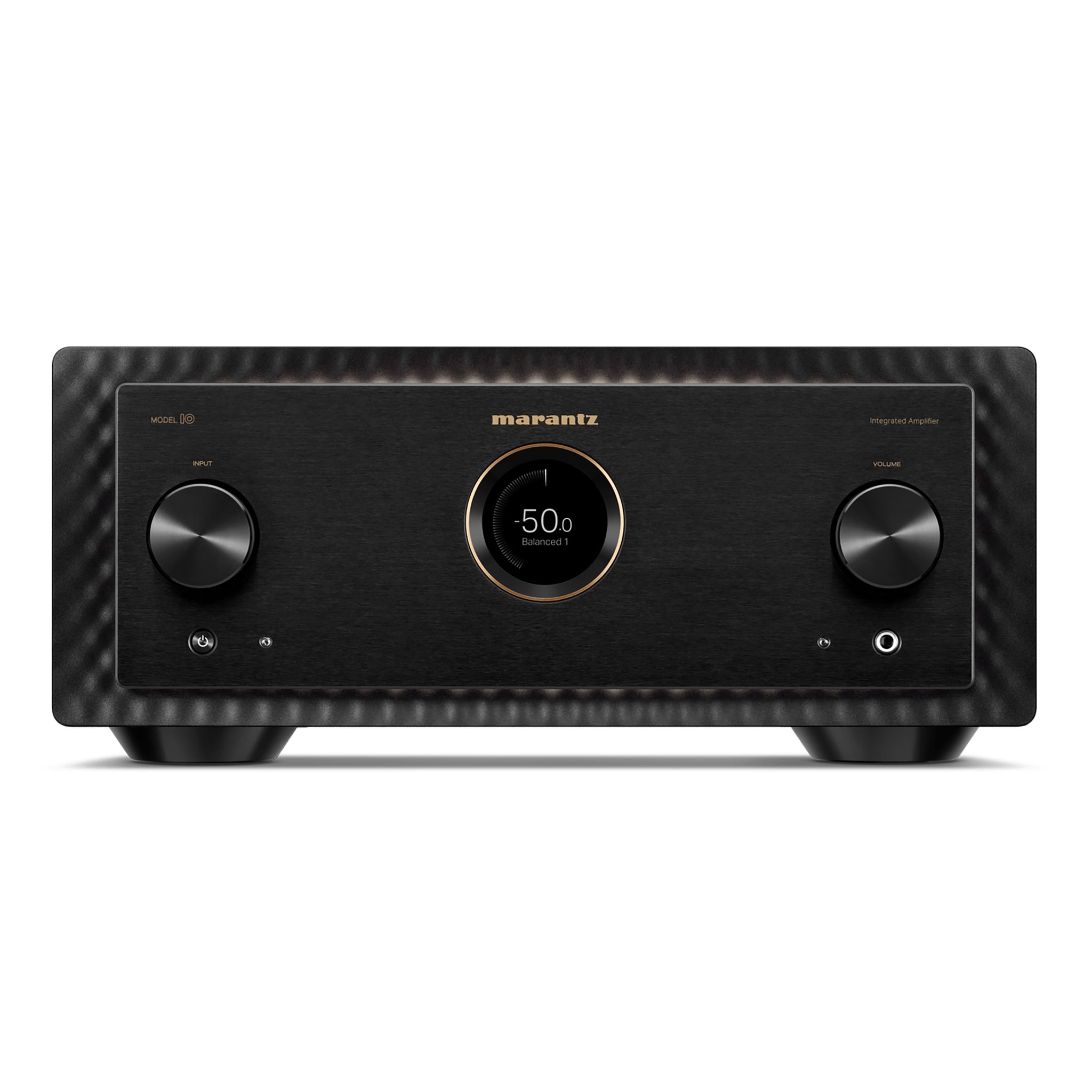 Marantz Model 10, at $15,000 the most expensive Class D amplifier we hold
The bottom line
- You want pure Class A and have efficient speakers: six choices in our table, 10 to 30 watts, $770 to $21,000. Run the EA13 against the Aegir 2F for the two under $1,000, and check your speakers are 90 dB or better before either.
- You want power in a normal box at a normal price: Class A/B, 165 options, and the class on its own tells you nothing about which of them to buy.
- You want a lot of watts, a small box, and a low electricity bill: Class D, 93 options, from a $90 Fosi Audio to the $15,000 Marantz Model 10, and the weight per watt is the proof.
- You see "Class A" on a product name or a headline: look for the power at which it stays there. If the maker does not say, assume it is a well-biased A/B design, which is not an insult.
Every amplifier here is on the amplifiers page, and the class is on each product’s page under the amplifier section of the specs.
Does the class of an amplifier change what you buy, or do you look at power and price first and read the class afterwards?