Chord Electronics has launched the Ultima 7, and What Hi-Fi calls it the brand’s first Class G amplifier. It is on sale now in the UK at £6,500, in Jett Black or Argent Silver. Chord says other prices will follow.
Two things are worth knowing straight away. This is a power amp, not an integrated: it has no volume control, so it needs a preamp in front of it. And it is not an addition to the range. It replaces the Ultima 6, with less power and a lower price.
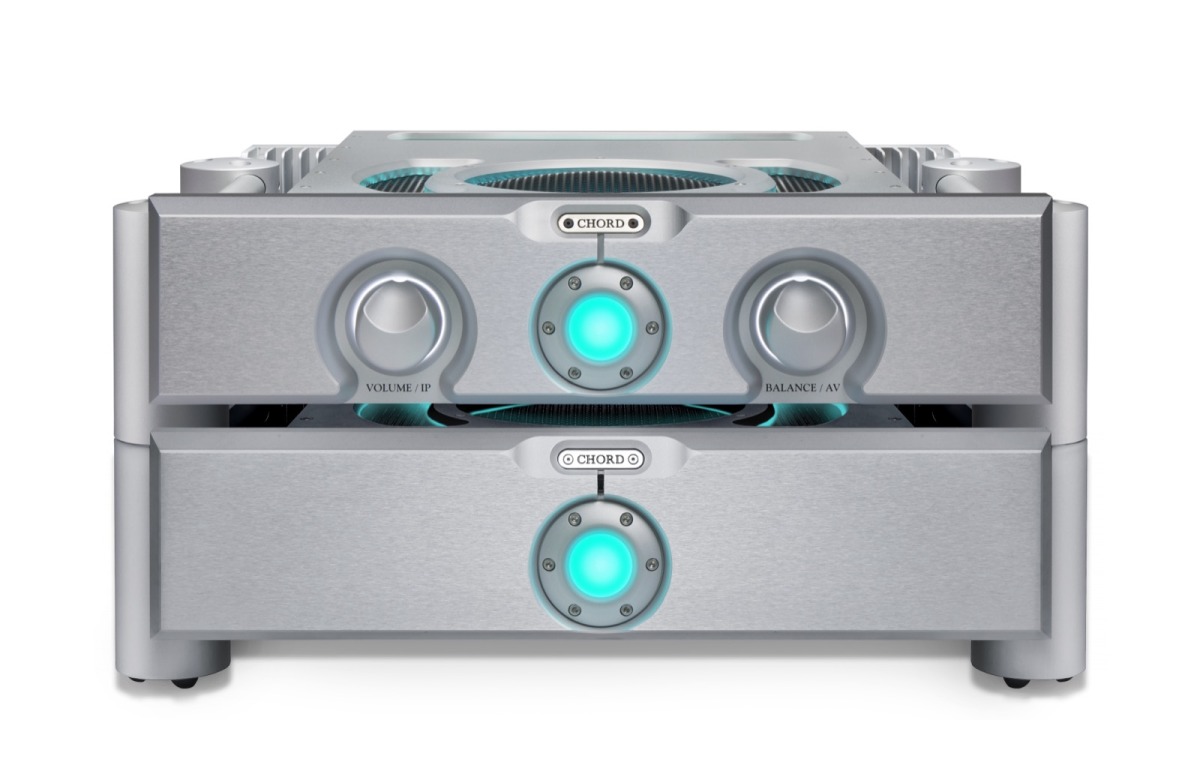 Chord Ultima 7 stereo power amplifier in Argent Silver, under the Ultima Pre 3 preamp it was designed to height-match
Quick facts
- Price. £6,500 in the UK. No US price yet.
- Power. 140 watts per channel into 8 ohms, 250 watts into 4 ohms, with short bursts of more than 1,000 watts.
- What it replaces. The Ultima 6, rated at 180 watts into 8 ohms and £7,500 in the UK.
- What it needs. A preamp. Chord designed it to sit under the Ultima Pre 3, which is £6,000 on its own.
- Our data. We list 11 Class G amps. 10 are from Arcam or JBL, and none is a power amp.
What the Ultima 7 is
It is a two-channel power amp with one balanced XLR and one RCA input per channel, one pair of speaker terminals, and 12 V trigger sockets. That is all. There is no DAC, no streaming and no volume knob, which is normal for a power amp.
Inside, Chord uses vertical MOSFETs and its Dual Feed Forward error correction, the same idea it uses across the Ultima range. What is new is the Class G output stage. Chord says it runs cooler in everyday listening than a conventional amp of the same power.
Chord’s spec page lists 0.015 percent THD, 5 Hz to 25 kHz, and a signal-to-noise ratio of 105 dB. It is 13.2 cm tall with its legs, 48 cm wide and 38.2 cm deep, and it weighs 14.45 kg. It draws 20 watts at idle and up to 640 watts flat out.
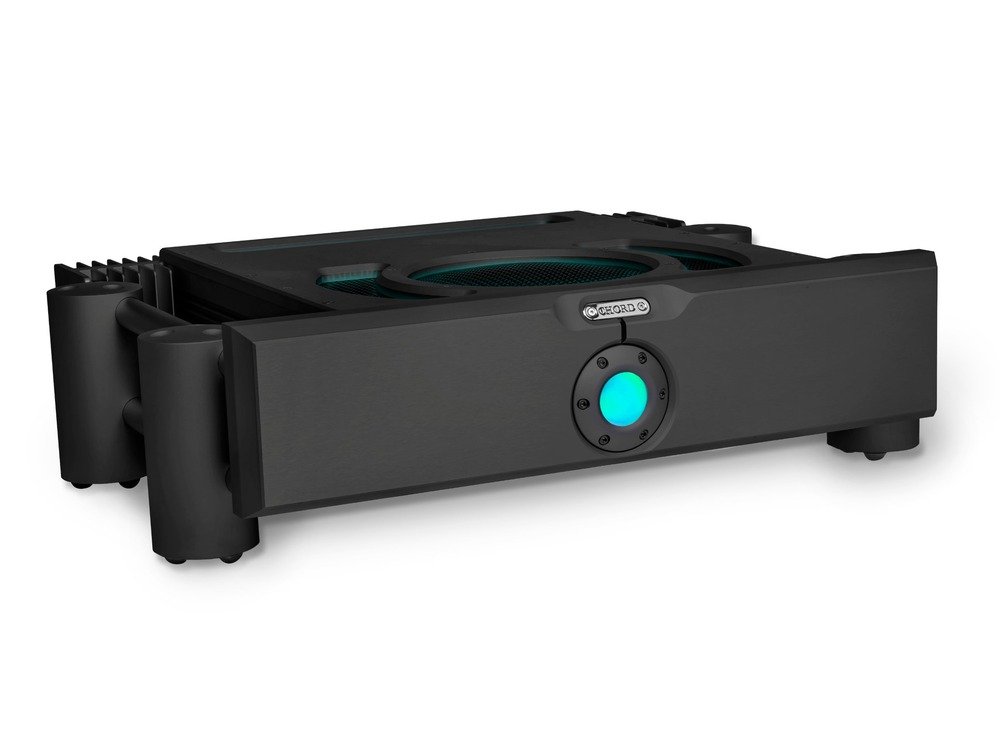 Chord Ultima 7 in Jett Black, with the round porthole window over the circuit boards that every Ultima amp has
Class G in one paragraph
A normal Class AB amp runs from one high supply voltage all the time, and most of that is turned into heat when the music is quiet. A Class G amp has two or more supply rails. It plays from a low rail most of the time and switches up to a high rail only for loud peaks. So it wastes less power and makes less heat. The risk is a tiny glitch each time it switches. Chord says its Dual Feed Forward correction fixes that. I cannot check that claim, and there are no independent measurements yet.
Less than the Ultima 6, on purpose
The German site hifi.de spoke to Chord at the High End show this spring. It reports that the Ultima 6 had become hard to keep making at its price, so Chord designed a cheaper replacement rather than raise it. Here is what changed:
- Power: 180 watts into 8 ohms down to 140. That is 22 percent less.
- Price: £7,500 down to £6,500 in the UK, about 13 percent less. In euros, hifi.de gives 10,490 down to 8,250.
- Height: about 18 cm down to 13.2 cm, so it now lines up with the Ultima Pre 3.
- Circuit: Class AB in the Ultima 6, Class G in the Ultima 7.
So you lose more power than you save in money, at least in pounds. Power is not everything, though. 140 watts is plenty for most speakers in most rooms. Our amp-speaker matcher will tell you whether your speakers need more.
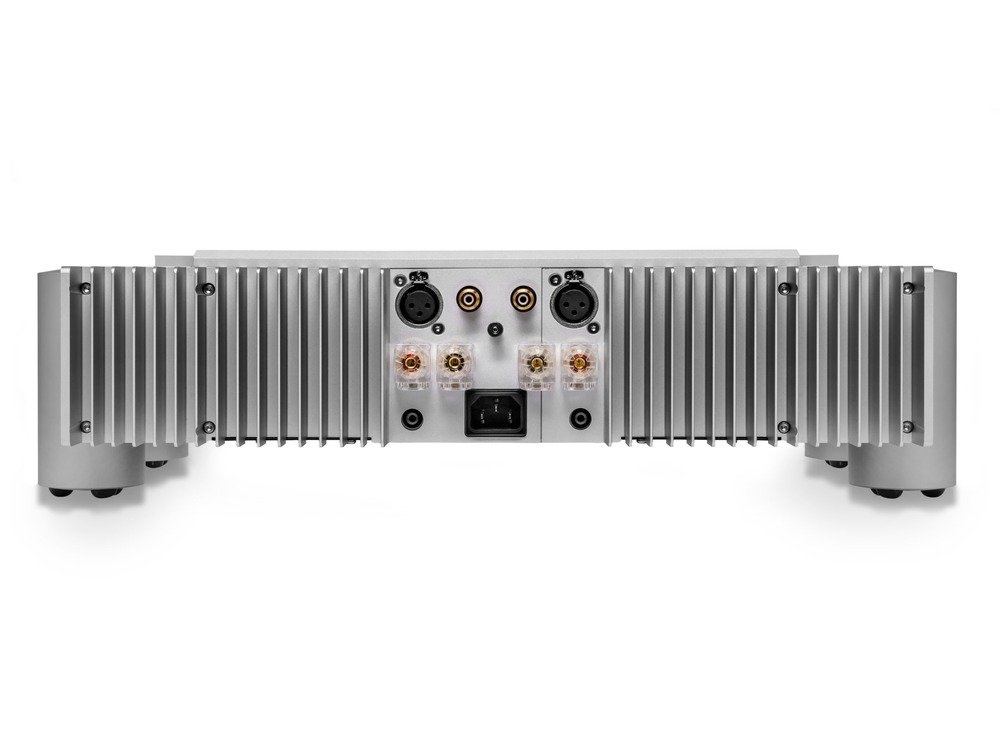 The back of the Chord Ultima 7: one XLR and one RCA input per channel, one pair of speaker terminals, and two 12 V triggers
The power figures moved twice before launch
Chord’s numbers changed on the way to the shops. That is not unusual for a product shown early, but it tells you which figure to trust.
- High End show, spring 2026: What Hi-Fi and hifi.de both reported 135 watts into 8 ohms.
- Chord’s “coming soon” post, August 2026: 140 watts into 8 ohms and 280 watts into 4 ohms, both channels driven.
- Chord’s product page, today: 140 watts into 8 ohms and 250 watts into 4 ohms.
The 8 ohm figure went up by 5 watts. The 4 ohm figure went down by 30. If you have a 4 ohm speaker, use 250 watts, the figure on the product page. And if a dealer quotes 280, that is the August number.
The other Class G amps we list
Class G is rare. Out of 307 stereo amps and receivers we list, 9 are Class G, plus 2 home theater receivers. 10 of those 11 come from two Harman brands, Arcam and JBL. The odd one out is the Integra DTM-7.4 stereo receiver.
- Arcam SA20: 90 W, $1,249
- Arcam A25: 100 W, $1,499
- JBL SA550 Classic: 90 W, $1,999
- Arcam A25+: 100 W, $2,000
- Arcam SA30: 130 W, $2,699
- JBL SA750: 130 W, $3,000
- Arcam SA35: 120 W, $3,300
- Arcam SA45: 180 W, $5,500
- Arcam AVR31 and AVA35: home theater receivers, $6,900 and $7,000
All watts are per channel into 8 ohms. Every one of these is an integrated amp or a receiver, with its own volume control and, in most cases, its own DAC. Not one of the 69 stereo power amps we list is Class G. So the Ultima 7 is a first here too.
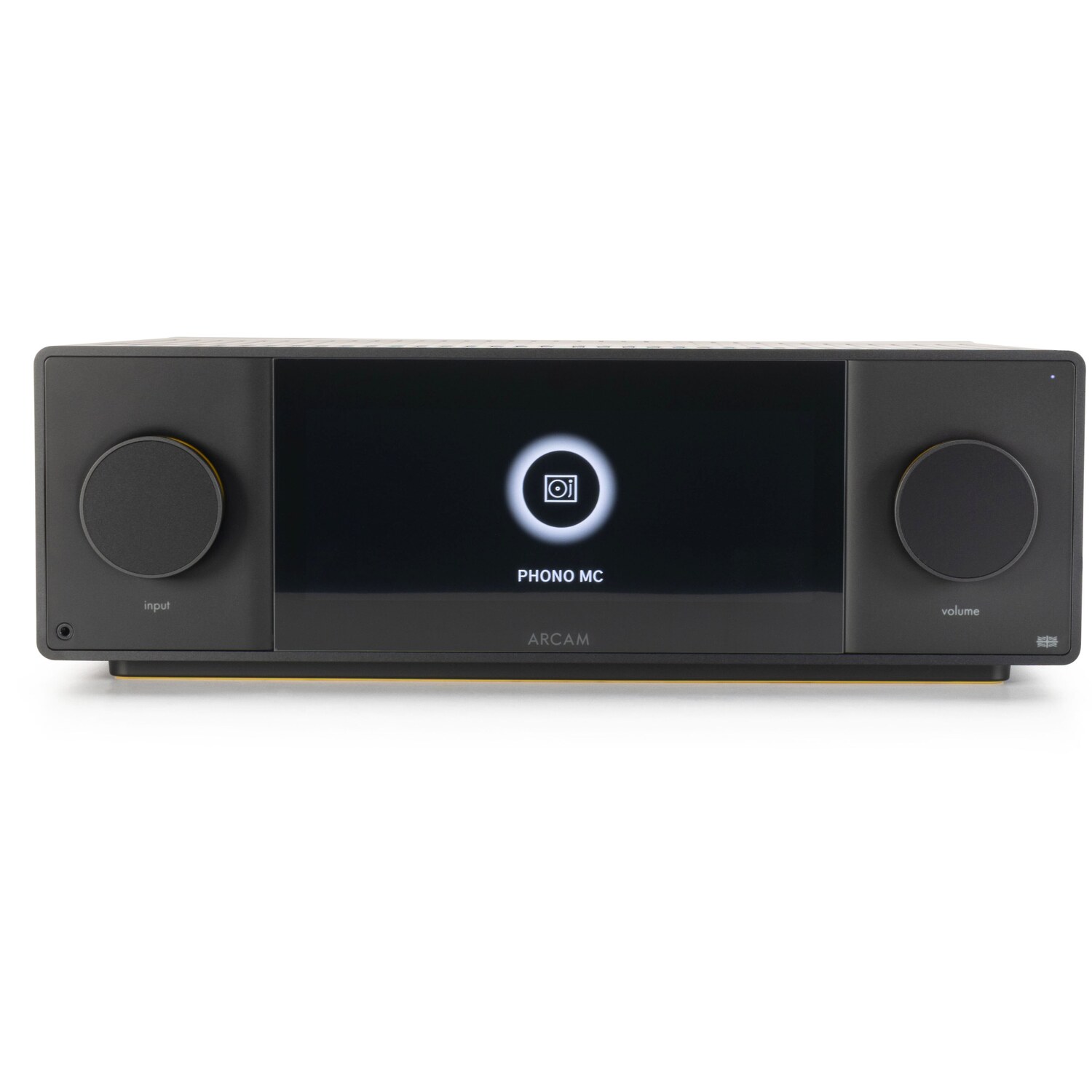 Arcam SA45, the most powerful Class G stereo amp we list: 180 watts into 8 ohms for $5,500, with streaming built in
Until now, Class G in our list has mostly meant one thing: Arcam getting a lot of power out of a mid-price integrated. The SA45 gives you 180 watts, a DAC and streaming for $5,500. Chord is using the same idea at the top end, in a box that does only one job.
The catches
You have to buy a preamp too. Chord built the Ultima 7 to match the Ultima Pre 3, which is £6,000 in the UK. Together that is £12,500 for 140 watts and no streaming or DAC. If you want one box, this is not it.
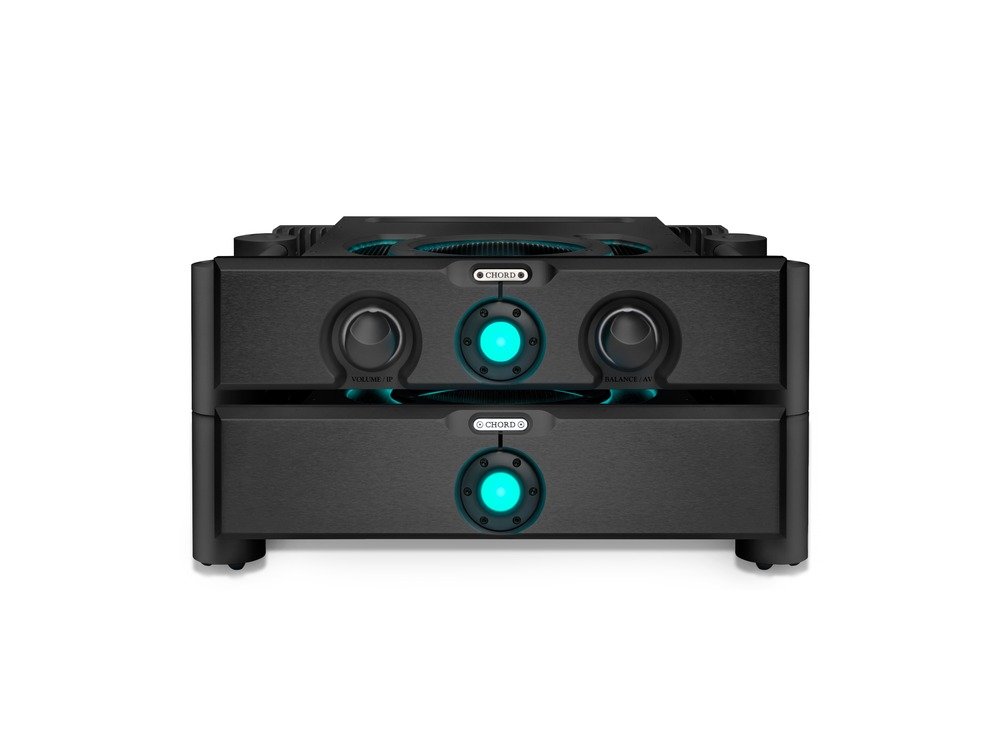 Chord Ultima 7 in Jett Black under the Ultima Pre 3, the pre/power pair Chord designed together, 12,500 pounds in the UK
No US price yet. Chord says further prices are pending. As a rough guide only: the Ultima Pre 3 is £6,000 in the UK and about $8,500 at US dealers, and What Hi-Fi gives the Ultima 6 as £7,500 or $11,260. The same gap would put the Ultima 7 somewhere around $9,000 to $10,000. That is my guess, not Chord’s.
The power you can get for less. Among the power amps we list, the McIntosh MC152 gives 150 watts for $6,500. The Naim NAP 250 is 100 watts for $8,999, and the PS Audio PMG S200 100 watts for $7,999. If the Ultima 7 lands near $9,500, it will be judged on sound and build, not watts per dollar.
No measurements yet. The low distortion and the clean switching between rails are Chord’s claims. Nobody has published bench tests.
What I take from it
The Ultima 7 is Chord making its entry Ultima power amp cheaper and smaller instead of more expensive. You give up 40 watts per channel compared with the Ultima 6 and save £1,000 in the UK. Class G is how Chord kept the power reasonable in a smaller, cooler box. For a 4 ohm speaker, plan on 250 watts, not the 280 Chord quoted in August.
We will add the Ultima 7 to the database when Chord publishes a US price. Until then, the Arcam SA45 page is the closest Class G amp you can compare against other amps here.
Would you take a Class G power amp over a Class AB one at this price, or does the switching put you off?