Bombard is a new loudspeaker company from Ronse in Belgium, and its first product made its debut at the Dutch Audio Event on 10 and 11 October. The OB1 is an open baffle: two 15 inch woofers and a compression tweeter on a cast brass horn, mounted on a charred oak board with no cabinet behind it. Each speaker carries 370 watts of Class D amplification, a DSP and a streamer, the two talk to each other over an HDMI cable, and the pair is priced at EUR 15,000. Stereophile’s Rogier van Bakel heard it after hours at the show and liked it more than most of the established rooms. There is no US price and no US dealer yet, and no published size or weight, so there is nothing for us to import.
But it made me check something. Of the 1,657 speakers in our database, how many have no box? The answer is 28, and they come from exactly two makers: Magnepan, with 18 planar magnetic panels, and MartinLogan, with 10 electrostatic hybrids. Here they all are, with what the numbers say about them against the other 1,629.
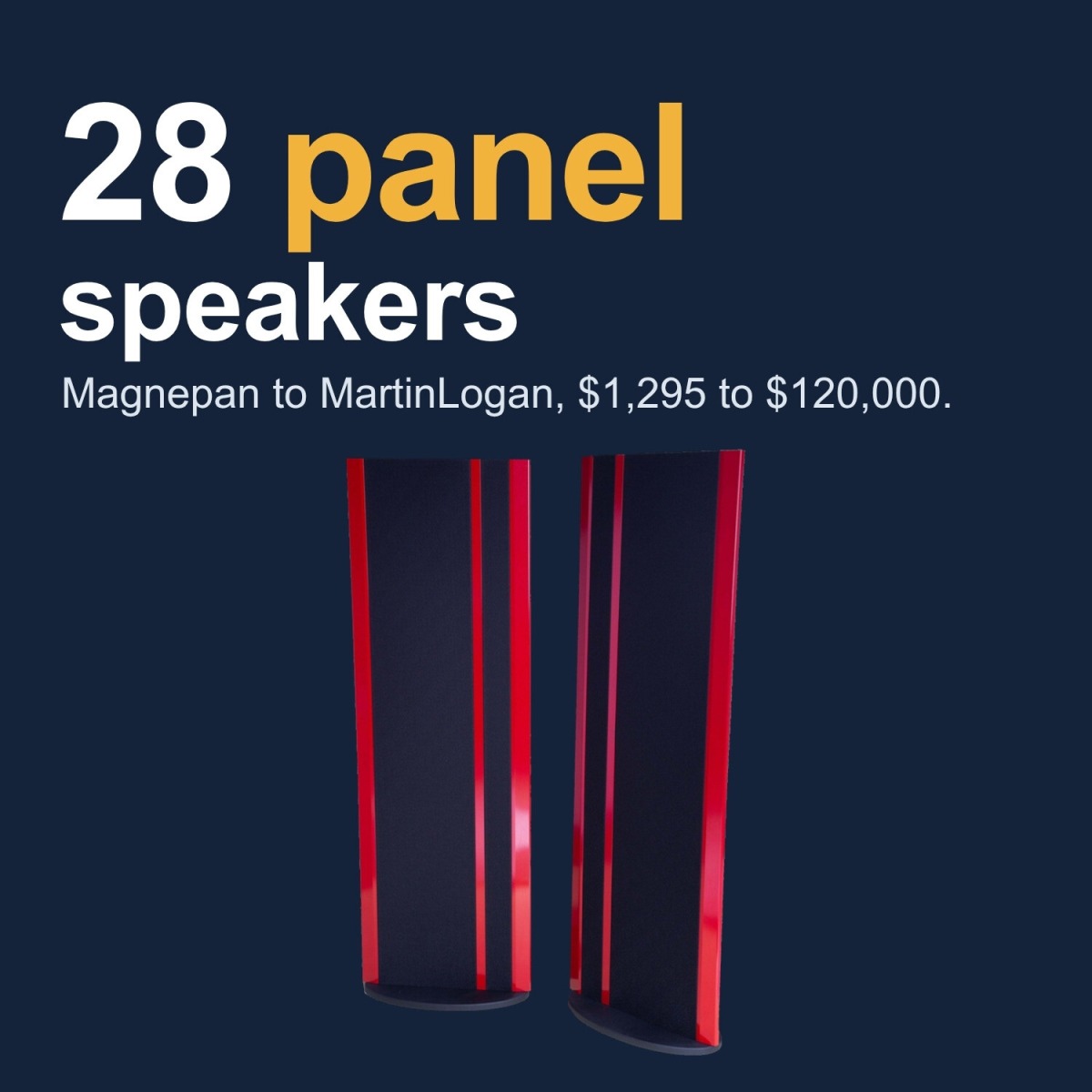 Magnepan 3.7i planar magnetic speakers in red, one of the 18 Magnepan models in the Speaker Decision database
Quick facts
- 28 panel speakers out of 1,657. 18 Magnepan (13 floor-standers, 3 centres, 1 on-wall, 1 bass panel) and 10 MartinLogan electrostatics (7 floor-standers, 2 centres, 1 surround). Nobody else we hold makes one.
- $1,295 to $120,000 a pair. The Magnepan LRS+ is the cheapest and is sold direct. The MartinLogan Neolith is the dearest, at 175 kg per speaker.
- Every Magnepan floor-stander is 86 dB and 4 ohm. Of the 21 floor-standers we hold that are both 4 ohm and 86 dB or less, 13 are Magnepans. That is the amplifier story in one line.
- The eight shallowest floor-standers we hold are all Magnepans, and one of the five tallest is too. The LRS+ is 25 mm deep against a 399 mm average. The Magnepan 20.7 is 2,007 mm tall, taller than the KEF Muon; the Neolith is close behind at 1,899 mm.
- No open-baffle cone speaker at all. The Bombard OB1 would be the first, and at EUR 15,000 it would also be the most expensive powered pair we list, above the $11,000 Dynaudio Focus 50.
Panel, dipole, open baffle: three words for one idea
A normal speaker is a cone in a box. The box exists to stop the sound coming off the back of the cone from cancelling the sound coming off the front, which it would do at low frequencies if the two could meet. A dipole does without the box and lets the back wave out. You get a figure-of-eight radiation pattern, almost nothing to the sides, a lot of sound bounced off the wall behind the speaker, and no cabinet resonance because there is no cabinet. You also lose bass below the point where the front and back waves cancel, which is why dipoles are big and why they want to stand well out into the room.
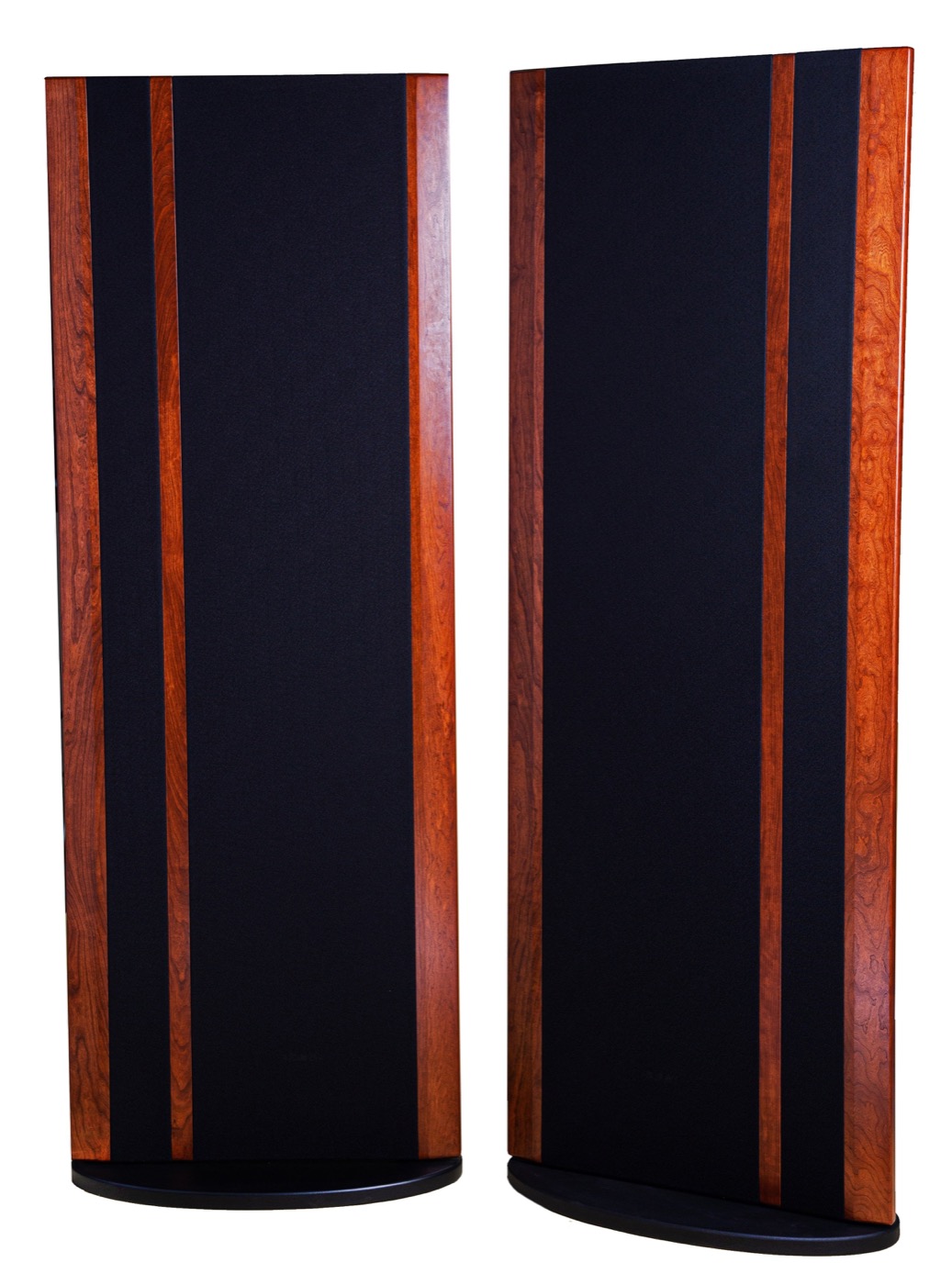 Magnepan 20.7, a 2,007 mm three-way panel with a true ribbon tweeter, $22,995 a pair
A panel speaker is a dipole where the driver itself is a thin sheet: a film with a conductor on it, driven by magnets (Magnepan’s planar magnetic and quasi-ribbon designs) or by a high-voltage charge between two plates (MartinLogan’s electrostatics). An open baffle is a dipole made with ordinary cone drivers on a board, which is what the Bombard OB1 is. All three share the pattern and the placement demands. They differ in how the sound is made and, usually, in how much power they want.
One thing they are not: a planar tweeter in a box. DALI, PS Audio, GoldenEar, ELAC and others put ribbon or planar magnetic tweeters into conventional cabinets, and we hold around ninety of those. They are good speakers, and they are not what this post is about.
The 18 Magnepans, cheapest first
Magnepan builds everything in White Bear Lake, Minnesota, and the whole range is in our database. The prices are Magnepan’s own for the models it sells direct (LRS+, DWM) and the dealer list prices for the rest, checked against the maker’s site and three US dealers this week. The six "x" models are the same panels as the model they are named after, with upgraded crossover parts and wiring, and they are sold alongside the originals rather than replacing them. Each review page now says so and shows the price difference.
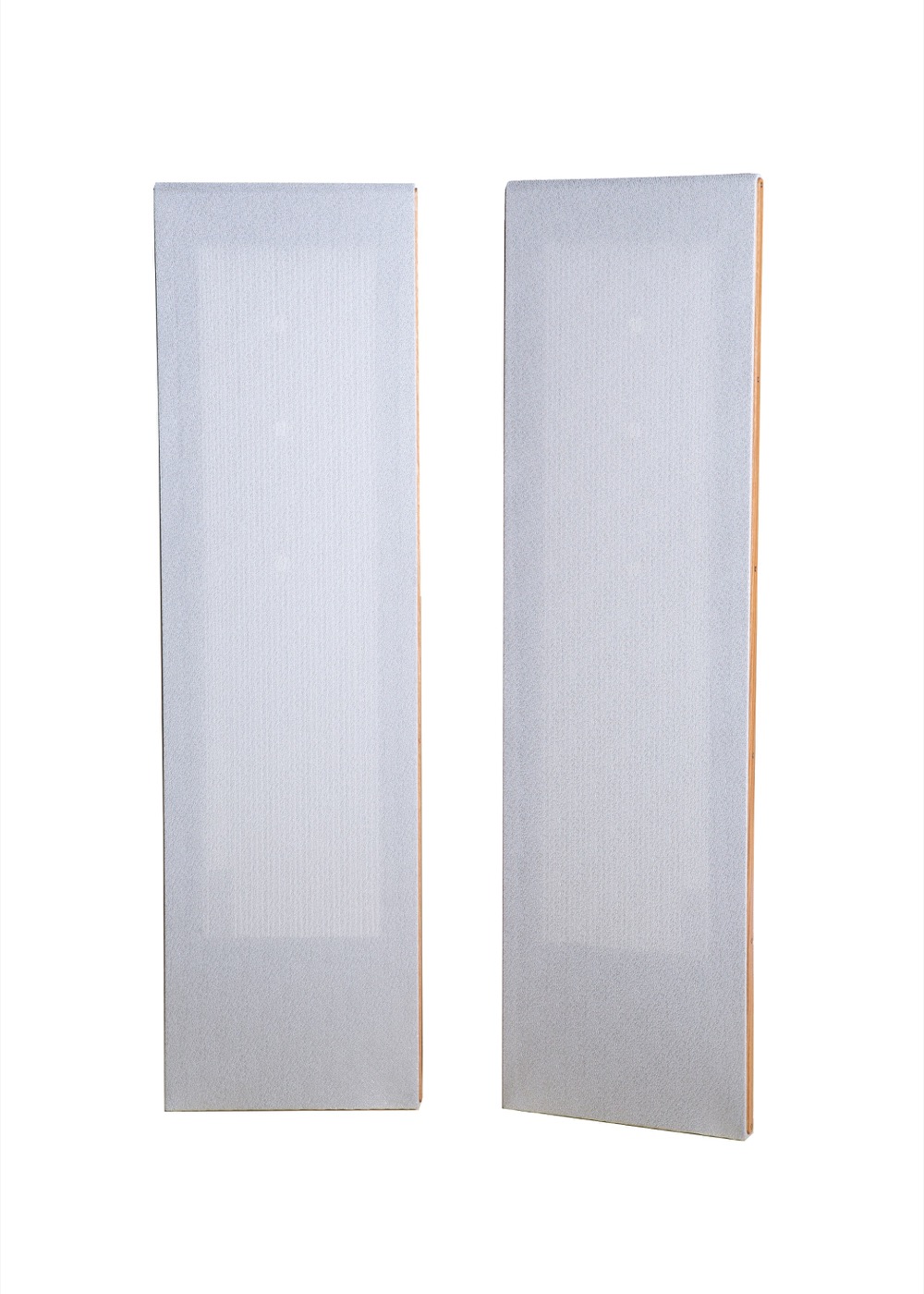 Magnepan .7 in white, a two-way quasi-ribbon panel 1,378 mm tall and 32 mm deep, $1,995 a pair
| Model | Type | Price, pair | H x W x D, mm | Sensitivity / impedance |
|---|
| LRS+ | Floor-stander, 2-way | $1,295 | 1,219 x 330 x 25 | 86 dB / 4 ohm |
| DWM | Bass panel | $1,295 each | 489 x 572 x 32 | 86 dB / 4 ohm |
| MC1 | On-wall | $1,495 | 972 x 260 x 25 | 88 dB / 4 ohm |
| .7 | Floor-stander, 2-way | $1,995 | 1,378 x 387 x 32 | 86 dB / 4 ohm |
| CC5 | Centre | $1,995 each | 267 x 914 x 127 | 88 dB / 3 ohm |
| 1.7i | Floor-stander, 3-way | $2,995 | 1,651 x 483 x 51 | 86 dB / 4 ohm |
| .7x | Floor-stander, 2-way | $4,000 | 1,378 x 387 x 32 | 86 dB / 4 ohm |
| CCR | Centre | $4,795 each | not published | 88 dB / 3 ohm |
| 1.7x | Floor-stander, 3-way | $5,000 | 1,651 x 483 x 51 | 86 dB / 4 ohm |
| 2.7i | Floor-stander, 3-way | $6,495 | 1,803 x 559 x 45 | 86 dB / 4 ohm |
| CCRx | Centre | $7,000 each | 381 x 1,003 x 140 | 88 dB / 3 ohm |
| 3.7i | Floor-stander, 3-way, true ribbon | $9,495 | 1,803 x 610 x 41 | 86 dB / 4 ohm |
| 2.7x | Floor-stander, 3-way | $10,000 | 1,803 x 559 x 45 | 86 dB / 4 ohm |
| 3.7x | Floor-stander, 3-way, true ribbon | $13,000 | 1,803 x 610 x 41 | 86 dB / 4 ohm |
| 20.7 | Floor-stander, 3-way, true ribbon | $22,995 | 2,007 x 737 x 52 | 86 dB / 4 ohm |
| 20.7x | Floor-stander, 3-way, true ribbon | $30,000 | 2,007 x 737 x 52 | 86 dB / 4 ohm |
| 30.7 | Four panels, 4-way | $44,995 | not published | 86 dB / 4 ohm |
| 30.7x | Four panels, 4-way | $55,000 | not published | 86 dB / 4 ohm |
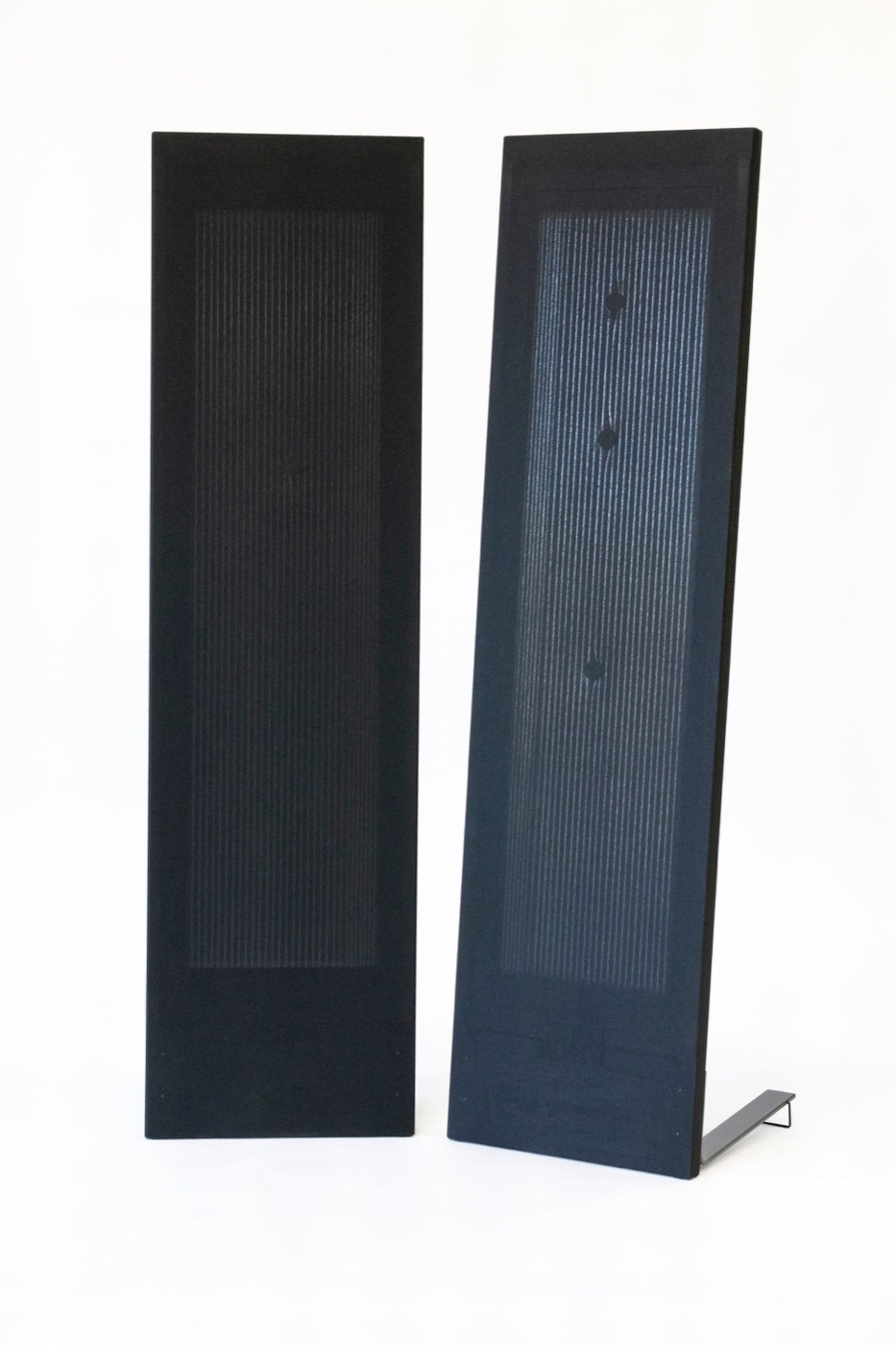 Magnepan LRS+, a 1,219 mm panel that is 25 mm deep and costs $1,295 a pair direct from Magnepan
Three things to read off that table. First, the sensitivity column never moves: 86 dB, and Magnepan measures it at 500 Hz with 2.83 volts, not at the 1 kHz most makers use. Second, the depth column. The LRS+ is 25 mm deep, an inch. The 2.7i and 3.7i are under 50 mm. The average floor-stander in our database is 399 mm deep and 1,126 mm tall; the average Magnepan floor-stander is 42 mm deep and 1,680 mm tall. They take up no floor and a lot of wall, which is the opposite of every other speaker you will shortlist. Third, the step from a model to its "x" version costs between $2,005 (.7 to .7x) and $10,005 (30.7 to 30.7x) for identical dimensions and identical published specs. Magnepan’s claim is better parts in the crossover and wiring. We cannot measure that, and neither can the spec sheet.
| FEATURE and SPECS COMPARISON | | 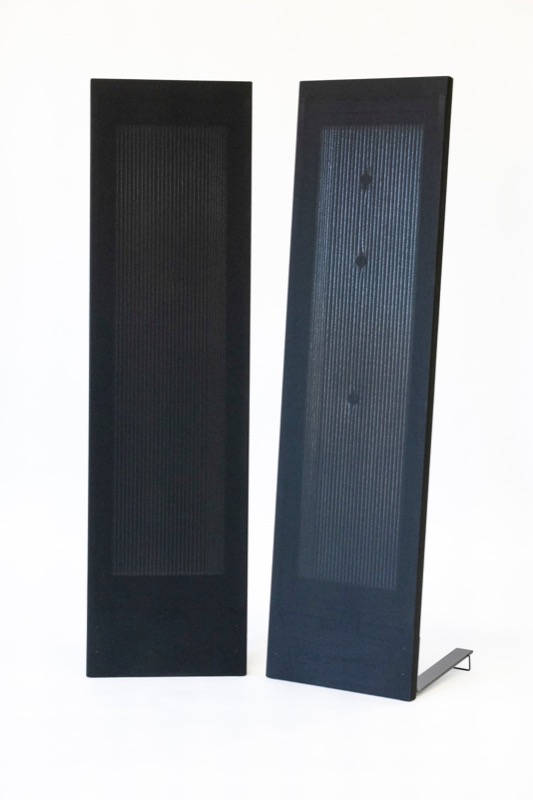 | 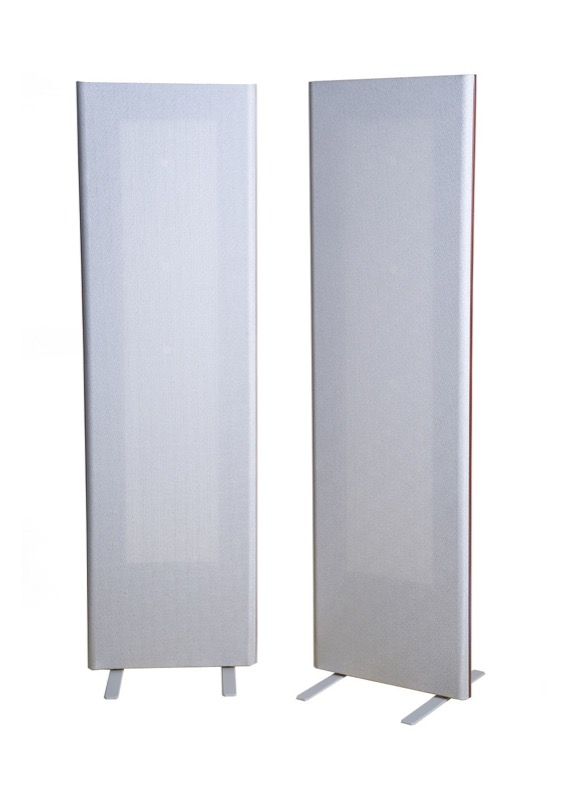 | 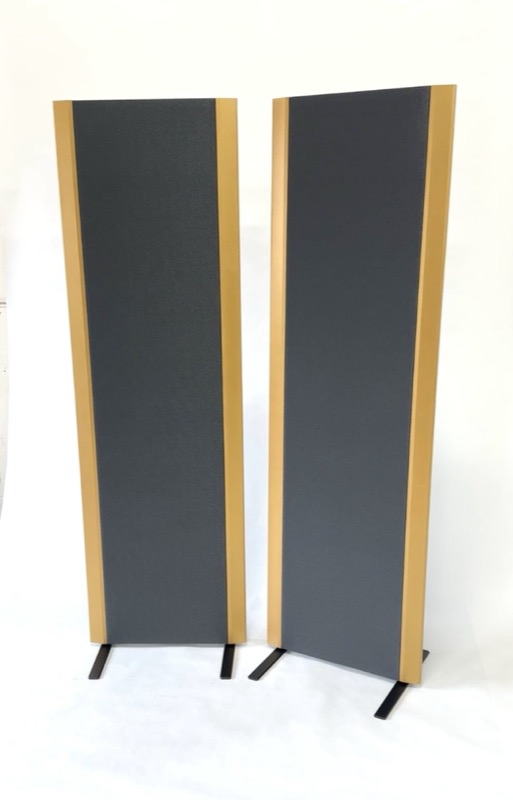 |
| Model | Magnepan LRS+ | Magnepan 1.7i | Magnepan 2.7i |
| Speaker Type | Passive Floor-standing | Passive Floor-standing | Passive Floor-standing |
| Enclosure Type | Dipole | Dipole | Dipole |
| Woofer | x " Woofer | x " Woofer | x " Woofer |
| Frequency Range / Low | 50Hz | 40Hz | 40Hz |
| Frequency Range / High | 20kHz | 24kHz | 30kHz |
| Impedance Nominal | 4Ω | 4Ω | 4Ω |
| Sensitivity | 86dB | 86dB | 86dB |
| Height | 1219.2mm | 1651.0mm | 1803.4mm |
| Width | 330.2mm | 482.6mm | 558.8mm |
| Depth | 25.4mm | 50.8mm | 44.5mm |
| MSRP(pair) | 1295USD | 2995USD | 6495USD |
| Check Current Price | Amazon | Amazon | Amazon |
Readers on this site compare the LRS+ against the 1.7i more than any other Magnepan pair, which makes sense: it is the $1,700 question of whether the third panel section and the extra 430 mm of height are worth it. Both are 4 ohm, both 86 dB, both want the same amplifier.
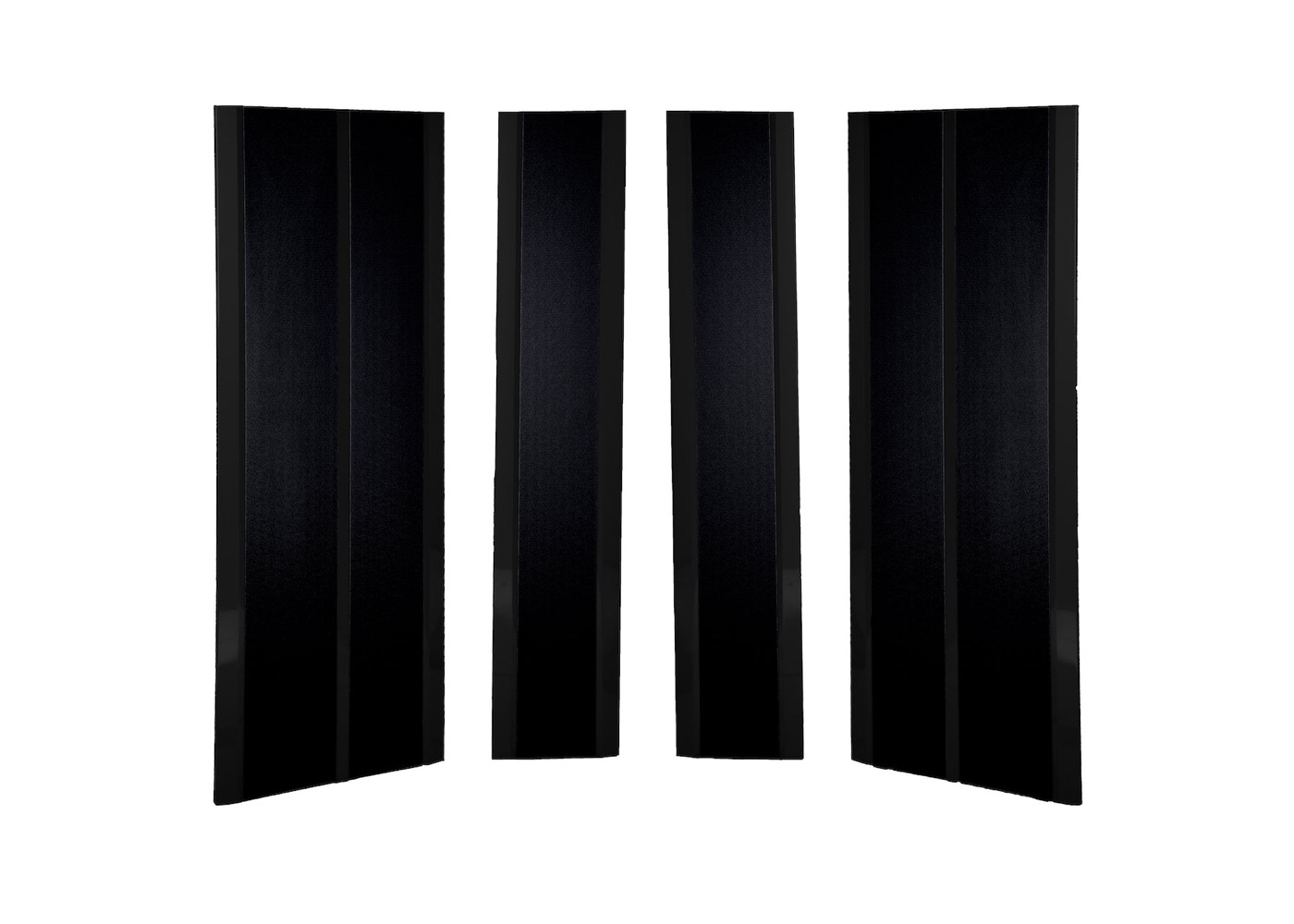 Magnepan 30.7, two panels per side: a bass panel and a separate midrange and ribbon tweeter panel, $44,995 a pair
The 10 MartinLogan electrostatics
MartinLogan’s panels are hybrids. A curved electrostatic sheet handles everything above a few hundred hertz and a conventional woofer in a box handles the bass, powered by the speaker’s own amplifier on the four models with an "A" in the name (11A, 13A, 15A and the C34A centre). So they are half dipole, and they give you the panel’s openness without the panel’s bass problem. The price for that is a cabinet, weight, and a plug in the wall for the powered ones. Prices are from martinlogan.com this week, per pair except where marked.
| Model | Type | Price | Panel size | Sensitivity / impedance | Weight, each |
|---|
| ElectroMotion ESL | Floor-stander, passive woofer | $2,800 | 34 x 8.6 in | 91 dB / 6 ohm | 16.1 kg |
| EFX | Surround, on-wall | $4,400 | Electrostatic | 90 dB / 6 ohm | 11.1 kg |
| ElectroMotion ESL X | Floor-stander, passive woofers | $4,500 | 40 x 8.6 in | 91 dB / 6 ohm | 23.6 kg |
| Focus ESL C18 | Centre | $4,900 each | 18 x 7.5 in | 90 dB / 4 ohm | 22.7 kg |
| Classic ESL 9 | Floor-stander, passive woofers | $7,500 | 44 x 9.2 in | 90 dB / 4 ohm | 35.5 kg |
| Illusion ESL C34A | Centre, powered woofers | $9,500 each | 34 in curved line source | 90 dB / 6 ohm | 40.9 kg |
| Impression ESL 11A | Floor-stander, powered woofers | $12,000 | 44 x 11 in | 91 dB / 4 ohm | 40.8 kg |
| Expression ESL 13A | Floor-stander, powered woofers | $18,000 | 44 x 13 in | 91 dB / 4 ohm | 46.8 kg |
| Renaissance ESL 15A | Floor-stander, powered woofers | $29,000 | 46 x 15 in | 92 dB / 4 ohm | 63.5 kg |
| Neolith | Floor-stander, passive, 15 in woofer | $120,000 | 48 x 22 in | 90 dB / 4 ohm | 175 kg |
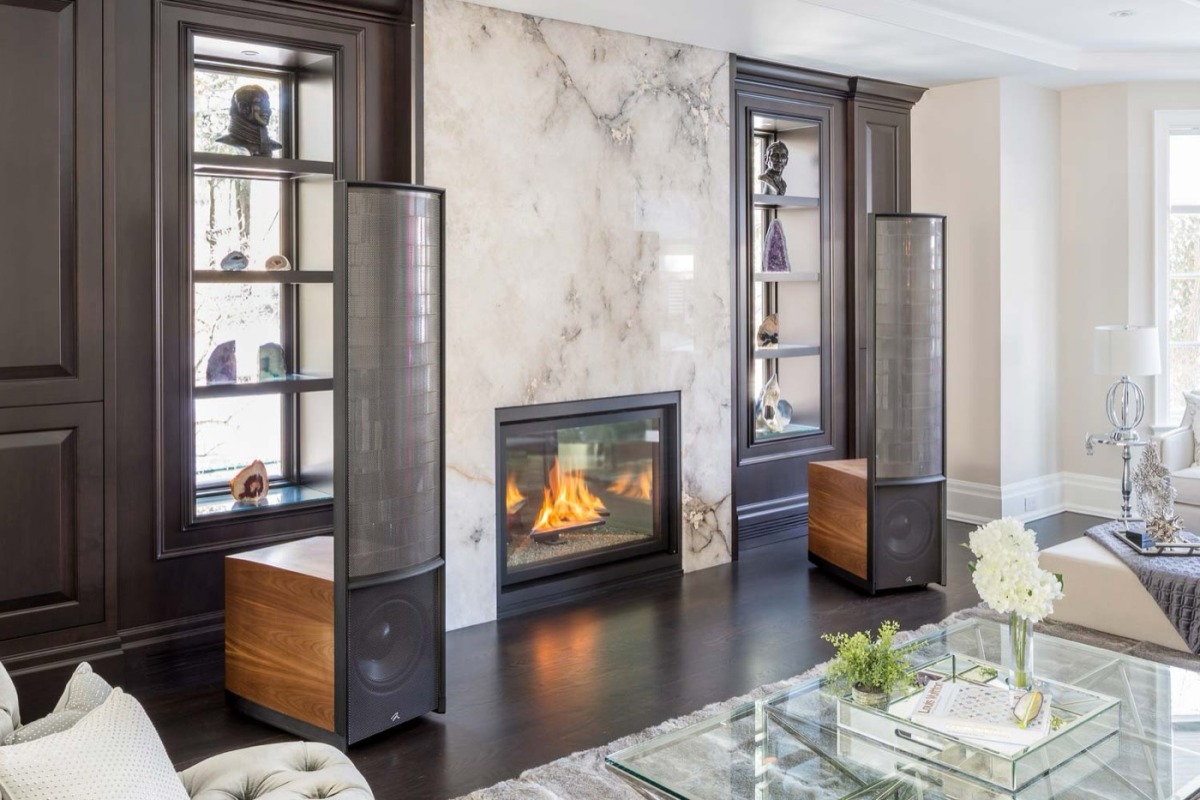 MartinLogan Renaissance ESL 15A, a curved electrostatic panel over a powered woofer cabinet, $29,000 a pair
The sensitivity is four to six dB higher than Magnepan’s, and that is a real difference: 4 dB is more than twice the power for the same volume. The catch is in the impedance column, and it is not the nominal figure. MartinLogan prints the minimum at 20 kHz on its own pages, and on the ESL X it is 1.6 ohm. An electrostatic panel is a capacitor, so its impedance falls as the frequency rises, and a cheap amplifier that is happy with "6 ohm" on the spec sheet can run out of current at the top of the band. The models with powered woofers make the amplifier’s life easier, because the bass, which is where most of the current goes in a normal speaker, is handled inside the cabinet.
| FEATURE and SPECS COMPARISON | |  |  |  |
| Model | MartinLogan Expression ESL 13A | MartinLogan Renaissance ESL 15A | MartinLogan Neolith |
| Speaker Type | Powered Floor-standing | Powered Floor-standing | Passive Floor-standing |
| Enclosure Type | Dipole | Dipole | Dipole |
| Driver Setup | 2-way | 2-way | 2-way |
| Woofer | 2 x 10" Aluminium Woofer | 2 x 12" Aluminium Woofer | 1 x 15" Aluminium Woofer |
| Frequency Range / Low | 24Hz | 22Hz | 23Hz |
| Frequency Range / High | 23kHz | 21kHz | 22kHz |
| Impedance Nominal | 4Ω | 4Ω | 4Ω |
| Sensitivity | 91dB | 92dB | 90dB |
| Max Power (RMS) | 600w | 700w | 1300w |
| Crossover Frequency | 300Hz | 300Hz | 60, 250–400 Hz |
| Grille | Yes | Yes | Yes |
| Height | 1561.0mm | 1773.0mm | 1899.0mm |
| Width | 339.0mm | 400.0mm | 769.0mm |
| Depth | 699.0mm | 633.0mm | 870.0mm |
| Weight | 46.80kg | 63.50kg | 175.00kg |
| MSRP(pair) | 18000USD | 29000USD | 120000USD |
| Check Current Price | Amazon | Amazon | Amazon |
Readers compare MartinLogan against MartinLogan here, almost never against a box speaker: among the floor-standers, the 15A against the 13A is the most opened pair. That tells you who is reading these pages. People who already want a panel, and are deciding how much panel.
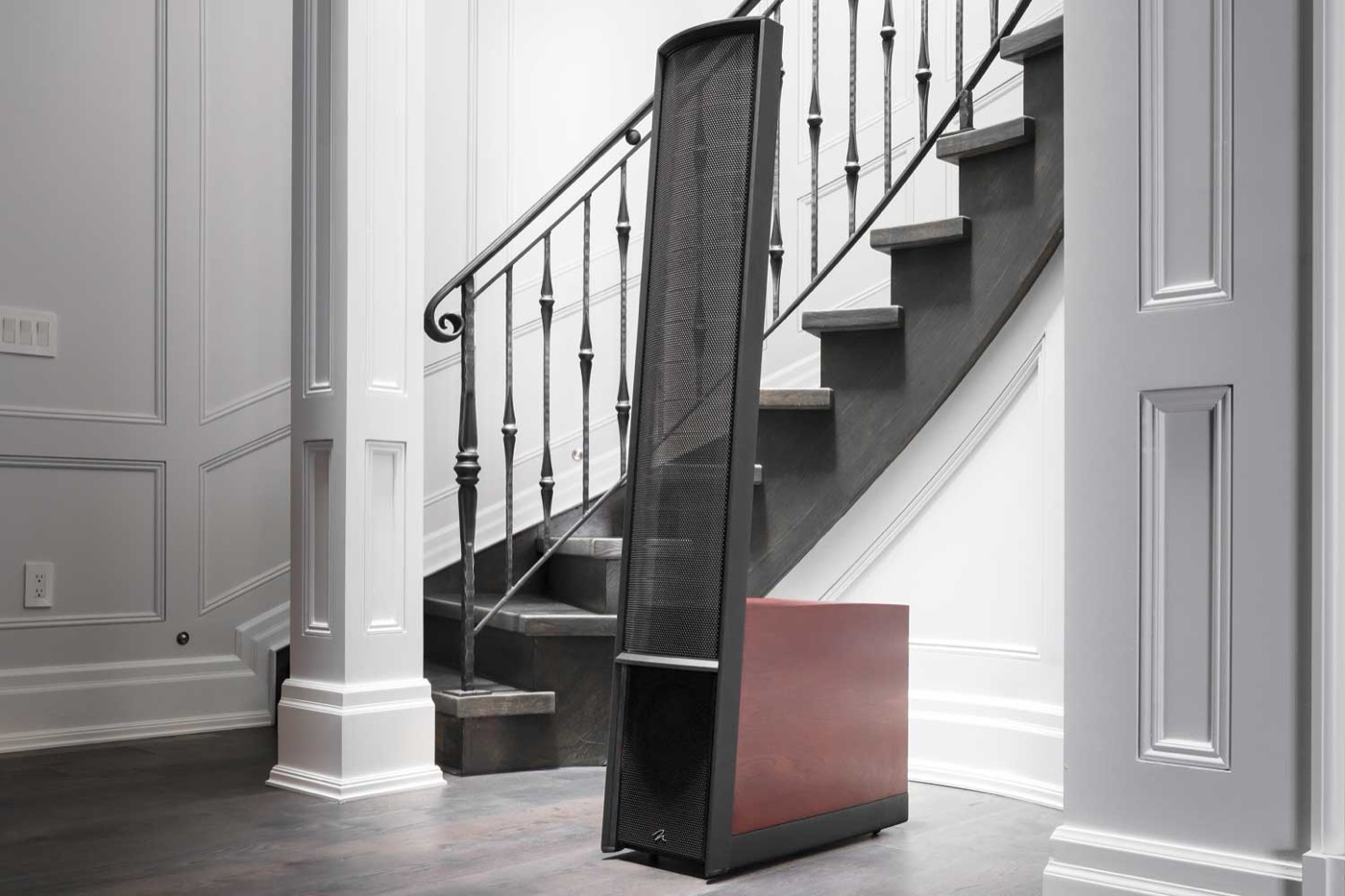 MartinLogan Classic ESL 9, the cheapest Masterpiece series model at $7,500 a pair, with passive 8 inch woofers
What the Bombard OB1 adds, and what we cannot say about it yet
The OB1 is a different animal from both tables. It uses cone drivers, two 15 inch SB Audience woofers per side, so there is no thin film and no high-voltage supply. It is active, with 370 watts per speaker split between the woofers and the horn, which means the amplifier question that dominates everything above simply goes away. And it is a streamer: a Volumio-based player and a DSP live inside, the two speakers find each other over an HDMI link carrying 24-bit, 192 kHz audio, and you can play from a phone with no other box in the room. Bombard says room correction is coming.
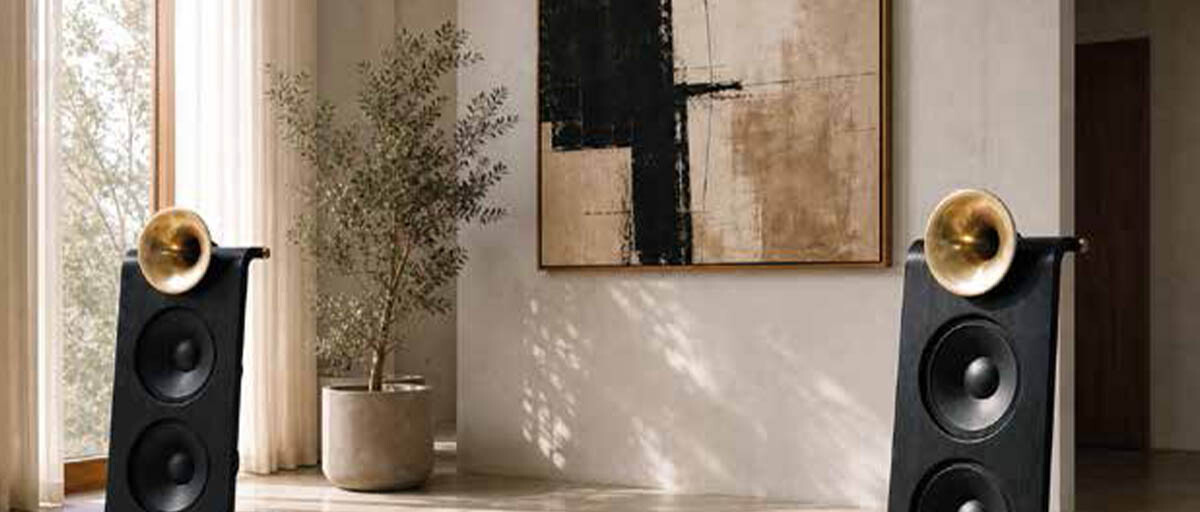 Bombard OB1 active open-baffle speakers, two 15 inch woofers and a brass horn on a charred oak baffle, shown at the Dutch Audio Event 2026
Where would it sit among what we hold? We list 18 speakers with a 15 inch woofer, from the Klipsch Cornwall IV at $6,598 to the Neolith, and every one of them puts the woofer in a box or a horn. We list 108 powered stereo pairs and the dearest is the Dynaudio Focus 50 at $11,000. The OB1 at EUR 15,000 would top both lists at once. But it would do so with no published frequency response, sensitivity, dimensions or weight, because Bombard has not released any, and with a DSP that Stereophile’s report says is still being tuned to tame the horn at high volume. The company’s own site has the same five facts the press has. Until there is a US price and a spec sheet, it is a lead, not a row.
The weak point: what a panel asks of you
Three things, and the tables already said two of them.
The amplifier. Every Magnepan floor-stander is a 4 ohm, 86 dB load. Our amp and speaker matcher will tell you what that means for your room, but the short version is that a 50 watt receiver is not the plan, and that the amplifier needs to be rated into 4 ohms with both channels driven. MartinLogan’s higher sensitivity helps, but the impedance at 20 kHz does not, and the powered models need a mains socket behind each speaker.
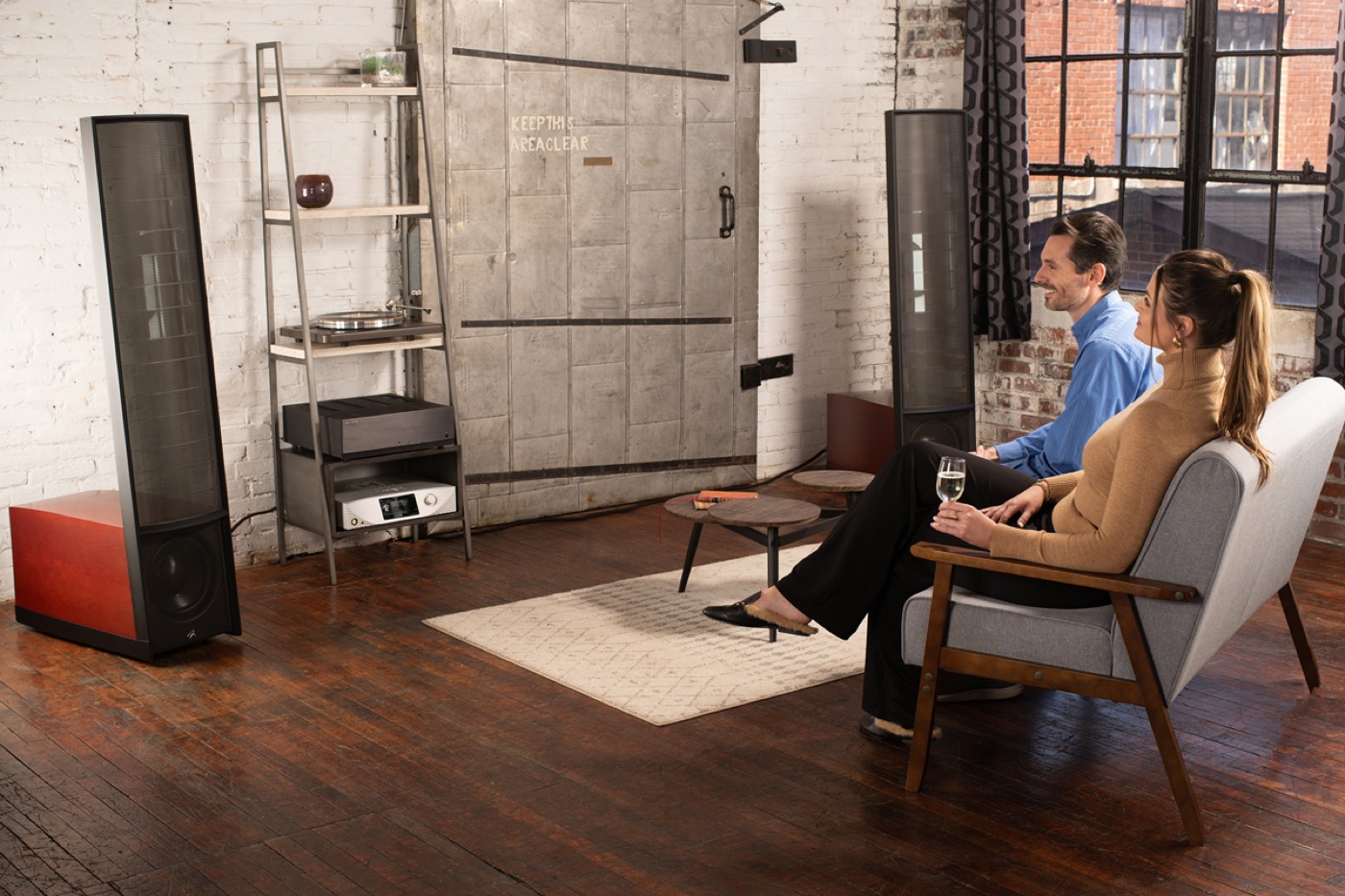 MartinLogan Expression ESL 13A, $18,000 a pair, with two powered 10 inch woofers under a 44 by 13 inch panel
The room. A dipole fires as much sound backwards as forwards. Both makers’ setup guides start you at least two to three feet from the wall behind, and a panel pushed into a corner or against a wall sounds like a cheap speaker. A 1,650 mm panel standing a metre into the room is a piece of furniture, and not everyone who lives in the room will agree to it. The slim depth is real, and it does not mean the speaker takes no space.
The bass. The Magnepan floor-standers are rated from 50 Hz (LRS+), 45 Hz (.7) and 40 Hz (1.7i, 2.7i) down to 25 Hz on the 20.7 and 30.7, and a dipole’s bass falls off faster below its limit than a ported box does. That is why the DWM bass panel exists and why MartinLogan put woofers in a cabinet. If you want the last octave from a Magnepan under $5,000, you are buying a subwoofer or a DWM as well.
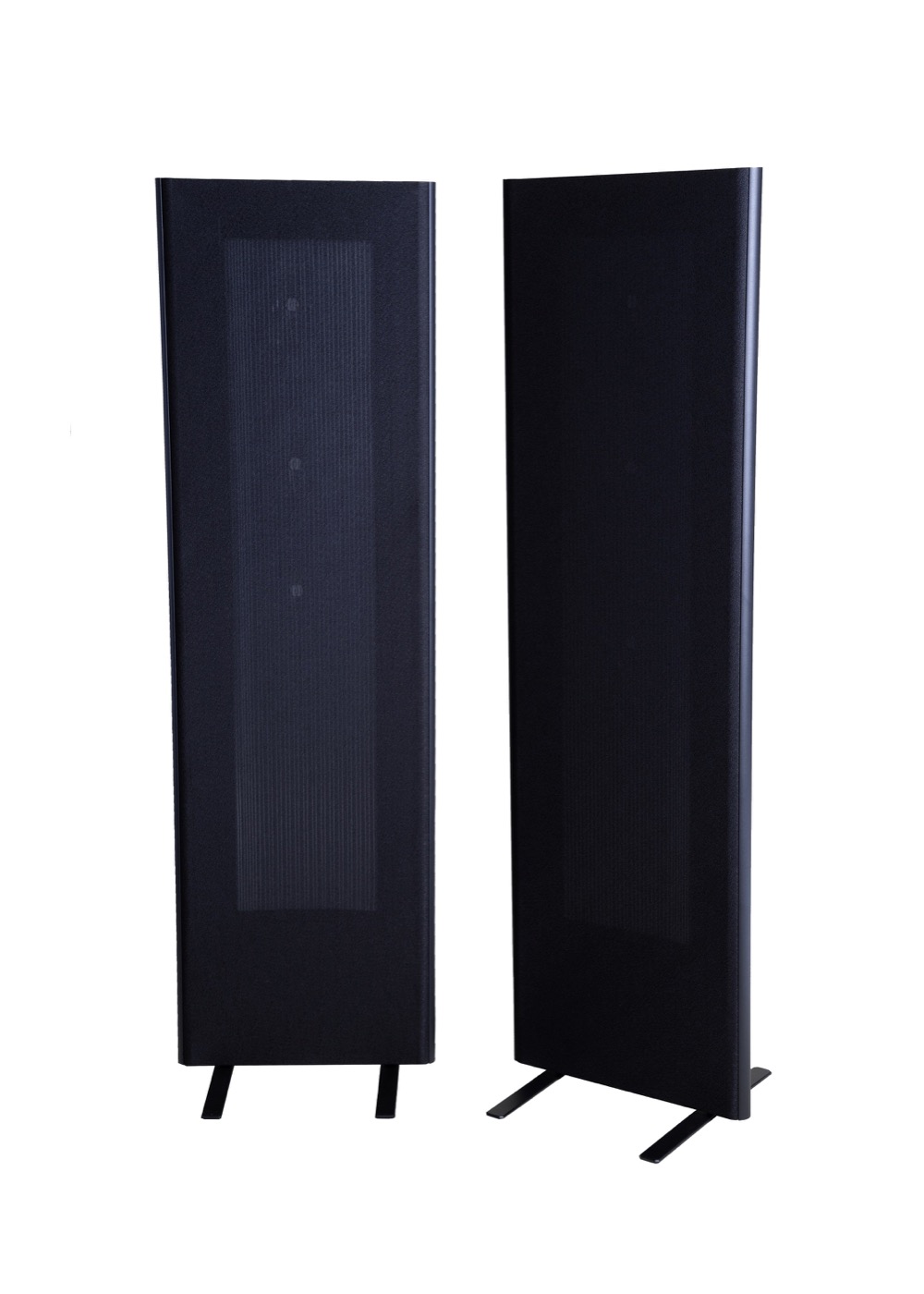 Magnepan 1.7i, the three-way panel most readers weigh against the LRS+, $2,995 a pair and rated to 40 Hz
And one thing about our own data. The 28 rows are complete for price, sensitivity, impedance and height, but Magnepan does not publish weights for most models and gives no dimensions at all for the 30.7, so those cells say "not published" because they are. We also file six of the MartinLogan hybrids under the type of box their woofers use, which is correct for the bass and says nothing about the panel; the "Dipole" tag is on the other four. The next pass through the data will give the panel its own field.
The bottom line
- You want to hear what a panel does for under $3,000: the Magnepan LRS+ at $1,295 or the 1.7i at $2,995, bought with an amplifier that is honest into 4 ohms. The LRS+ is one of 94 floor-standers we hold at $1,500 or under, and the only one with no box.
- You want a panel with proper bass and no subwoofer: a MartinLogan with powered woofers, from the Impression ESL 11A at $12,000, or a Magnepan 3.7i and up.
- You have the room and the budget for the real thing: the Magnepan 20.7 at $22,995 and the MartinLogan Renaissance ESL 15A at $29,000 are the two full-size panels under $30,000, and they compare directly.
- You want a panel that does not need an amplifier, a streamer or a spec sheet: wait for Bombard to publish one. We will add the OB1 the day it has a US price and a size.
Every speaker in both tables is on the Magnepan and MartinLogan brand pages, and any two of them can be compared side by side.
Have you lived with a panel speaker, and did the room or the amplifier turn out to be the bigger problem?
FIND THIS INTERESTING? SHARE IT WITH YOUR FRIENDS!
Open Baffle and Dipole: All 28 Panel Speakers We Hold, From a $1,295 Magnepan to a $120,000 MartinLogan Class A, A/B, D and G: What the 301 Stereo Amplifiers We Hold Actually Claim, and Why FiiO's New "Class A" Is Not One MartinLogan USR51 Is the Anthem MRX SLM With a New Badge: Same $1,300, Same 50 Watts, One HDMI Port Magico A3 2027 at $25,000: What Else That Buys in a Floor-Standing Speaker Wharfedale Diamond 12i vs Diamond 12: All Six Pairs, Same UK Price, More in the US Audioengine's HD4 Next Gen Is One of Only Two Powered Speakers We Hold With aptX Adaptive Edifier MR4.5 Added: What 250 Dollars Buys Against the 19 Powered Speakers We Held Under 300 Esoteric F-01 vs F-02: Same 21,000 Dollars, 30 Watts of Class A or 120 Watts Castle Tintagel and Walmer: Four New British Speakers, and the Amp Each One Needs Yamaha's R200A Replaces a Ten-Year-Old Receiver, and Keeps the Same 100 Watts Paradigm Premier v2 vs the Original Premier: All Six Models, What Changed Which Speaker Brands Keep Their Shoppers, and Which Get Shopped Against Harbeth XD2 Range: All Five Compared, Which Size and What Amp What You Compared Most in September: The Old Speaker or Its Replacement 30 Tips to Better Sound Before You Buy New Speakers REL No.35 and No.36: 10,000 and 12,000 Dollar Subwoofers With the Same Watts as a 2,199 Dollar REL Audioengine A2+ Gen 3: What Changed Since the A2+ Wireless, and What It Still Cannot Do Sonos Beam Ultra: Real Atmos Height Drivers in a Soundbar Under 80 cm, for 699 Dollars JBL's Summit Series Is Five Speakers, and the Cheapest Needs the Biggest Amplifier We Built 11 Free Speaker and Amplifier Tools, and Every One Shows Its Working