Every figure below is Monitor Audio’s own, read from monitoraudio.com this week. For bass I have used the in-room figure at -6 dB for all three, because it is the only one Monitor Audio publishes for the Silver 100 8G. Comparing one speaker’s in-room figure with another’s free-field figure makes the free-field one look 15 Hz worse than it is. Our own Gold rows had exactly that mismatch until this week.
| FEATURE and SPECS COMPARISON | |  |  |  |
| Model | Monitor Audio Silver 100 8G | Monitor Audio Gold 100 6G | Monitor Audio Platinum 100 3G |
| Speaker Type | Passive Bookshelf | Passive Bookshelf | Passive Bookshelf |
| Enclosure Type | Ported | Ported | Ported |
| Driver Setup | 3-way | 3-way | 2-way |
| Tweeter | 1" gold dome C-CAM Tweeter | 1" Tweeter | 1" Tweeter |
| Mid-Range | 3" C-CAM RST III cone Midrange | 3" HDT C-CAM Midrange | - |
| Woofer | 1 x 8" C-CAM RST III Woofer | 1 x 8" HDT C-CAM Woofer | 1 x 6" RDT III Woofer |
| Frequency Range / Low | 33Hz | 32Hz | 28Hz |
| Frequency Range / High | 35kHz | 60kHz | 60kHz |
| Impedance Nominal | 8Ω | 4Ω | 4Ω |
| Impedance Minimum | 3.7Ω | 3.9Ω | 4Ω |
| Sensitivity | 87dB | 87dB | 85dB |
| Max Power (RMS) | 200w | 250w | 150w |
| Crossover Frequency | 610Hz and 2900Hz | 700 Hz - 2600 Hz | 2850 Hz |
| Available Colors | High Gloss Black, European Walnut, Satin White | Macassar Wood Veneer, High-Gloss Black, Satin White | Piano Black, Piano Ebony, Satin White |
| Height | 440.0mm | 448.0mm | 398.0mm |
| Width | 230.0mm | 231.0mm | 225.0mm |
| Depth | 354.0mm | 358.0mm | 325.0mm |
| Weight | 12.10kg | 14.05kg | 15.20kg |
| MSRP(pair) | 2300USD | 4599USD | 7599USD |
| Check Current Price | Amazon | Amazon | Amazon |
| Silver 100 8G | Gold 100 6G | Platinum 100 3G |
|---|
| US price, pair | $2,300 | $4,599 | $7,599 |
| Design | 3-way, ported | 3-way, ported | 2-way, ported |
| Bass driver | 8 in C-CAM RST III | 8 in HDT C-CAM | 6 in RDT III |
| Midrange | 3 in C-CAM RST III | 3 in HDT C-CAM | None |
| Tweeter | 25 mm C-CAM dome | MPD III ribbon | MPD III ribbon |
| Crossover | 610 Hz, 2.9 kHz | 700 Hz, 2.6 kHz | 2.85 kHz |
| Sensitivity | 87 dB | 86.5 dB | 85 dB |
| Nominal impedance | 8 ohms | 4 ohms | 4 ohms |
| Minimum impedance | 3.7 ohms at 140 Hz | 3.9 ohms at 140 Hz | 4.0 ohms at 180 Hz |
| Bass, in-room, -6 dB | 33 Hz | 32 Hz | 28 Hz |
| Recommended amplifier | 100 to 400 W into 4 ohms | 130 to 500 W into 4 ohms | 75 to 300 W into 4 ohms |
| Height x width x depth | 440 x 230 x 354 mm | 448 x 230 x 357 mm | 398 x 225 x 326 mm |
| Weight, each | 12.1 kg | 14.0 kg | 15.2 kg |
The Platinum’s height includes its outrigger feet and spikes, so its cabinet is shorter still. It is the smallest of the three and the heaviest.
Silver 100 to Gold 100: twice the price for the same box
This is the step that changed most in 2026. The old Silver 100 7G was a two-way: an 8 inch bass driver and a tweeter, in a cabinet 377 mm tall weighing 9.4 kg. The Gold 100 had a dedicated 3 inch midrange the Silver lacked, in a bigger box. That was a real reason to step up.
The 8G took that reason away. It added a 3 inch midrange, grew to 440 mm and 12.1 kg, and now matches the Gold 100’s width to the millimetre and its height to within 8 mm. On paper the two now reach the same depth in a room, 33 Hz against 32 Hz, and the Silver is half a decibel more sensitive.
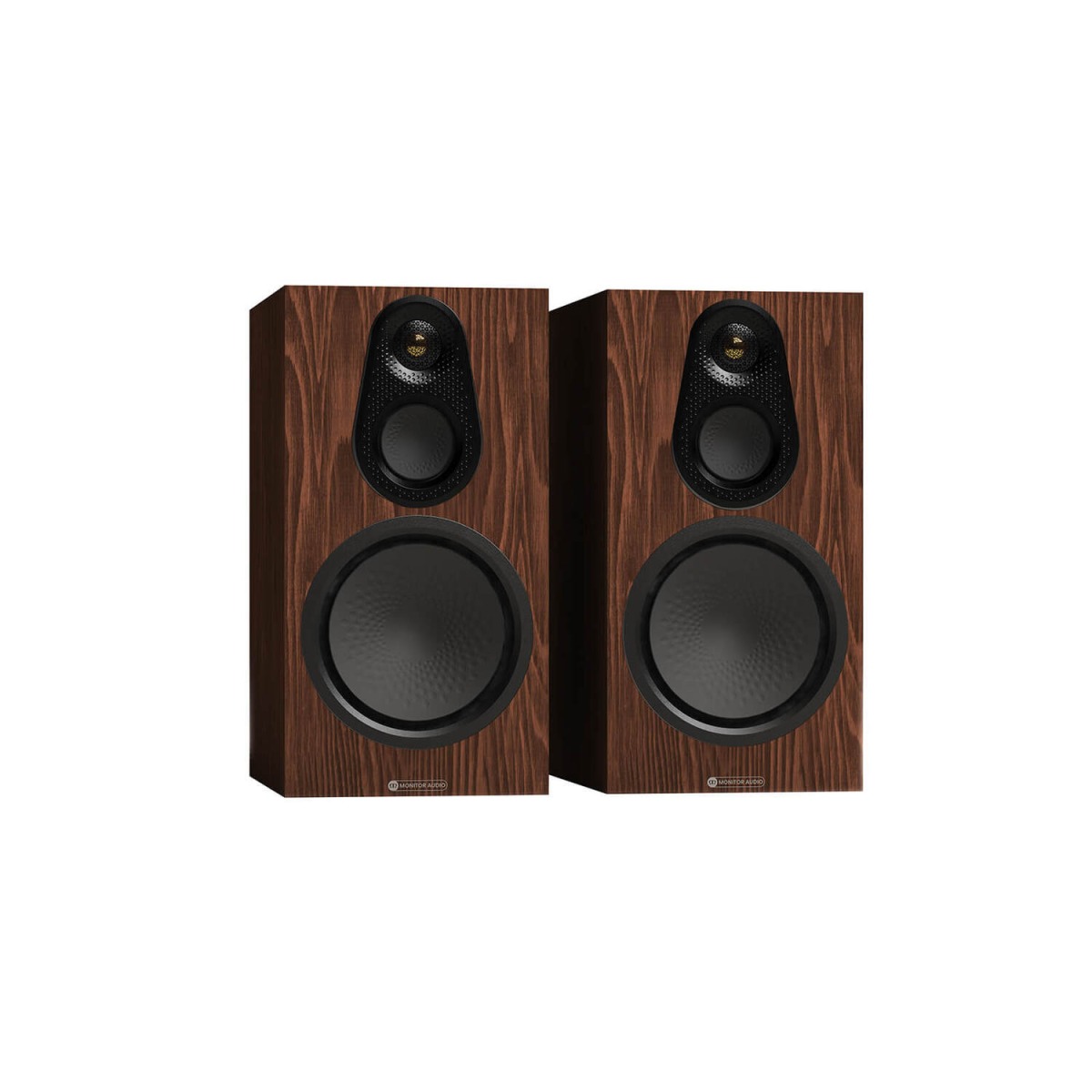 Monitor Audio Silver 100 8G in European Walnut, the 2026 Silver with a 3 inch midrange added
So what is the extra $2,299 for? Three things.
- The tweeter. The Gold uses Monitor Audio’s MPD III, a pleated ribbon of the Heil air motion type, the same one fitted to the Platinum. The Silver uses a 25 mm dome.
- Louder peaks. Monitor Audio rates the Gold 100 at 119 dB maximum peak SPL against 114 dB for the Silver. Five decibels is a clear difference if you play loud in a big room, and none at all if you do not.
- The drivers and the box. HDT cones rather than RST III, and 1.9 kg more cabinet per speaker.
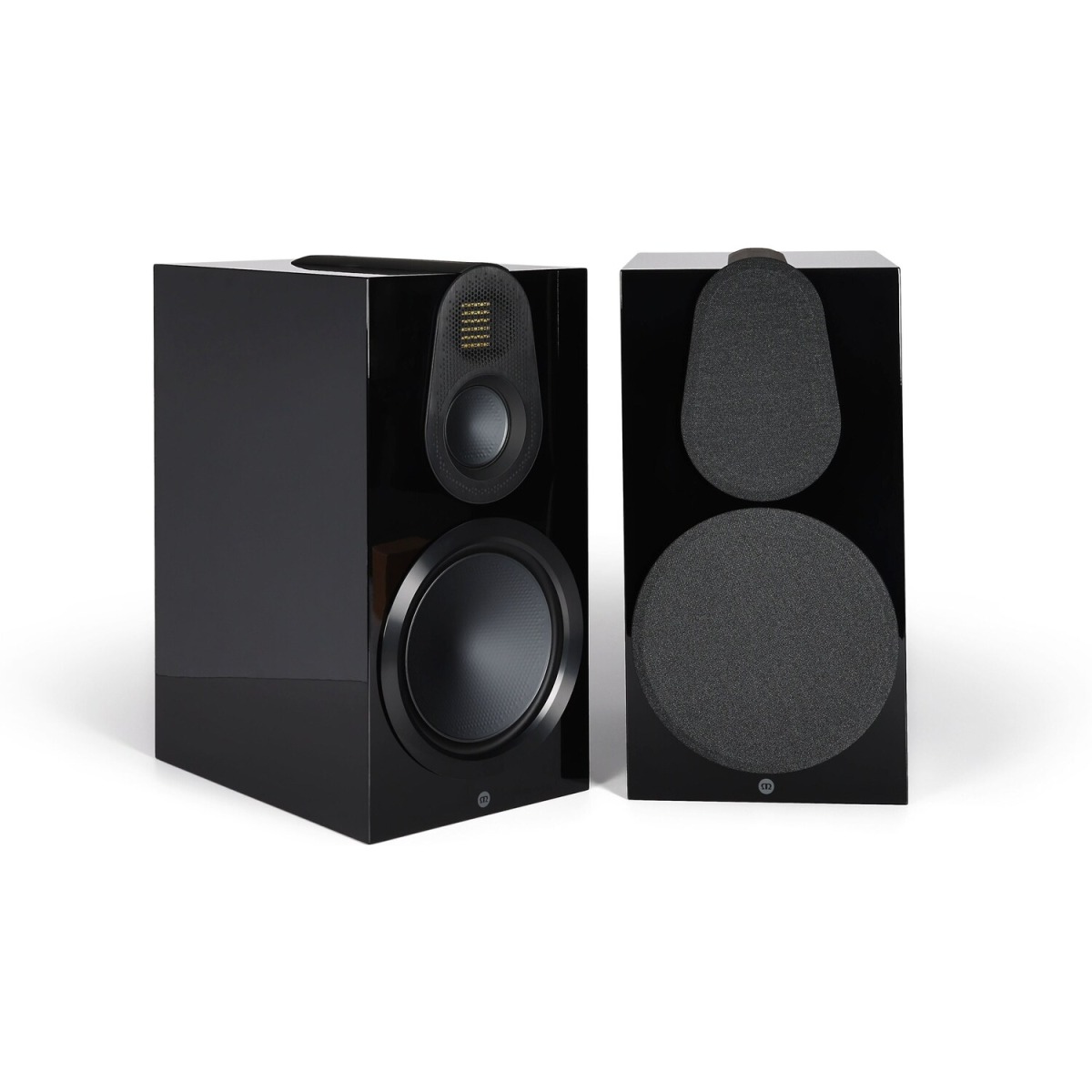 Monitor Audio Gold 100 6G standmount speaker with its MPD III ribbon tweeter, 3 inch midrange and 8 inch bass driver
Stereophile’s measurements back up most of the Gold’s spec sheet. It measured 87 dB sensitivity, half a decibel better than the claim. The minimum impedance was 4.4 ohms with a small phase angle, and Steve Temme concluded the Gold 100 “should be an easy load for any reasonably powerful amplifier to drive.” The response was within 3 dB from 56 Hz to 45 kHz on the tweeter axis. He also found the horizontal dispersion fairly narrow, beaming above 10 kHz, and advised pointing the speakers at your seat.
So who does the Gold 100 rule out? Anyone whose amplifier is modest. Monitor Audio recommends 130 to 500 watts into 4 ohms for the Gold, against 50 to 200 watts into 8 ohms for the Silver. If you are buying the speakers to suit the amplifier you already own, the Silver 100 8G is the safer and much cheaper choice.
The weak point on the Silver: the 8 ohm label flatters
Monitor Audio calls the Silver 100 8G an 8 ohm speaker and the other two 4 ohm speakers. That makes the Silver sound like the easy one to drive. But Monitor Audio’s own figure for its minimum impedance is 3.7 ohms at 140 Hz. That is lower than the Gold’s 3.9 ohms and the Platinum’s 4.0, and it falls in the upper bass, where music puts a lot of its energy.
Any decent integrated amplifier copes with 3.7 ohms. But if a seller tells you the Silver suits a small amplifier better because it is 8 ohms, the spec sheet does not support that. Our amp and speaker matcher will show what our amplifiers can do with each of the three.
Gold 100 to Platinum 100: $3,000 more for a smaller speaker
The name suggests the Platinum 100 is a bigger, better Gold 100. It is neither bigger nor the same kind of speaker. It is a two-way with a 6 inch bass driver and no midrange, crossing straight to the same MPD III tweeter at 2.85 kHz.
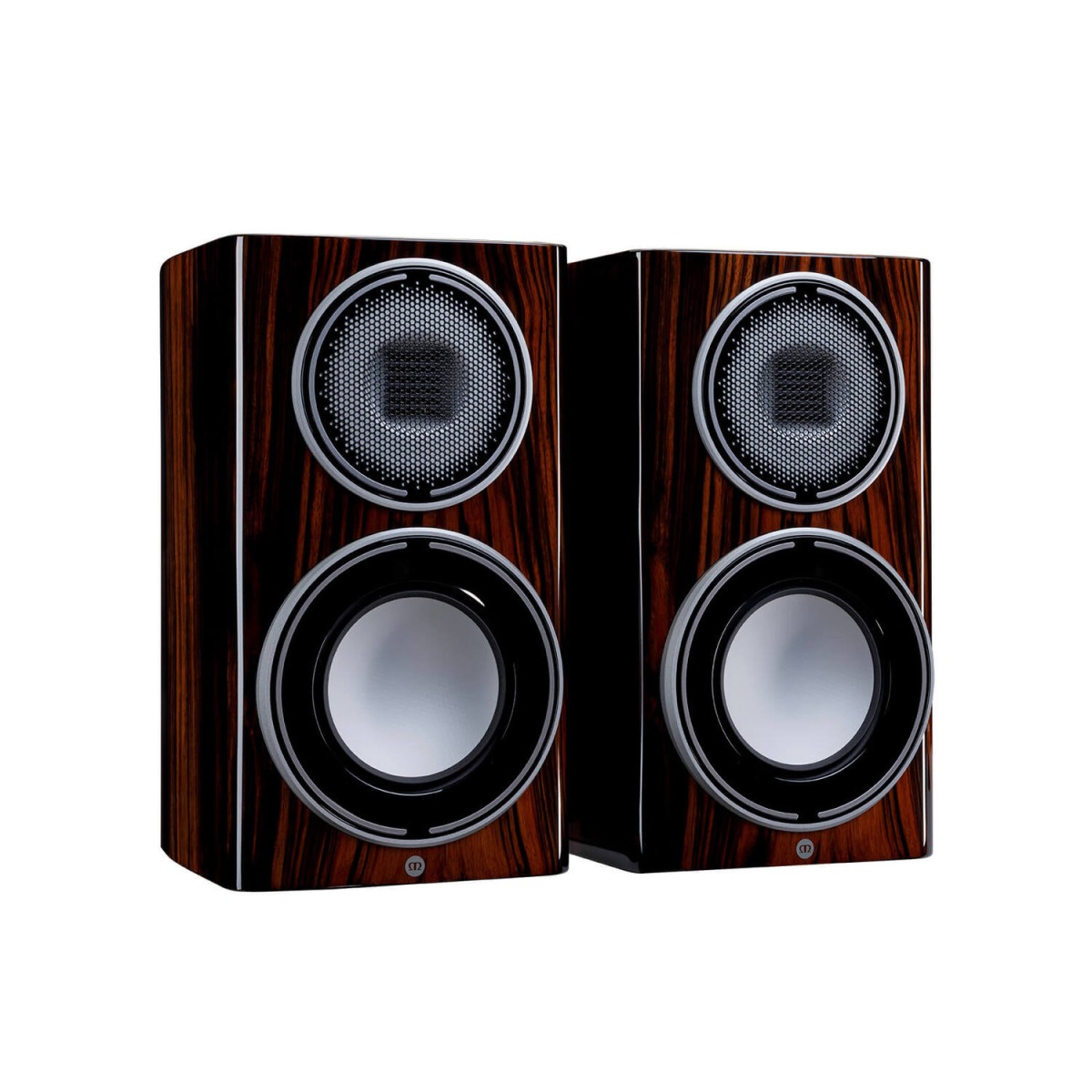 A pair of Monitor Audio Platinum 100 3G two-way standmount speakers in Piano Ebony
What the Platinum does have, on paper, is the deepest bass of the three, 28 Hz in-room, and the heaviest cabinet. A 15.2 kg box for a 6 inch two-way tells you where the money went.
What it gives up is sensitivity and headroom. At 85 dB it needs 1.5 dB more amplifier power than the Gold for the same volume, which is about 40 percent more watts. And a 6 inch driver moves less air than an 8 inch one, whatever the box is made of. Monitor Audio rates its continuous power handling at 150 W.
Size, drawn to scale
Both speakers and both views share one scale, so everything here is directly comparable. Hover a box for its dimensions.
One scale for both, standing on the same surface and pushed back to the same wall, so the deeper one visibly sticks out further.
Monitor Audio Gold 100 6G needs about 13% more floor or shelf area. Monitor Audio Gold 100 6G is 33mm deeper, so it stands that much further out from the wall. Monitor Audio Gold 100 6G is 50mm taller.
So the Platinum 100 is for a small or medium room, listened to at sensible levels, by someone who values refinement and finish over scale. For a big room, the Gold 100 is the bigger speaker for $3,000 less. The Platinum line’s bigger standmount does not exist: the next model up is the Platinum 200 3G, a floorstander at $15,299 a pair.
Every price went up, and our file was behind
While checking these three, I found every Gold and Platinum price we held was out of date. Monitor Audio’s US site and Upscale Audio both list them 10 to 12 percent higher than we had. The Gold 100 is $4,599, not $4,199, and the Platinum 100 is $7,599, not $6,900. The rest of both ranges moved by about the same. All nine rows are corrected now.
The Silver 8G has moved too. What Hi-Fi and StereoNET both reported the Silver 100 8G at $2,000 a pair at its August launch. It is $2,300 on Monitor Audio’s US site today, and the same at Upscale Audio. That is 15 percent in about two months. The other six Silver 8G models are up by 13 to 21 percent on their launch prices.
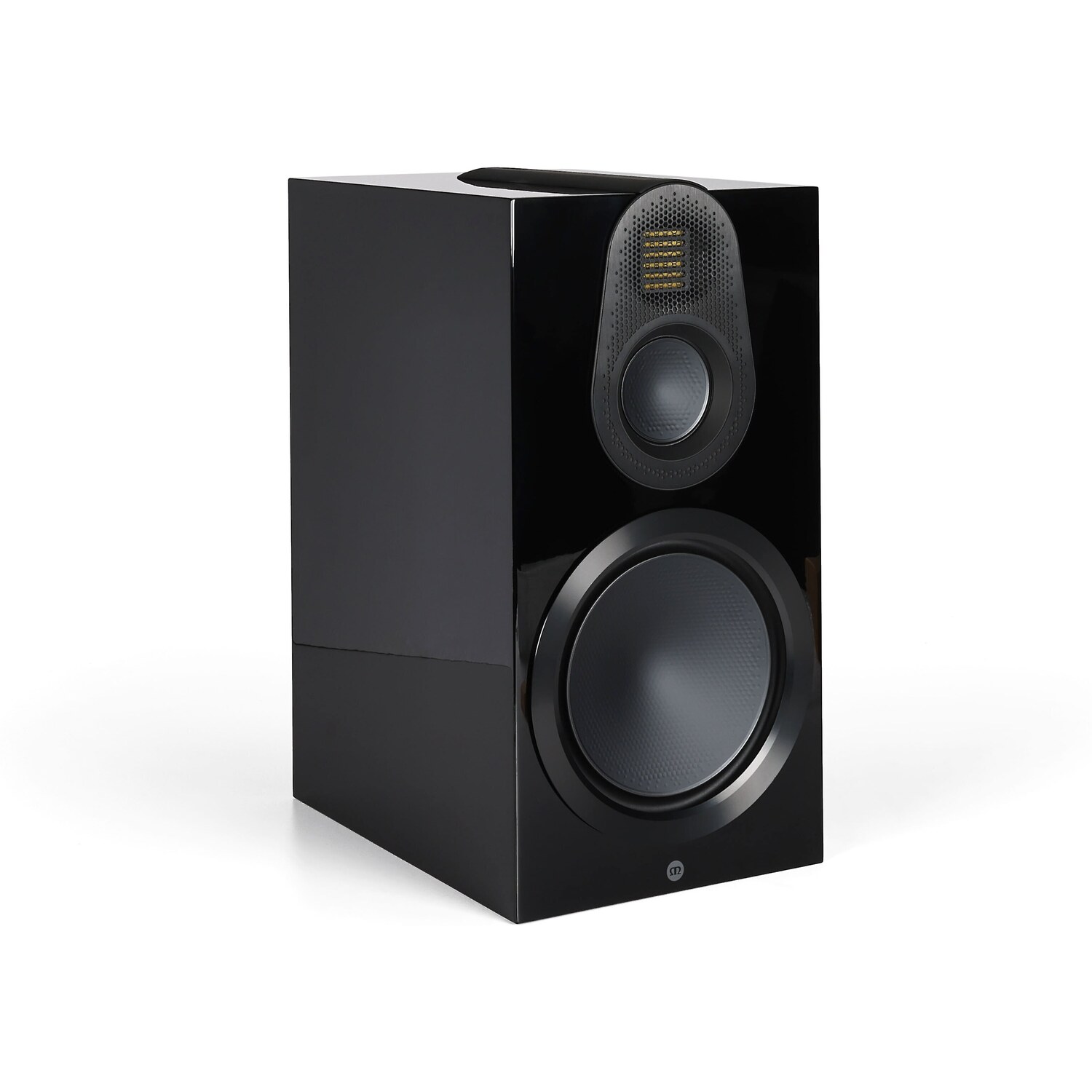 Monitor Audio Gold 100 6G in High Gloss Black, now $4,599 a pair
Which one should you buy
- Most people: the Silver 100 8G at $2,300. It is now the same size and layout as the Gold, reaches as deep in a room, and asks less of your amplifier in power terms.
- You play loud in a big room and have a strong amplifier: the Gold 100 6G at $4,599. The ribbon tweeter and the extra 5 dB of peak output are what you are paying for.
- A smaller room, moderate levels, and finish matters: the Platinum 100 3G at $7,599. Know that it is a two-way and the least sensitive of the three.
- On a tight budget: look for the outgoing Silver 100 7G while dealers still have it. It is a two-way with no midrange, so it is the one real step down in this group.
All 65 Monitor Audio models we hold are on the Monitor Audio page. The Silver 100 7G and 8G are now linked as predecessor and successor, so each review page points to the other.
Questions answered
What is the difference between the Monitor Audio Silver 100 8G and Gold 100 6G?
Both are three-way standmounts with an 8 inch bass driver and a 3 inch midrange in a box of almost the same size. The Gold adds the MPD III ribbon tweeter, HDT cones and 5 dB more peak output, and costs $4,599 a pair against $2,300.
Is the Platinum 100 3G a bigger version of the Gold 100 6G?
No. The Platinum 100 is a two-way with a 6 inch bass driver and no midrange. It is smaller and heavier than the Gold 100 and 1.5 dB less sensitive, and costs $7,599 a pair.
Is the Monitor Audio Gold 100 6G hard to drive?
Not by Stereophile’s measurements. It measured 87 dB sensitivity and a minimum impedance of 4.4 ohms with a small phase angle. Monitor Audio still recommends 130 to 500 watts into 4 ohms.
How is the Silver 100 8G different from the Silver 100 7G?
The 8G is a three-way with a new 3 inch midrange, where the 7G was a two-way. It is 63 mm taller and 2.7 kg heavier per speaker, and launched at $2,000 a pair in August 2026.
Would you pay twice the price of the Silver 100 8G for the Gold’s ribbon tweeter, now that the boxes are the same size?