DALI announced a new subwoofer this week. The BASIK SUB is 800 dollars in the US, 429 pounds in the UK and 500 euros in Europe, and it goes on sale in October. It is pitched as the compact partner for the KUPID and SONIK 1 bookshelf speakers.
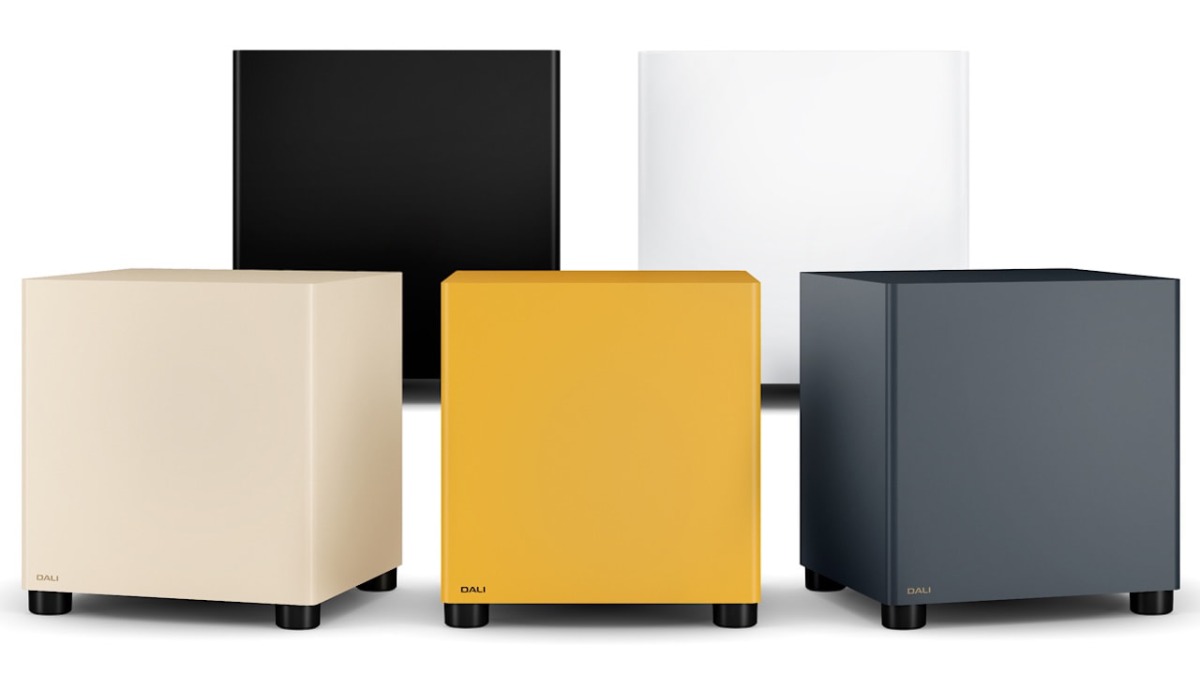 DALI BASIK SUB in all five finishes, Solid Black, Solid White, Caramel White, Golden Yellow and Chilly Blue
We list the DALI subwoofer range, so the first thing we did was put the new specifications next to the ones we already hold. They matched. Not approximately. Exactly.
The BASIK SUB is now listed, so you can check that for yourself rather than take our word for it.
Quick facts
- The BASIK SUB and the DALI SUB C-8 D share every published specification that matters: the 8 inch paper long stroke woofer, 170 watts RMS and 220 watts peak of Class D, 33Hz to 200Hz at +/-3dB, a 40 to 120Hz crossover, bass reflex loading and a 250 watt maximum draw.
- The rear panel badge reads DALI BASIK SUB C-8 D. DALI is not hiding this. Most of the coverage simply did not mention it.
- What changed is the price and the paint. 800 dollars against the 900 we have listed for the SUB C-8 D, and five finishes instead of two.
- Most of the coverage says the BASIK SUB reaches 40Hz. That is the crossover control, not the bass. DALI's own frequency figure is 33Hz.
- Nothing here is measured. Every number is a manufacturer specification.
The two spec sheets, side by side
The left column is the row we have held since we added the DALI subwoofer range. The right column is this week's announcement.
| Specification | DALI SUB C-8 D (2018) | DALI BASIK SUB (2026) |
|---|
| Driver | 1 x 8in long stroke, paper | 1 x 8in long stroke, paper pulp |
| Firing direction | Down | Down |
| Amplifier | Class D | Class D |
| Power, RMS | 170W | 170W |
| Power, peak | 220W | 220W |
| Frequency range | 33 to 200Hz, +/-3dB | 33 to 200Hz, +/-3dB (LFE) |
| Crossover | 40 to 120Hz | 40 to 120Hz |
| Enclosure | Bass reflex | Bass reflex |
| Max power draw | 250W | 250W |
| Inputs | Stereo RCA line, mono LFE | Stereo RCA line, mono LFE |
| Width | 295mm | 295mm |
| Depth | 310mm | 310mm |
| Height | 335mm | 319mm |
| Finishes | Black Ash, White | Five, including three colours |
| Price | $900 | $800 |
Two rows differ. The height is 16mm apart, which is the kind of gap you get when one figure includes the feet and the other does not, though DALI has not said so and we are not going to pretend we know. And DALI's page for the SUB C-8 D quotes a maximum SPL of 109dB where the BASIK SUB is being reported at 108dB, a difference nobody could hear and which may simply be a rounding in the press material.
Everything else is the same number.
The back panel settles it
You do not have to infer any of this from a spec sheet. DALI put the answer on the product.
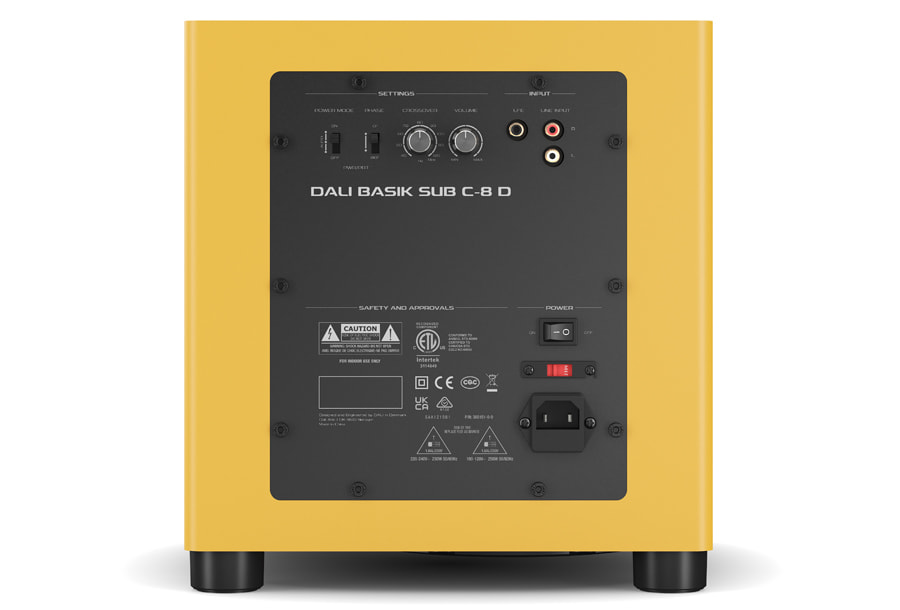 The BASIK SUB rear panel, badged DALI BASIK SUB C-8 D
The badge in the middle of the amplifier plate reads DALI BASIK SUB C-8 D. The controls above it are the same four the SUB C-8 D has always had: power mode, phase, crossover and volume, with LFE and stereo line inputs to their right.
So this is not a rebadge that DALI is trying to sneak past anyone. It is a model being moved into the new BASIK range, given the colours that range uses, and repriced. That is a normal thing for a loudspeaker company to do. It is just not what "DALI introduces new subwoofer" suggests.
The 40Hz in the coverage is the wrong number
This is the part that would actually mislead a buyer, and it is worth being precise about.
Several write-ups say the BASIK SUB reaches down to 40Hz. One of the spec tables going around lists no frequency response row at all, and its summary paragraph reports 40Hz as the low frequency limit.
40Hz is the bottom of the adjustable crossover. It is the lowest point you can set the handover to your main speakers. It says nothing about how deep the subwoofer plays, and DALI lists it in a row of its own labelled crossover.
DALI's published frequency figure is 33Hz to 120Hz through the line inputs and 33Hz to 200Hz through LFE, both at +/-3dB. That is the same figure DALI has published for the SUB C-8 D for years, and it is on DALI's own product page today.
The gap between those two numbers is the difference between a subwoofer near the bottom of its price bracket and one in the middle of it.
Where 33Hz actually puts it
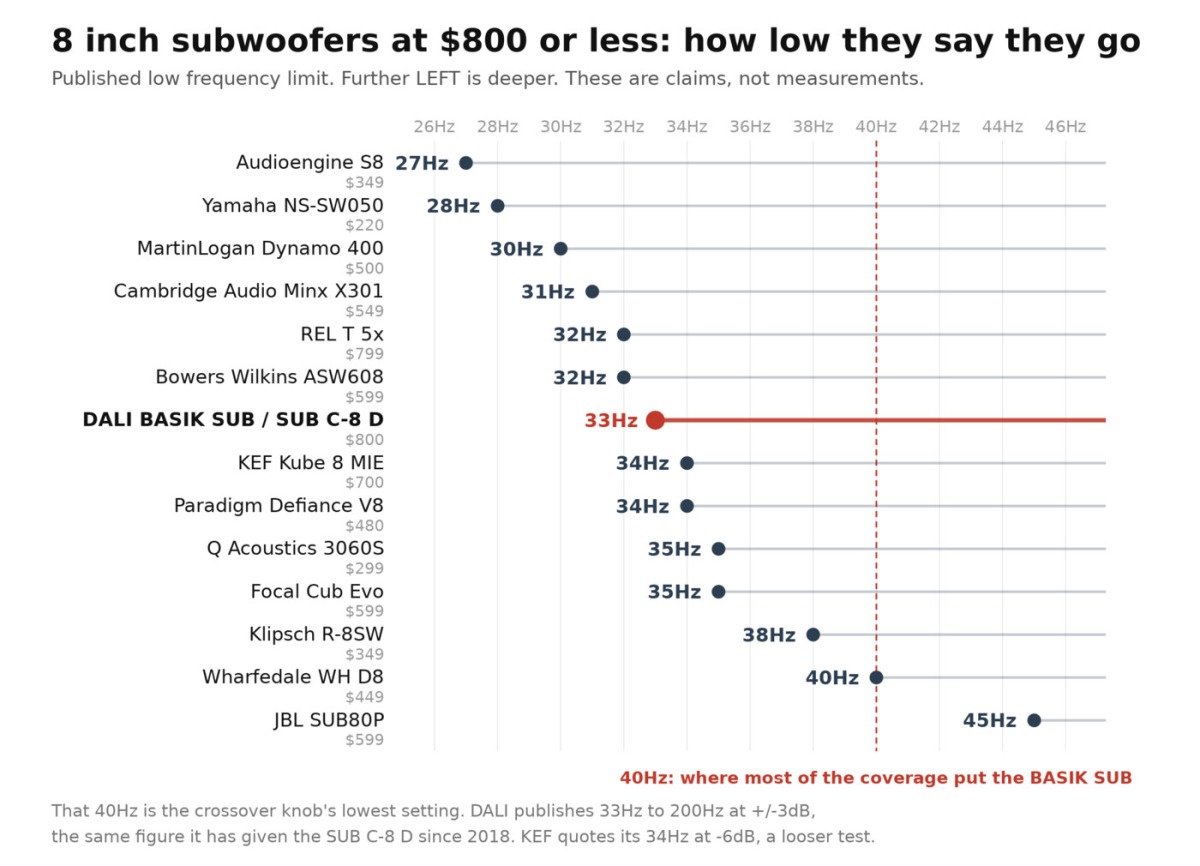 8 inch subwoofers at 800 dollars or less, by published low frequency limit
We hold 116 subwoofers at 800 dollars or less that publish a low frequency figure. At 33Hz, 77 of them go deeper, one matches and 38 do not reach as low. Middle of the pack.
Had 40Hz been the real number, 107 of those 116 would have gone deeper. Bottom of the pack. Same subwoofer, two very different impressions, and only one of them is what DALI actually claims.
Narrowing it to the direct comparison, we list 37 subwoofers with an 8 inch driver at 800 dollars or less. 15 of them publish a deeper figure than 33Hz.
The two rivals the coverage names, checked
The write-ups put the BASIK SUB against two subwoofers we hold, and both comparisons deserve a second look.
The REL T 5x is 799 dollars, also an 8 inch down-firing driver, and publishes 32Hz. So it is one dollar cheaper and one hertz deeper. That comparison holds up, and REL's music-first reputation is a real reason to consider it.
The KEF Kube 8 MIE is the one to be careful with. It was described as offering deeper published bass extension for less money. KEF publishes 34Hz, which is not deeper than 33Hz, and KEF's own US price today is 699.99 dollars, not the 599 that has been circulating.
There is a second wrinkle, and it is the one people miss. KEF quotes that 34Hz at -6dB. DALI quotes its 33Hz at +/-3dB. Those are not the same test. A -6dB figure is always the flattering one, because you are allowing the output to fall twice as far before you stop counting. Held to the same standard the KEF uses, DALI's number would look better still.
| FEATURE and SPECS COMPARISON | |  |  |  |
| Model | DALI BASIK SUB | DALI Sub C-8 D | KEF Kube 8 MIE |
| Driver | 8" Paper, long stroke | 8" Paper, long stroke | 8" Polypropylene |
| Enclosure | Ported | Ported | Sealed |
| Firing Direction | Down | Down | - |
| Amplifier Power (RMS) | 170 watts | 170 watts | 300 watts |
| Amplifier Power (Peak) | 220 watts | 220 watts | - |
| Amplifier Class | Class D | Class D | Class D |
| Frequency Response | 33-200 Hz | 33-200 Hz | 34-140 Hz |
| Low Pass Crossover | 40 - 120 Hz | 40 - 120 Hz | 40-140 Hz |
| Phase | Yes | Yes | Yes |
| Room Correction | - | - | Yes |
| Line Level Inputs | Stereo RCA/LFE | Stereo RCA/LFE | Stereo RCA/LFE |
| Speaker Level Inputs | - | - | Yes |
| Speaker Level Outputs | - | - | No |
| Wireless | - | - | Optional |
| Height | 319.0mm | 335.0mm | 293.0mm |
| Width | 295.0mm | 295.0mm | 293.0mm |
| Depth | 310.0mm | 310.0mm | 310.0mm |
| Weight | 9.75kg | - | 9.40kg |
| MSRP | 800 USD | 900 USD | 700 USD |
| Check Current Price | Amazon | Amazon | Amazon |
Read the first two columns across. Driver, enclosure, firing direction, RMS power, peak power, amplifier class and frequency response are the same line twice. The KEF is in the third column because the coverage kept putting it there, and it is a sealed design against two ported ones, which is a real difference worth knowing about.
Our comparison page for the pair reaches the same conclusion without any help from us. Its verdict block judges bass depth, amplifier power, driver area and enclosure as evenly matched, and finds exactly one difference: the BASIK SUB costs 800 dollars against 900, about 11 percent less.
DALI BASIK SUB Powered Subwoofer Speaker Key Specs
- 1 x 8" Paper, long stroke Woofer
- 33-200 Hz Frequency Response
- 170-watt RMS ( 220-watt Peak) Class D Type Integrated Amplifier
- 40 - 120Hz Low Pass Filter
- Stereo RCA/LFE Inputs
- Weight:21.50 lbs / 9.75 kg
- Dimensions (H x W x D): 12.56" x 11.61" x 12.2" / 319.0 x 295.0 x 310.0mm
- Read the Review
The useful thing here is not that DALI reused a good subwoofer. It is that the number most of the coverage printed was taken from the wrong row of the spec sheet, and it made a mid-pack subwoofer look like a poor one. Always check which row a frequency figure came from, and at what tolerance.
What this means if you were going to buy one
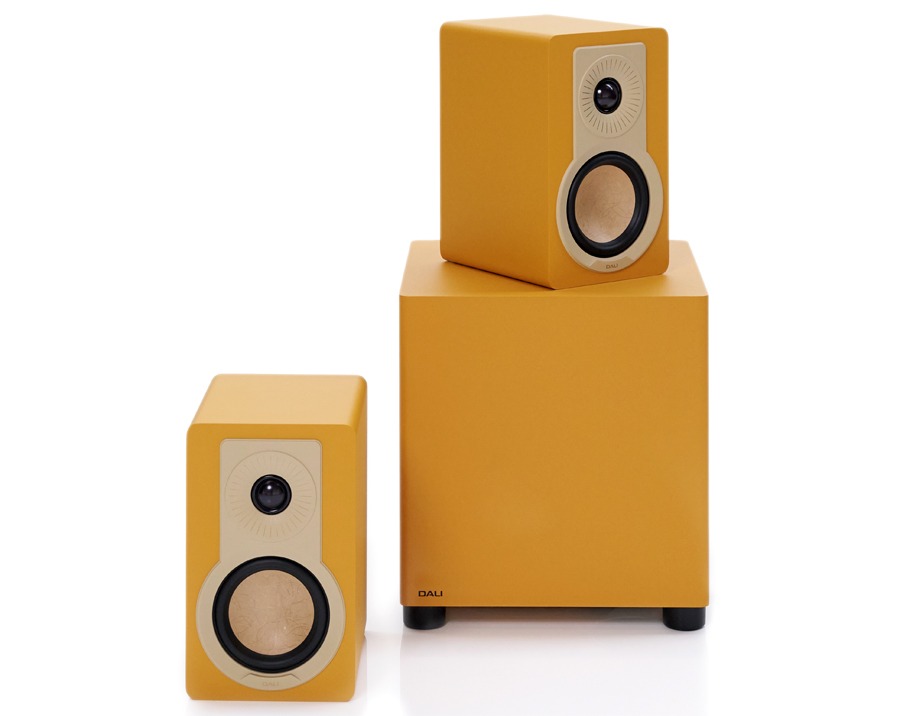 The BASIK SUB is pitched as a partner for the DALI KUPID bookshelf speaker
If you already own a SUB C-8 D, nothing here changes anything. You have the same subwoofer, and October's launch does not obsolete it.
If you were about to buy a SUB C-8 D at 900 dollars, wait for October and buy the BASIK SUB instead. Identical performance, 100 dollars less, and more finishes.
If you own the KUPID or the SONIK 1, the colour matching is a genuine reason to prefer it over a rival, and that is a perfectly good reason to buy a subwoofer. Nobody has to pretend it is an engineering argument.
The honest parts
Four things this article cannot tell you.
Nothing here is measured. Every figure is a manufacturer specification, from DALI or from press coverage of DALI's press release. A subwoofer's published low frequency limit and its useful in-room output are different things.
DALI has not published a BASIK SUB product page yet, so the specifications come from the press release as carried by the trade press. The SUB C-8 D figures come from DALI's own live product page.
The BASIK SUB row is built from the announcement, because the subwoofer does not ship until October. Its specifications are DALI's published ones and nothing in it has been confirmed by a retailer or a review yet. We have dated it to October 2026 for that reason.
We corrected our own KEF Kube 8 MIE price while writing this. It said 599 dollars and KEF's US store says 699.99. That is exactly the kind of error this article is complaining about, so it seemed fair to say we made one too.
Questions answered
Is the DALI BASIK SUB actually a new subwoofer?
It is a new model name and a new set of finishes on an existing design. Every published specification matches the DALI SUB C-8 D, which DALI has sold since 2018, and the badge on the new unit's rear panel reads BASIK SUB C-8 D.
How deep does the BASIK SUB go?
DALI publishes 33Hz to 120Hz through the line inputs and 33Hz to 200Hz through LFE, both at +/-3dB. The 40Hz figure that appears in several write-ups is the lowest setting of the adjustable crossover, not the bass extension.
Should I buy the BASIK SUB or the SUB C-8 D?
The BASIK SUB, if you can wait until October. It is 800 dollars against 900 for the same driver, the same 170 watt Class D amplifier and the same 33Hz figure, and it comes in five finishes rather than two.
Is the KEF Kube 8 MIE deeper than the BASIK SUB?
No, on the published figures. KEF quotes 34Hz and DALI quotes 33Hz. KEF also quotes its number at -6dB while DALI quotes at +/-3dB, and the looser tolerance flatters the figure, so the gap is wider than one hertz. The KEF is 699.99 dollars on KEF's US store.
Is the BASIK SUB in your comparison database?
Yes. The DALI BASIK SUB is listed, and you can put it against anything else we hold. The head to head against the SUB C-8 D is the quickest way to see the point of this article. Its specifications come from DALI's announcement, since the subwoofer does not ship until October.
Does a rebadge with three new colours and 100 dollars off count as a new product to you, or would you rather makers just said "same sub, new paint, lower price"?