I added the Cayin Jazz 70 to the database this week. It is a 1,399 dollar valve integrated amplifier with four EL34 output tubes in push-pull, and a toggle on the top plate that switches it between ultralinear and triode operation. Ultralinear gives you 35 watts a channel. Triode gives you 17.
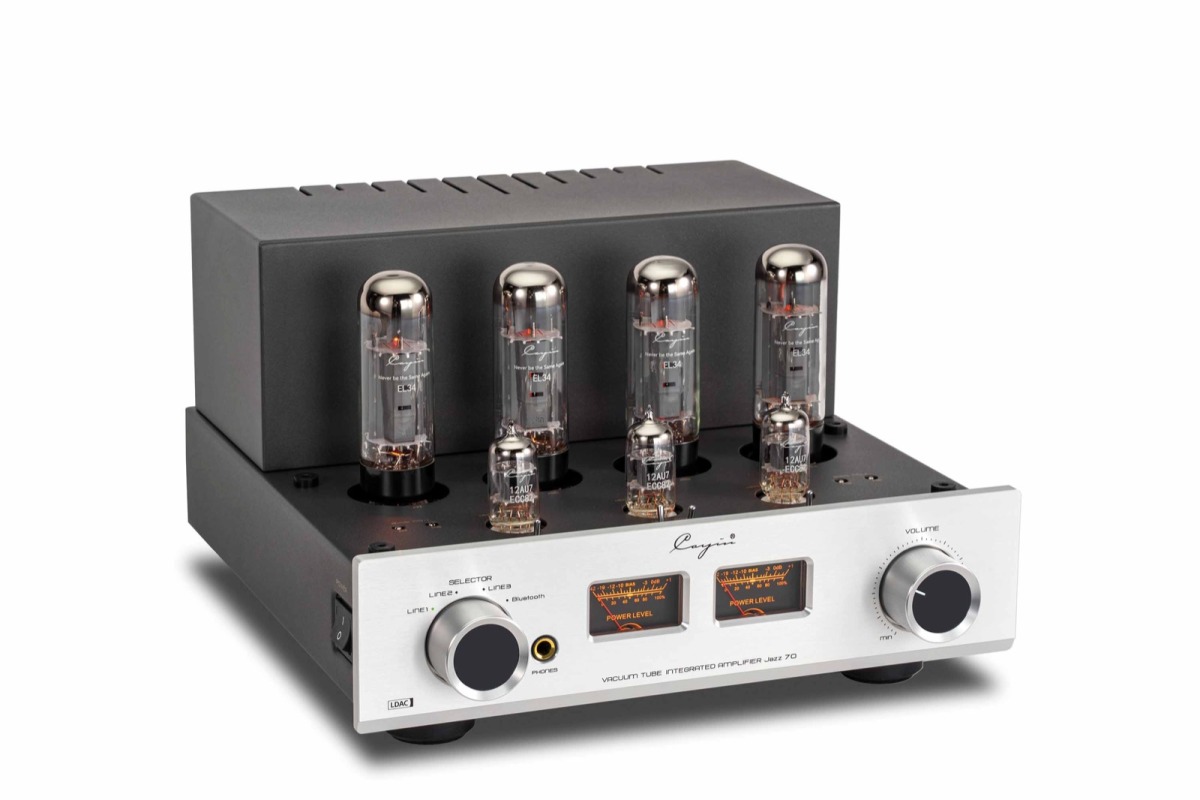 The Cayin Jazz 70, an EL34 push-pull valve integrated amplifier with a switchable triode and ultralinear mode
That toggle is the interesting part, and not because of how the two modes sound, which I have no way of checking. It is interesting because of what it used to cost.
Quick facts
- The Jazz 70 is 1,399 dollars in the US and 1,598 euro, in black or silver, in stock now.
- 35 watts a channel in ultralinear, 17 in triode, four EL34s in Class AB1 push-pull, with 4 and 8 ohm speaker outputs.
- It is the first valve amplifier we list with Bluetooth, and the first with a built-in DAC. All fourteen others have neither.
- Of the six valve amps we hold with a triode switch, the next cheapest is 3,495 dollars. That is a 2,096 dollar gap.
- Flipping it to triode rules out 255 of the speakers we list that ultralinear can drive. That is the real cost of the switch.
What it is
Seven valves. Four EL34s doing the output, three 12AU7s in front of them running the preamplifier stage. Push-pull, which means two output valves share the waveform per channel, and Class AB1.
The top plate carries four bias trim pots, one per output valve, and a set of toggles that turn the left VU meter into a bias meter so you can set each one. The same pair of meters shows power level the rest of the time. The mode switch sits up there with them.
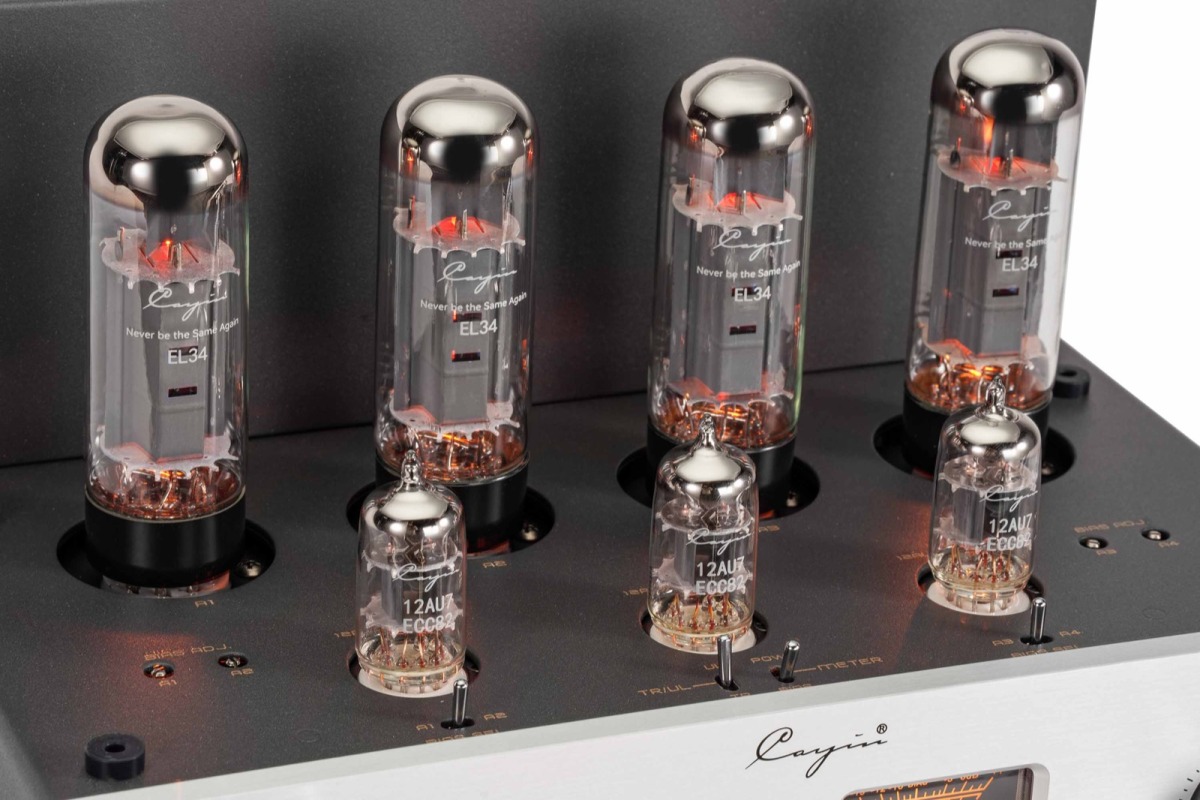 Four EL34 output valves and three 12AU7 drivers, with the bias trim pots and the triode and ultralinear toggle on the top plate
Round the back there are 4 ohm and 8 ohm speaker outputs, which is how a valve amplifier deals with different loads: you pick the tap that suits your speakers rather than expecting the amplifier to cope. That matters for the numbers later on, because it means the 35 watts is available to a 4 ohm speaker as well as an 8 ohm one.
Three RCA line inputs, a 6.35mm headphone socket rated for 16 to 300 ohm loads, and a remote. No phono stage, no USB, no network. Bluetooth is the only digital way in.
Cayin Jazz 70 Key Specs
- 35W into 8 ohms, 35W into 4 ohms (Class A/B)
- Integrated Amplifier
- 0.2% at 1 W / 1 kHz, under 5% at rated power THD
- Signal to Noise Ratio: 100dB
- Frequency Bandwidth: 8 Hz-60 kHzHz
- Built-in DAC: ESS ES9018K2M
- Headphone Output
- Bluetooth
- Weight: 15.60 kg
- Dimensions (H x W x D): 190.0 x 300.0 x 338.0 mm
- Read the Review
Two firsts, and they are both about the boring bits
The Jazz 70 has Bluetooth 5.1 on a Qualcomm QCC5125 chipset, feeding an ESS ES9018K2M DAC, and it takes LDAC, aptX HD, aptX Low Latency, aptX, AAC, MP3 and SBC.
Every other valve amplifier in our database reads No for Bluetooth and No for a built-in DAC. All fourteen of them. The closest thing to an exception is the Layer Gen-300B, where Bluetooth is a paid add-on module, so we record it as optional rather than yes.
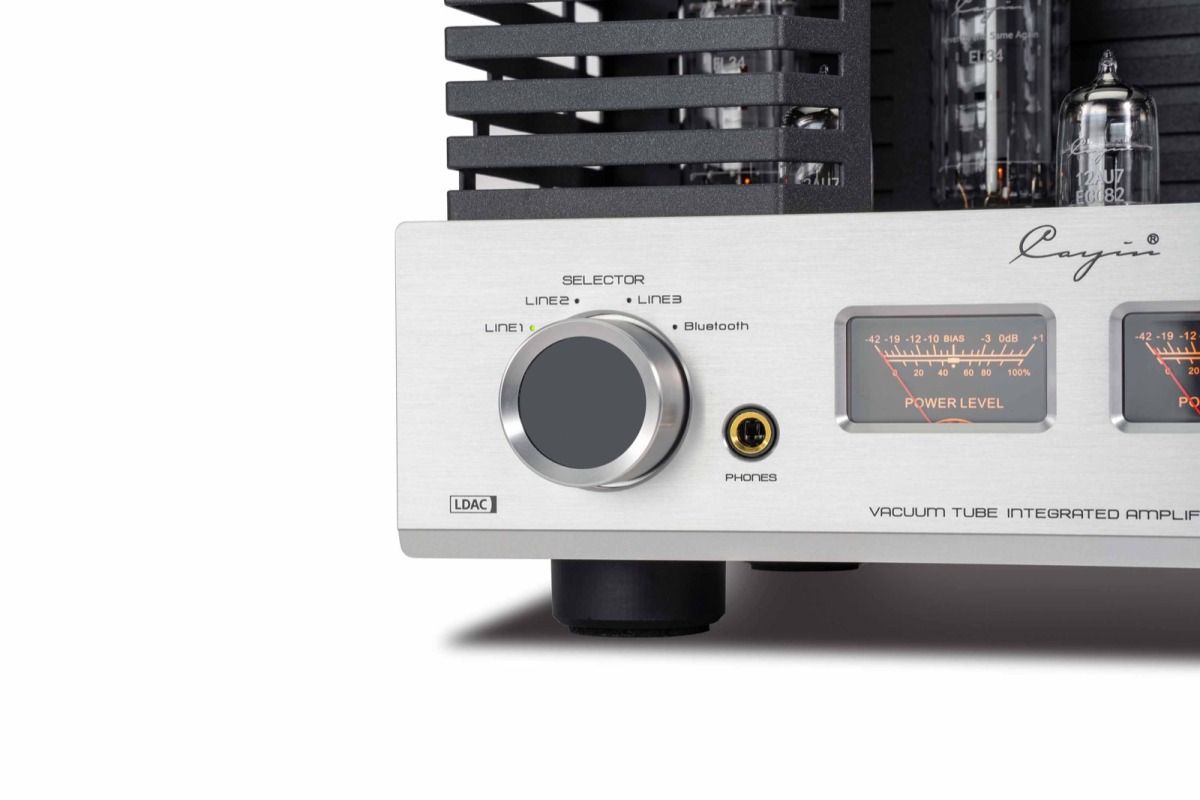 The selector runs LINE 1, LINE 2, LINE 3 and Bluetooth, with the LDAC badge on the front panel
That is a category that has been slow to move. The PrimaLuna EVO 100, EVO 200, EVO 300 and EVO 400 are all analogue-only boxes with RCA inputs and nothing else, and they run from 3,295 to 6,495 dollars. The Rogue Audio Cronus Magnum III and Stereo 100 are the same. The Audio Research I/70 is 9,950 dollars and has no wireless input either.
Cayin is also new to us as a brand. It becomes the seventh valve amplifier brand in the database, after PrimaLuna, which alone accounts for eight of the fifteen rows, Rogue Audio with two, and FiiO, Audio Research, Layer and McIntosh with one each.
The triode switch, and what it used to cost
Six of the fifteen valve amplifiers we hold can be switched between ultralinear and triode. Here they are, cheapest first.
The Jazz 70 is 60 percent cheaper than the next one on that list, and the five above it are 8 and 10 valve designs. It is not a like-for-like on power, and the Rogue in particular gives you nearly three times as many watts. But if the switch itself is what you wanted, the entry price for it has just come down by 2,096 dollars.
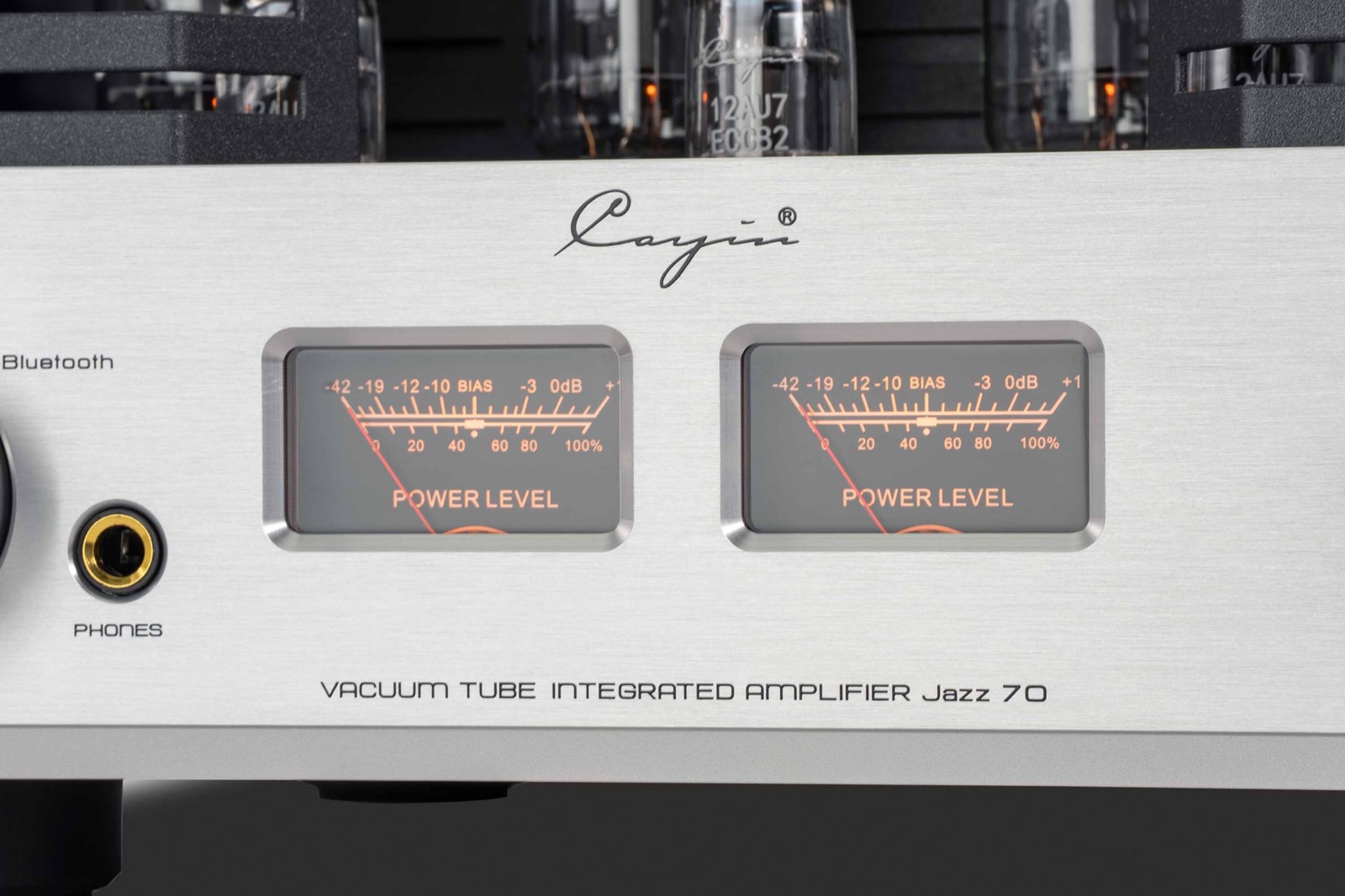 The meters read power level most of the time, and switch to reading bias current when you set the four output valves
| FEATURE and SPECS COMPARISON | |  |  |
| Model | Cayin Jazz 70 | Rogue Audio Cronus Magnum III |
| Type | Integrated Amplifier | Integrated Amplifier |
| Amplifier Class | Class A/B | Class A/B |
| Power into 8 ohms | 35 watts | 100 watts |
| Power into 4 ohms | 35 watts | - |
| THD | 0.2% at 1 W / 1 kHz, under 5% at rated power | - |
| Signal to Noise Ratio | 100 | - |
| Frequency Bandwidth | 8 Hz-60 kHz | - |
| Built-in DAC | | |
| DAC | ESS ES9018K2M | - |
| Analog Inputs | 3 | 4 |
| Phono Input | | |
| Phono Type | - | MM |
| HDMI Input | No | No |
| XLR Input | No | No |
| Headphone Output | Yes | Yes |
| Bluetooth | Yes | No |
| Wi-Fi | No | No |
| Handheld Remote | | |
| Height | 190.0mm | - |
| Width | 300.0mm | - |
| Depth | 338.0mm | - |
| Weight | 15.60kg | 24.95kg |
| MSRP | 1399 USD | 3495 USD |
| Check Current Price | Amazon, B&H Photo | Amazon, B&H Photo |
So what does triode mode actually cost you?
This is the part I could not find answered anywhere, and it is the sort of question our data can answer properly.
Our amp and speaker matcher works out whether a given amplifier can drive a given speaker. I ran its engine over the whole catalogue twice, once with the Jazz 70 at 35 watts and once at 17, and counted.
The settings are the tool's own defaults: 95 dB peaks at the listening seat, three metres away, a stereo pair, and two decibels knocked off every published sensitivity figure because manufacturers are optimistic. The tool also knows this amplifier has 4 and 8 ohm taps, so a 4 ohm speaker gets the full rating rather than being penalised for it.
Across the 771 passive bookshelf and floor-standing speakers where we hold both a sensitivity figure and an impedance:
| Cayin Jazz 70 | Speakers with proper headroom | Brands |
|---|
| Ultralinear, 35 watts | 476 of 771 | 40 |
| Triode, 17 watts | 221 of 771 | 27 |
So the split is 221 speakers that work in either mode, 255 that need ultralinear, and 295 that this amplifier should not be asked to drive at all.
Flipping to triode throws away 255 speakers, which is more than half of what the amplifier could drive a moment earlier. If you buy it for the triode mode, you are really buying a 17 watt amplifier and should shop for speakers on that basis.
The 255 you lose are not exotic. They are ordinary, popular, mostly cheap boxes.
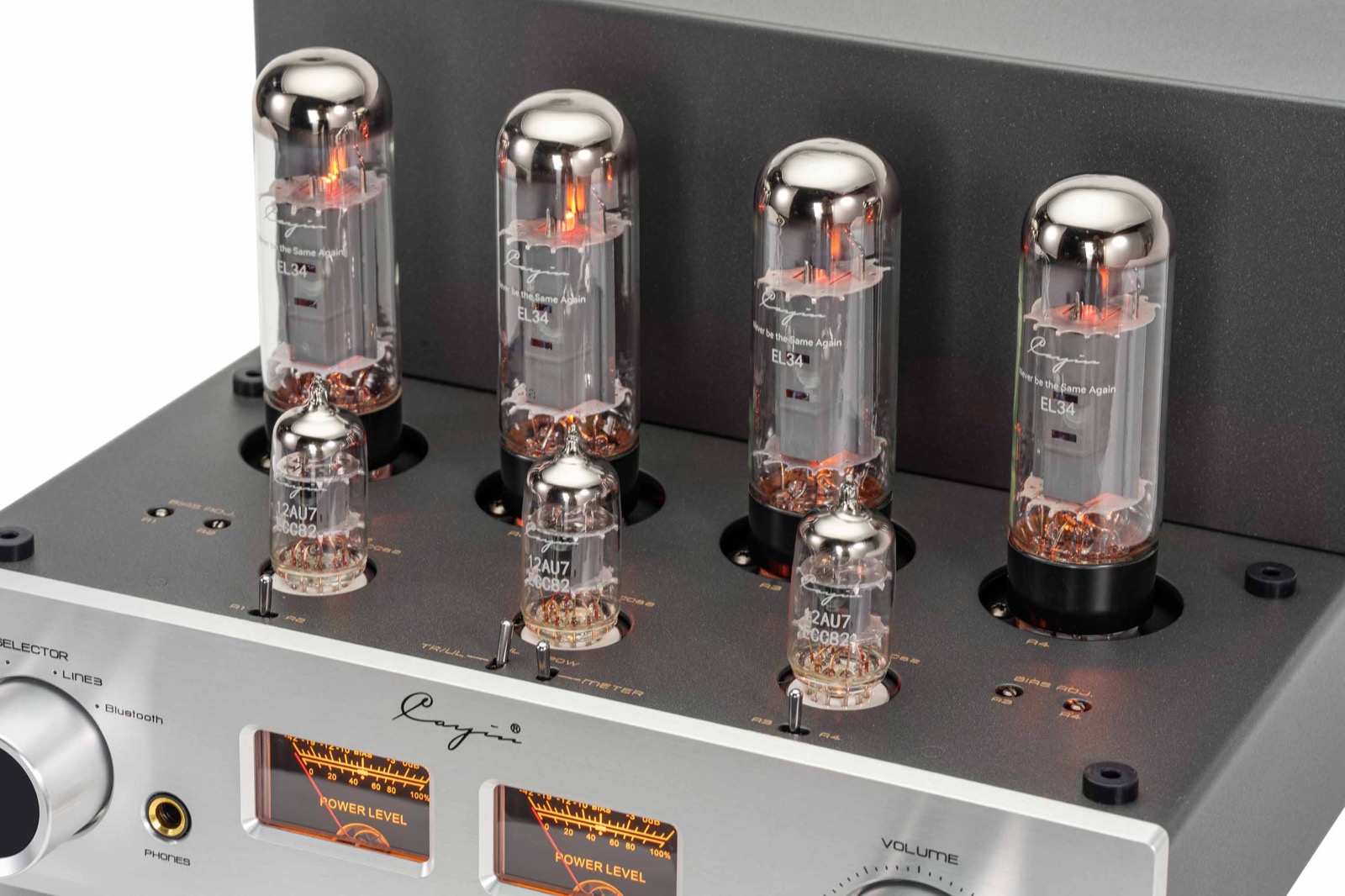 Four EL34s and three 12AU7s. In triode mode the four EL34s make 17 watts a channel instead of 35
And here is what survives the switch, cheapest first. Sensitivity is what decides it, not size or price.
Klipsch is 45 of the 221, which is the same pattern we found when we asked what ten watts could drive. Focal is 31 and Fyne Audio 30. If horns are not for you, the triode list gets short fast.
Seven hundred dollars for one watt
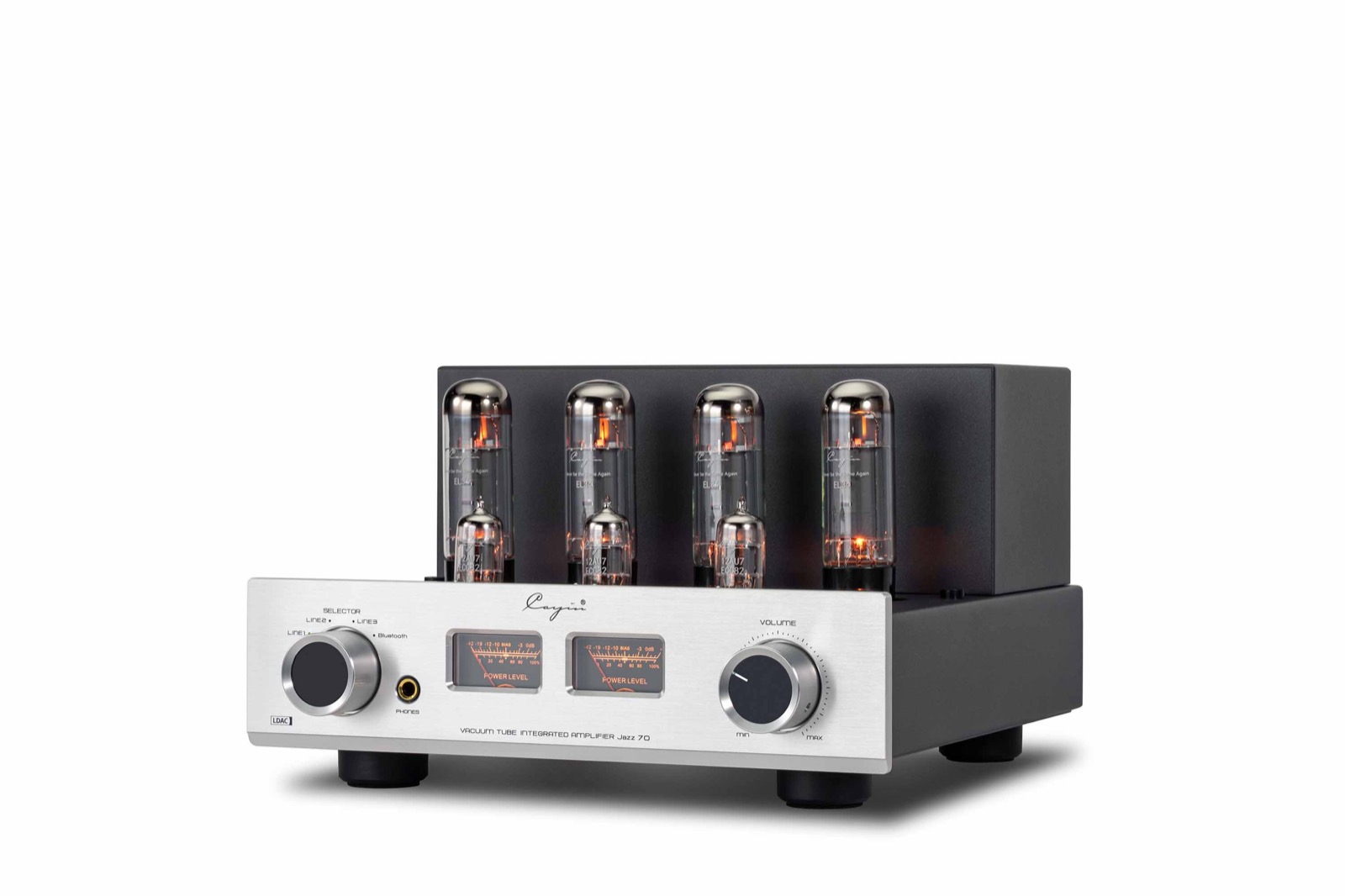 Seven valves on a 300mm wide chassis. The Jazz 80 above it carries eight
The Jazz 70 sits below the Jazz 80 in Cayin's range, and the Jazz 80 can be ordered with the same EL34 valves. That makes a clean comparison, and both prices below come from the same US dealer, so it is not two price lists being mixed.
| Jazz 70 | Jazz 80, EL34 |
|---|
| Price | 1,399 dollars | 2,099 dollars |
| Ultralinear | 35 watts | 36 watts |
| Triode | 17 watts | 18 watts |
| Valves | 7 | 8 |
| Bluetooth | 5.1, LDAC and aptX HD | LDAC |
Seven hundred dollars more buys you one watt a channel, an eighth valve, and a choke in the power supply. It also buys the option of KT88 valves instead, which takes the Jazz 80 to 40 watts for 2,299 dollars.
Put another way, the cheaper and newer model has the better specified Bluetooth. Cayin names the chipset and the DAC on the Jazz 70 and lists seven codecs. On the Jazz 80 it says LDAC and leaves it there.
Where it is hard to recommend
Four things, and the first is the one that should change how you read the power figure.
The 35 watts is a 5 percent distortion figure. Cayin publishes 0.2 percent distortion at 1 watt and under 5 percent at rated power. Five percent is a lot. It is normal for a valve amplifier to be specified this way and Cayin is being open about it rather than hiding it, but it means the honest comparison against a solid-state amplifier rated at 0.01 percent is not 35 watts against 35 watts. Treat the useful output as well under the number on the box.
Cayin's own English site does not list this amplifier. As I write, en.cayin.cn's newest Jazz entry is the Jazz 90. Every specification here comes from Cayin's German distributor, which publishes the full table, and from the US and Australian dealer listings, which agree with it. That is three independent sources saying the same thing, so I am confident in the numbers, but there is no manufacturer page in English to check them against.
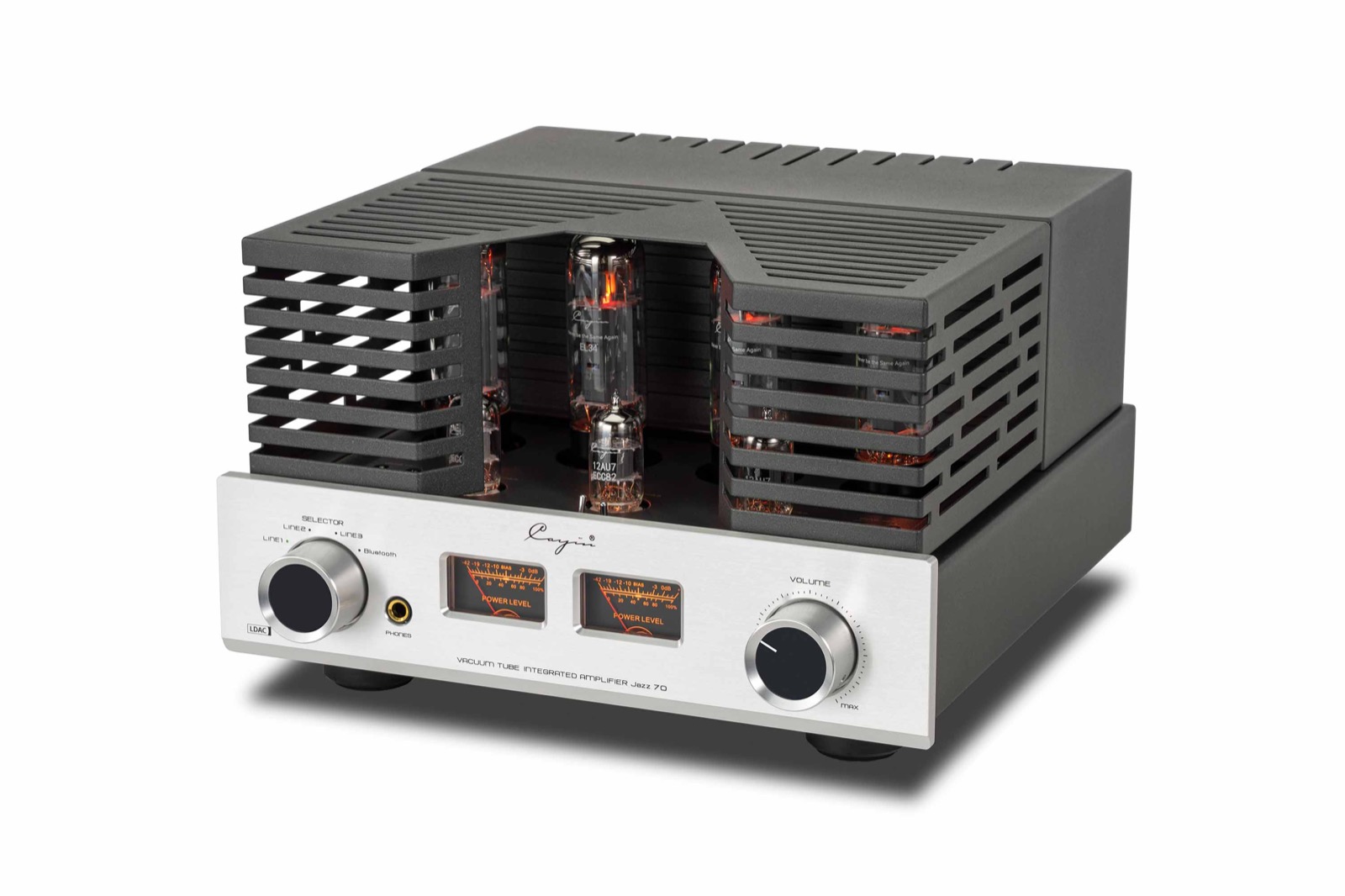 The removable metal cage is in the box. With it on you see one valve, which is the version that has to live in a room with children or cats
The specification table does not tie the power to a load. It gives 17 and 35 watts, and separately lists 4 ohm and 8 ohm speaker outputs, without saying which rating belongs to which. With a tapped output transformer that is ordinary and the rating applies at whichever tap you use, which is how our row stores it. It is still an assumption rather than a printed fact, and we passed on a 14,000 dollar amplifier a few days ago for a worse version of the same gap.
Bluetooth is the only digital input. There is no USB, no optical, no coaxial. The ES9018K2M inside it is reachable only over the air. If you own a streamer or a CD player, you are using one of the three analogue inputs and the DAC is doing nothing for you.
One more, on our own numbers. The matcher assumes published sensitivity is measured at 2.83 volts and knocks two decibels off it, because that is what most of the catalogue's figures are. If a maker publishes a true 1 watt at 1 metre figure instead, its speaker is easier to drive than the tables above suggest. The direction of that error is known and it is conservative.
Questions answered
What is the difference between triode and ultralinear?
They are two ways of wiring the same output valves. Ultralinear gives you more power and more grip. Triode gives you about half the power and a different distortion character, which is the reason people choose it. On the Jazz 70 that is 35 watts against 17. Nothing else about the amplifier changes.
Is 35 watts enough?
For 476 of the 771 stereo speakers we hold both a sensitivity figure and an impedance for, yes, with proper headroom at normal listening levels. In triode, that drops to 221. Sensitivity and impedance decide it, not the size of the speaker. Run your own shortlist through the amp and speaker matcher.
Which speakers should I look at with it?
If you plan to use triode, start with the high sensitivity brands. Klipsch is 45 of the 221 that survive the switch, Focal 31 and Fyne Audio 30. The Klipsch RP-600M at 459 dollars needs under two watts. If you will stay in ultralinear, the list opens up to 476 speakers across 40 brands and most ordinary bookshelf models are back on it.
How does it compare to the other cheap valve amplifiers you list?
The FiiO EA13 at 770 dollars is the only valve amp we hold that costs less, and it is a 28 watt power amplifier rather than an integrated, and it has no mode switch. The Layer Gen-300B at 1,499 is a 10 watt single-ended 300B, which is a different kind of amplifier for a much shorter list of speakers. After those two, the next valve integrated is 3,295 dollars.
Is it good value on paper?
At 1,399 dollars for 70 total watts it works out at 19.99 dollars a watt, which is third best of the fourteen valve amplifiers we hold that publish both a price and a power figure. Only the FiiO EA13 at 13.75 and the Rogue Cronus Magnum III at 17.48 beat it. Remember the 5 percent distortion caveat above before leaning on that too hard.
Can I use it as a headphone amplifier?
There is a 6.35mm socket on the front and Cayin says it suits loads from 16 to 300 ohms. It publishes no output power and no output impedance for it, so we cannot tell you how it will do with a demanding pair, and our row leaves those columns empty rather than guessing.
Can I get it in black?
Yes. Black and silver front panels, same price, both listed as in stock at the time of writing.
If you had 1,399 dollars and a pair of 90 dB speakers, would you buy the amplifier for the triode switch you could not really use, or is 35 ultralinear watts the whole point?