Klipsch has replaced the Reference Premiere range with a third generation. Nine models, on sale in October. We added all nine this week, so you can put them next to the Gen II speakers they replace.
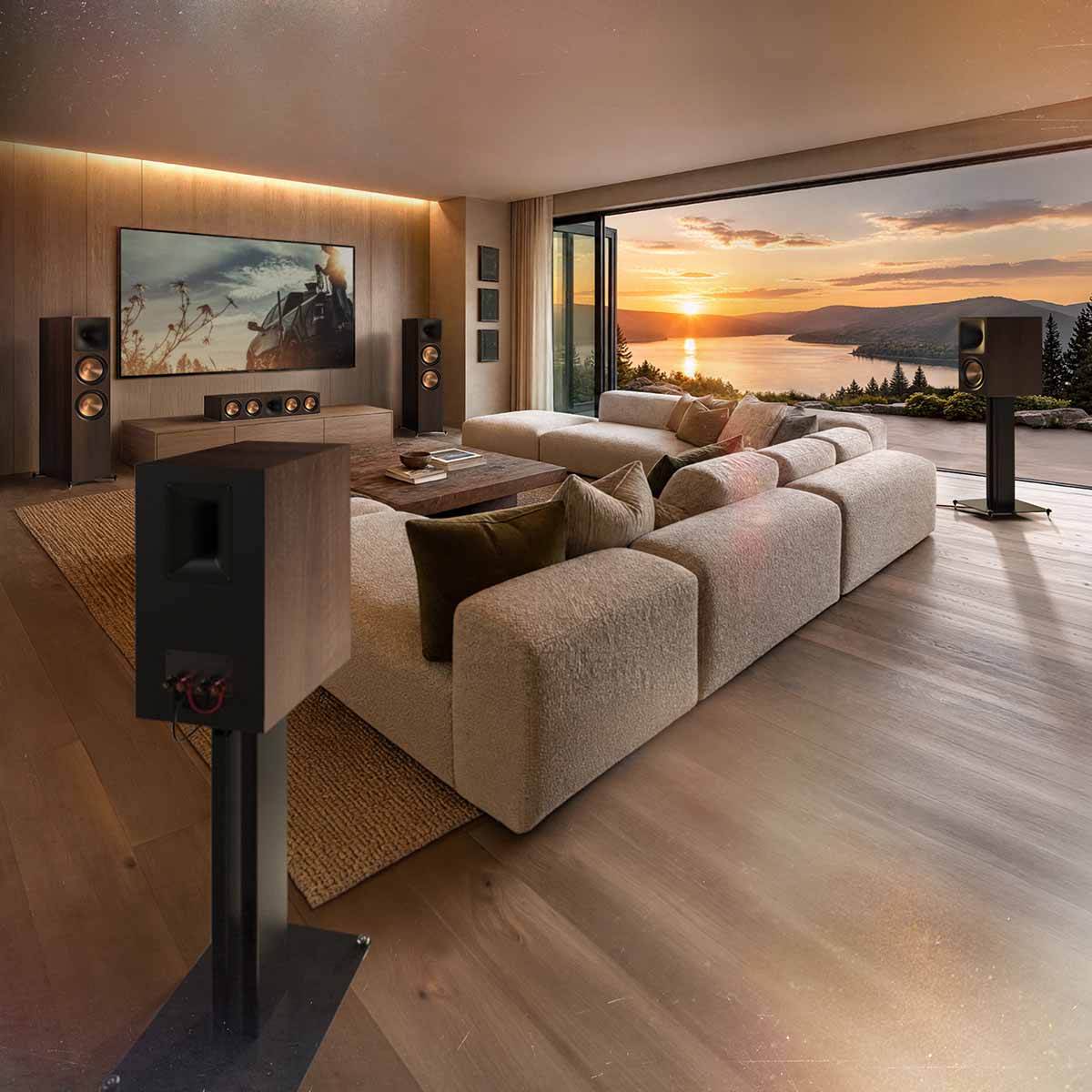 Klipsch Reference Premiere III home cinema system in walnut
Quick facts
- Nine models: RP-8263FA and RP-8203F and RP-6203F towers, RP-6103M and RP-5103M monitors, RP-5203C and RP-5403C centres, RP-5203S surround, RP-5103SA height module.
- 449 to 1,300 dollars, per unit for towers and centres, per pair for monitors and surrounds.
- Five of seven comparable models got cheaper, by 7 to 13 percent.
- The published specs barely moved. Same sensitivity, same power handling, same crossover points as Gen II.
- New flush-mounted horn, Faraday rings on the woofers. And a centre channel price that we think is a typo.
The numbers hardly changed at all
This is the part that surprised us. We compared each new model against the Gen II speaker it replaces, spec by spec.
Sensitivity is identical on every single pair. The RP-8203F is 98 dB, same as the RP-8000F II. The RP-6103M is 94.5 dB, same as the RP-600M II. All the way down the range.
Power handling is identical too. So are the crossover points: 1630 Hz on the big towers, 1500 Hz on the 6.5 inch monitor, 1950 Hz on the four-woofer centre. Not close. The same numbers.
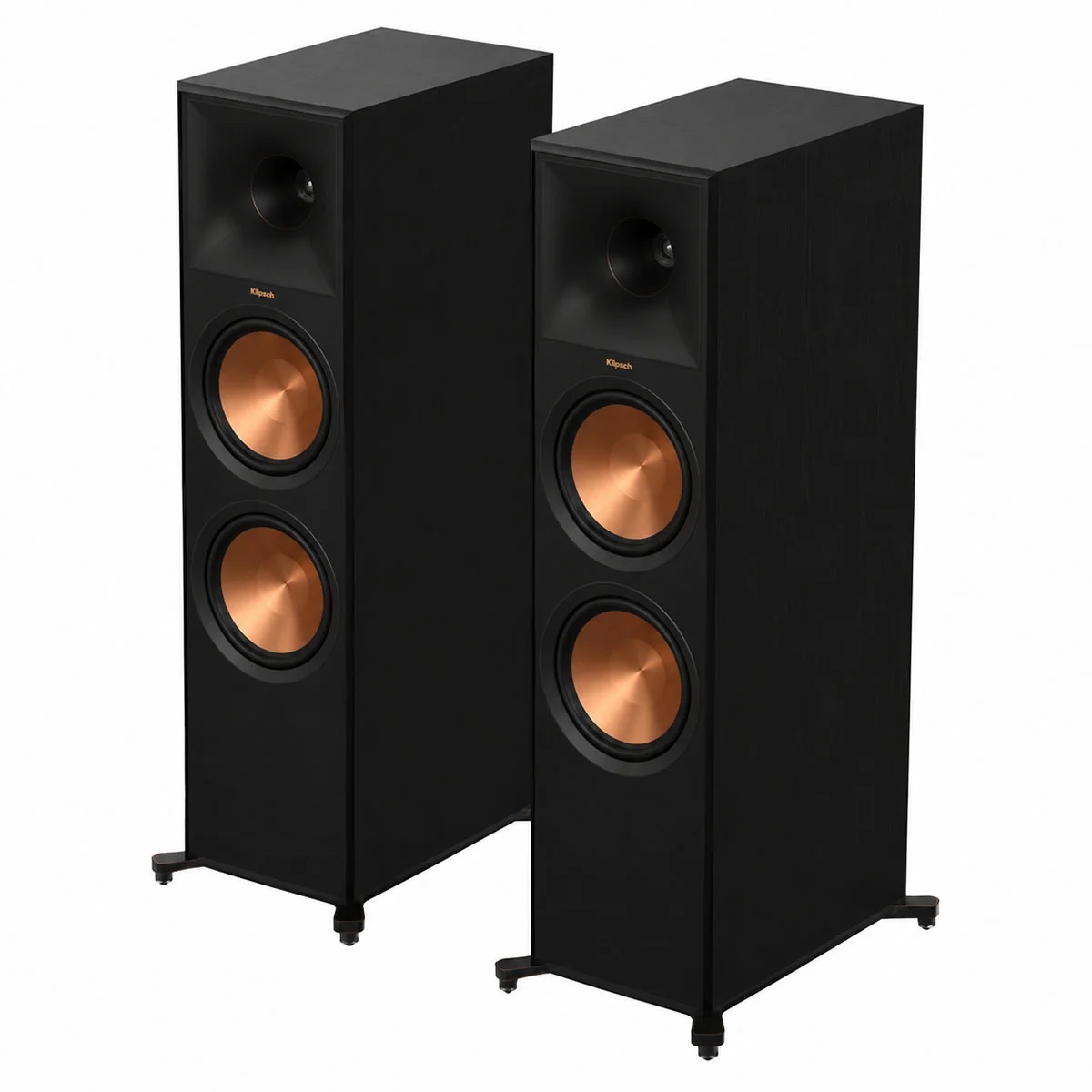 Klipsch RP-8203F floorstanding speaker
Frequency response moved on exactly two models, and one of them went the wrong way. Our row for the RP-8000F II says 32 Hz at the bottom. Klipsch publish the RP-8203F that replaces it at 35 Hz. That is three hertz of bass extension given up. The other change is the small centre, which goes from 60 Hz to 56 Hz.
The cabinets are within a few millimetres of the old ones, with one exception: both of the plain towers got deeper. The RP-8203F is 16 mm deeper than the RP-8000F II and the RP-6203F is 15 mm deeper than the RP-6000F II. Worth knowing if you measured a shelf.
So what did change? The tweeter now sits in a flush-mounted horn instead of the hybrid arrangement Gen II used, the woofers get Faraday rings, and the cabinets have a one-piece baffle and copper trim. Those are real changes. They are also the kind you cannot check against a spec sheet, which is exactly why we are not going to tell you they sound better.
The prices went down, which is the actual news
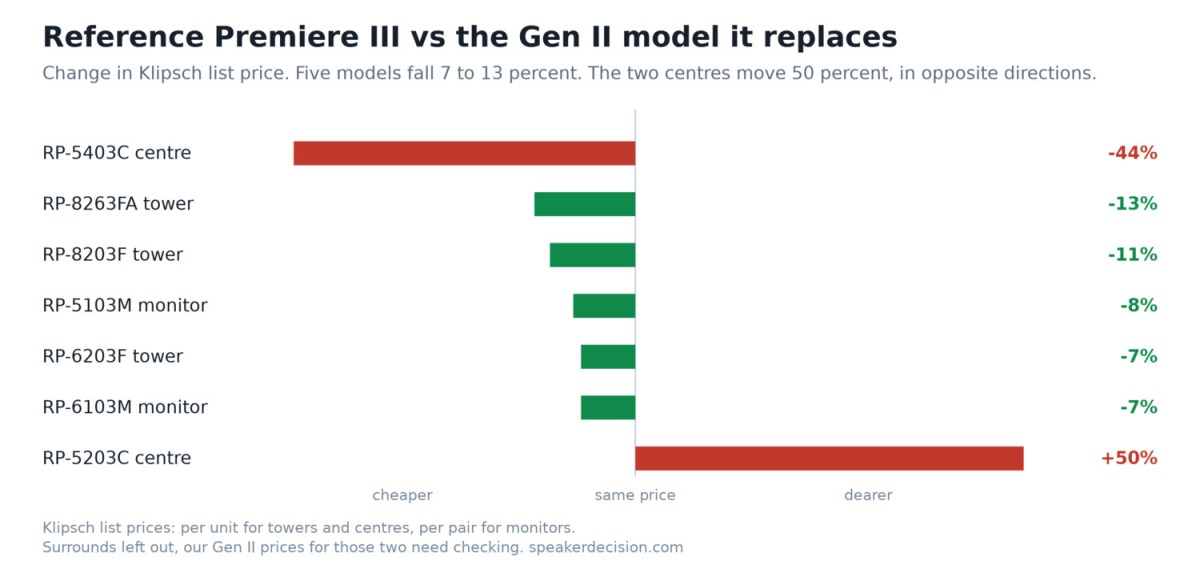 Reference Premiere III list price against the Gen II model it replaces
Five of the seven models we can compare cleanly cost less than the speaker they replace:
A brand cutting list prices on a new generation is unusual. Klipsch went the other way only a few months ago on their powered range, where The Fives, The Sevens and The Nines went up 44, 54 and 60 percent when the II versions arrived.
We left the two surround models out of that table on purpose. Our stored Gen II prices for the RP-502S II and the RP-500SA II do not match what Klipsch published at their launch, so any percentage we printed for those two would be measuring our own data rather than Klipsch's decision. We would rather say that than quietly include them.
The two centre channels are priced backwards
Here is the odd one, and it is odd enough that we think somebody made a mistake.
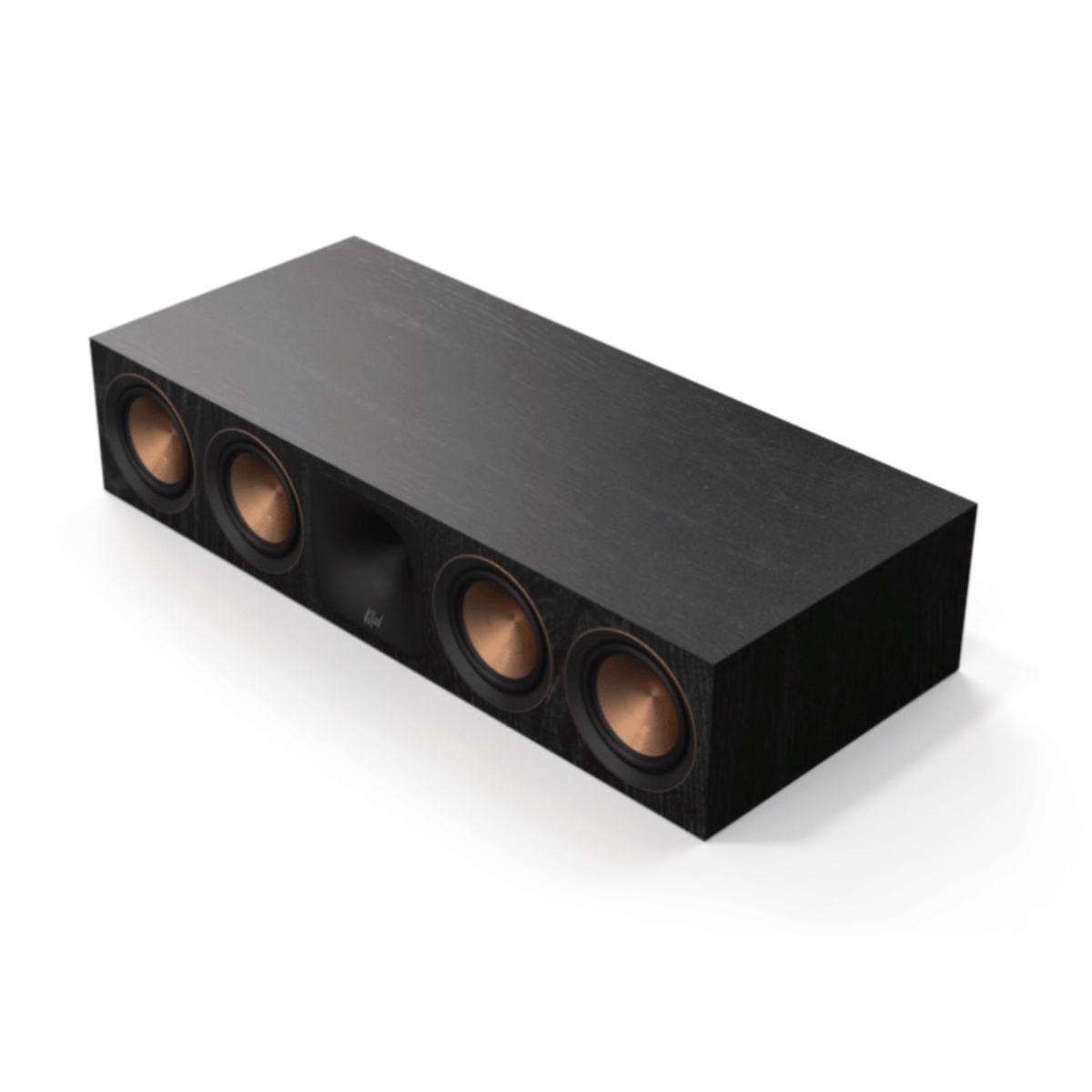 Klipsch RP-5403C centre channel with four 5.25 inch woofers
The RP-5403C is the big centre: four 5.25 inch woofers, 81 cm wide, 96 dB, 150 watts. Klipsch price it at 449 dollars.
The RP-5203C is the small one: two woofers, 49 cm wide, 94 dB, 100 watts. Klipsch price it at 749.99 dollars.
The bigger, louder, more powerful speaker costs 300 dollars less than the smaller one. In Gen II it was the other way round, and by a similar gap: the four-woofer RP-504C II was $799 and the two-woofer RP-500C II was $499.
Swap the two Gen III prices and everything lines up. The RP-5203C at $449 would be 10 percent below its predecessor. The RP-5403C at $750 would be 6 percent below its predecessor. Both would land inside the same 6 to 13 percent band as every other model in the range. As published, two speakers move 50 percent in opposite directions and nothing else does.
We have entered the prices as Klipsch published them, because three sources say the same thing: the press release, and two dealers. But we think one of them is a label that ended up on the wrong row, and if Klipsch corrects it in October we will swap them.
If the 449 is real, it is a lot of speaker. Of the 35 centre channels we hold that are 76 cm wide or more and carry a price, only one is cheaper.
What we do not have yet
Two gaps worth being straight about.
No weights. Every retailer spec sheet prints "TBD". We left those fields empty rather than copying the Gen II figures across, because the towers changed depth and a guessed weight is worse than a blank.
No Klipsch product pages. Klipsch have announced the range and published prices, but the product pages do not exist yet, the Reference Premiere landing page still shows Gen II, and the support site has only the 2022 spec sheets. So every specification here comes from dealer spec tables, cross-checked between two of them. They agreed on every figure, and we will re-check the lot when Klipsch publish.
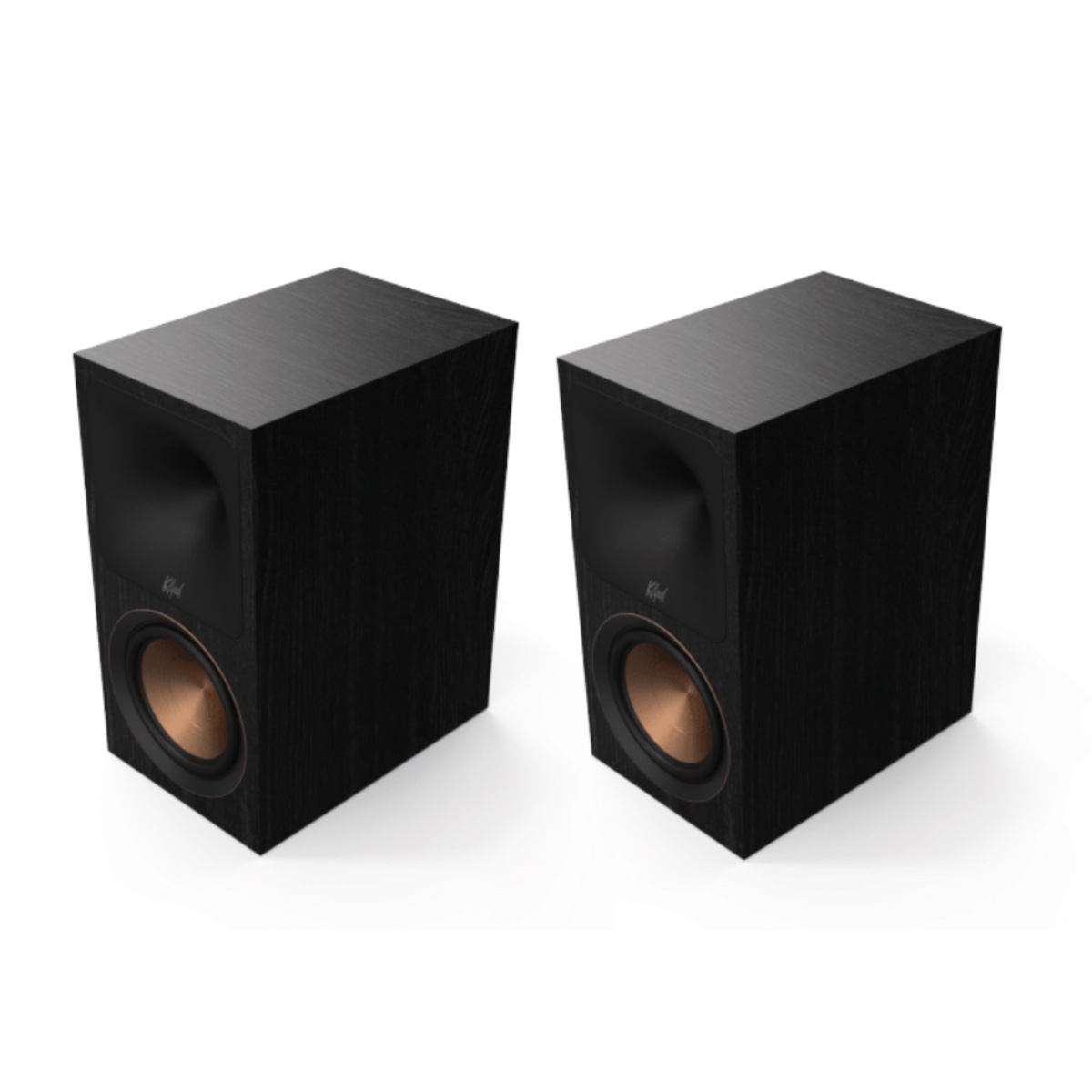 Klipsch RP-6103M, the 6.5 inch monitor that replaces the RP-600M II at 700 dollars a pair
The RP-5103SA height module also has no frequency response, no sensitivity and no crossover point. Klipsch print "conforms to Dolby Atmos specifications" in all three slots, as they did for the Gen II version. Those fields are empty on our page rather than filled with a phrase.
Where this sits in the Klipsch range
We now list 89 Klipsch speakers and 17 Klipsch subwoofers. Forty-one of the speakers are Reference Premiere, across all three generations, which makes it comfortably the brand's biggest line with us.
| FEATURE and SPECS COMPARISON | |  |  |  |
| Model | Klipsch Reference Premiere RP-8203F | Klipsch Reference Premiere RP-6103M | Klipsch Reference Premiere RP-5403C |
| Speaker Type | Passive Floor-standing | Passive Bookshelf | Passive Center Channel |
| Enclosure Type | Ported | Ported | Ported |
| Driver Setup | 2-way | 2-way | 2-way |
| Tweeter | 1" Tractrix Horn Tweeter | 1" Tractrix Horn Tweeter | 1" Tractrix Horn Tweeter |
| Woofer | 2 x 8" Cerametallic Woofer | 1 x 6.5" Cerametallic Woofer | 4 x 5.25" Cerametallic Woofer |
| Frequency Range / Low | 35Hz | 44Hz | 50Hz |
| Frequency Range / High | 25kHz | 25kHz | 25kHz |
| Impedance Nominal | 8Ω | 8Ω | 8Ω |
| Impedance Minimum | 3.46Ω | 3.4Ω | 3.4Ω |
| Sensitivity | 98dB | 94dB | 96dB |
| Max Power (RMS) | 150w | 100w | 150w |
| Crossover Frequency | 1630 Hz | 1500 Hz | 1950 Hz |
| Port Position | rear | rear | rear |
| Available Colors | Ebony, Walnut | Ebony, Walnut | Ebony, Walnut |
| Finish | MDF (internally braced) | MDF (internally braced) | MDF (internally braced) |
| Grille | Yes | Yes | Yes |
| Height | 1095.0mm | 400.0mm | 174.0mm |
| Width | 275.0mm | 202.0mm | 814.0mm |
| Depth | 463.0mm | 330.0mm | 383.0mm |
| MSRP(pair) | 1600USD | 700USD | 449USD |
| Check Current Price | Amazon | Amazon | Amazon |
If you are following Klipsch this year, the other two things worth reading are the Reference Signature range shown at CEDIA, which is a three-way horn sitting above this one, and the La Scala AL6 and Klipschorn AK7 at the Heritage end. For context on how the last two generations landed, we covered the 2022 Reference refresh and added the Mark II series when it arrived.
Would a 7 percent price cut and a new horn be enough to move you off a Gen II speaker, or is this a generation for people buying their first Klipsch?
FIND THIS INTERESTING? SHARE IT WITH YOUR FRIENDS!