Klipsch showed a new range at CEDIA Expo called Reference Signature. Six models, 1,600 to 3,000 dollars a pair, arriving this winter.
The spec that matters is buried in the middle of the press material: these are three-way speakers. That sounds ordinary until you look at what Klipsch has actually been selling.
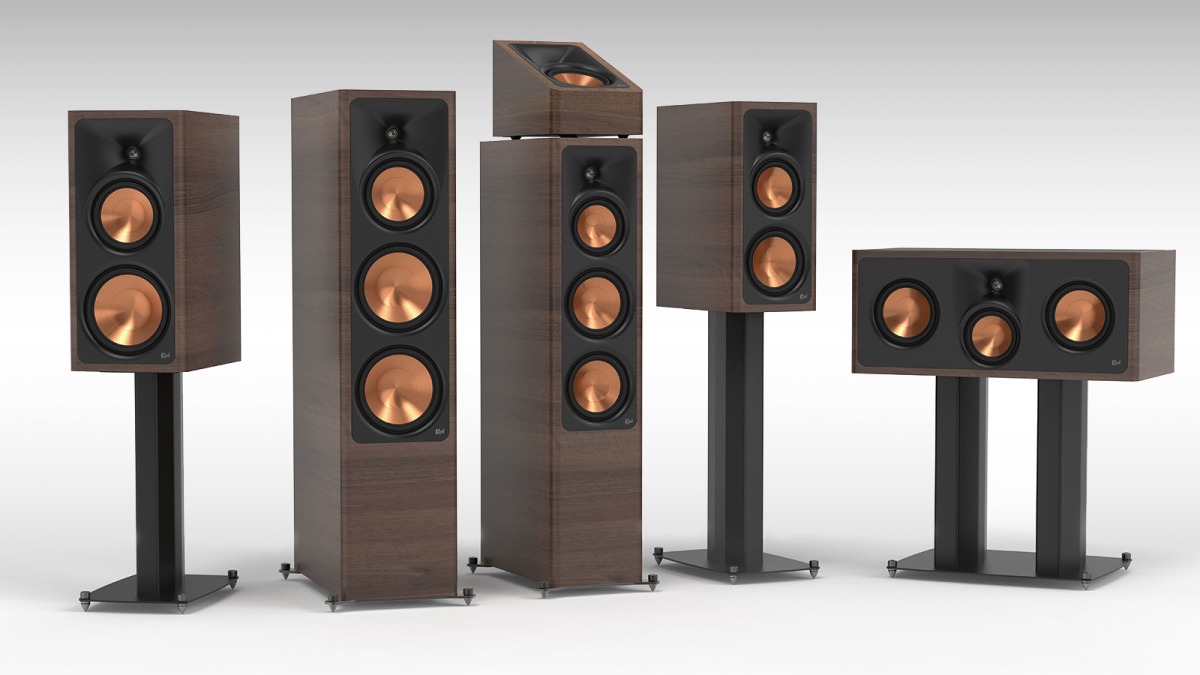 Klipsch Reference Signature range in walnut
Quick facts
- Six models: RS-8301F and RS-6301F floorstanders, RS-8301M and RS-6301M monitors, RS-6301C centre, RS-6101SA Atmos module.
- 1,600 to 3,000 dollars a pair. Klipsch has not given individual prices.
- Three-way, with the midrange inside the tweeter horn. The Atmos module is the one two-way.
- Titanium LTS tweeter, Cerametallic bass drivers, one-piece BMC baffle, curved cabinet edges.
- Ebony or walnut, leather top panel, and a rear switch for +1, 0 or -1 dB of treble.
Every Reference speaker we hold is two-way
We list 80 Klipsch speakers. Of those, 49 are Reference models, and all 49 are two-way. Not one exception, across the Reference Premiere range, the R series, from 2015 to now.
Klipsch does build three-way horns. We hold eight of them and they are all Heritage: Heresy, Forte, Cornwall, La Scala, Klipschorn. The cheapest one we list is the Capitol Heresy III at 2,346 dollars, and the current Heresy IV is 3,198.
So a three-way Klipsch horn has meant Heritage money. Reference Signature starts at 1,600, which undercuts the cheapest three-way Klipsch we list by about 750 dollars.
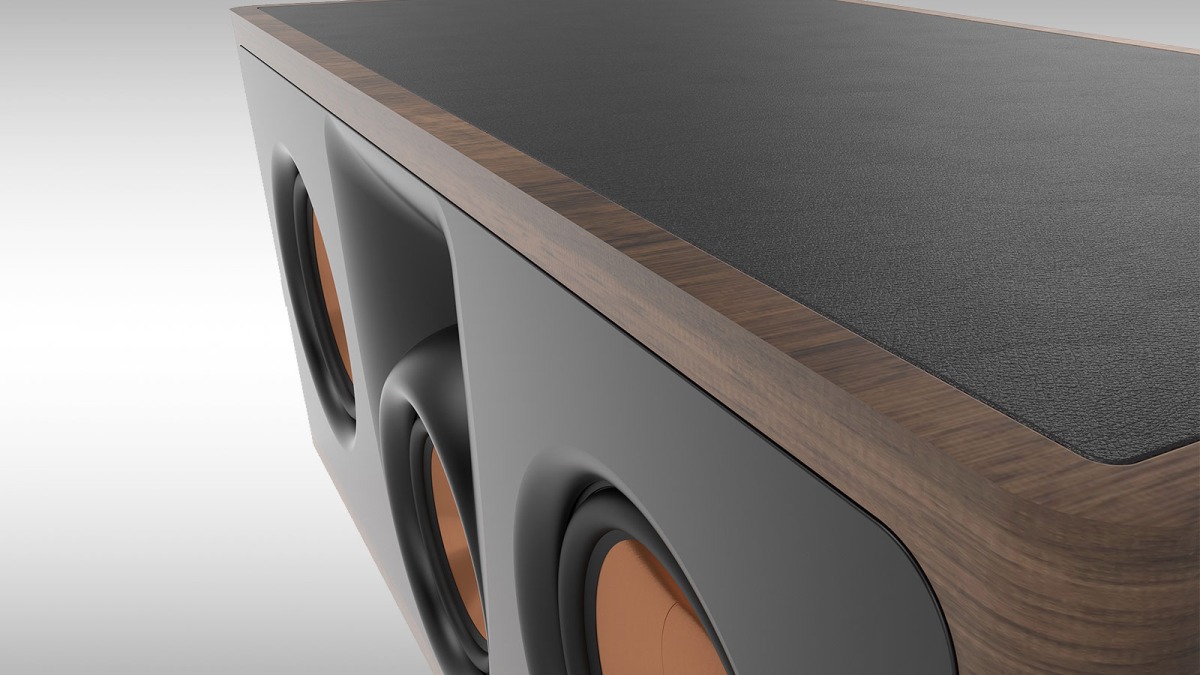 Klipsch Reference Signature center channel
What is actually in them
The two 8-inch models pair twin 8-inch Cerametallic bass drivers with a 6.5-inch midrange. The 6.5-inch models use 6.5-inch bass drivers with a 5.25-inch midrange. Floorstanders get two bass drivers, the monitors get one.
The horn arrangement is the part worth understanding. Klipsch put the midrange inside the tweeter horn rather than beside it, so both drivers radiate from roughly the same point. That is what they mean by phase-aligned, and it is a harder thing to build than a normal three-way.
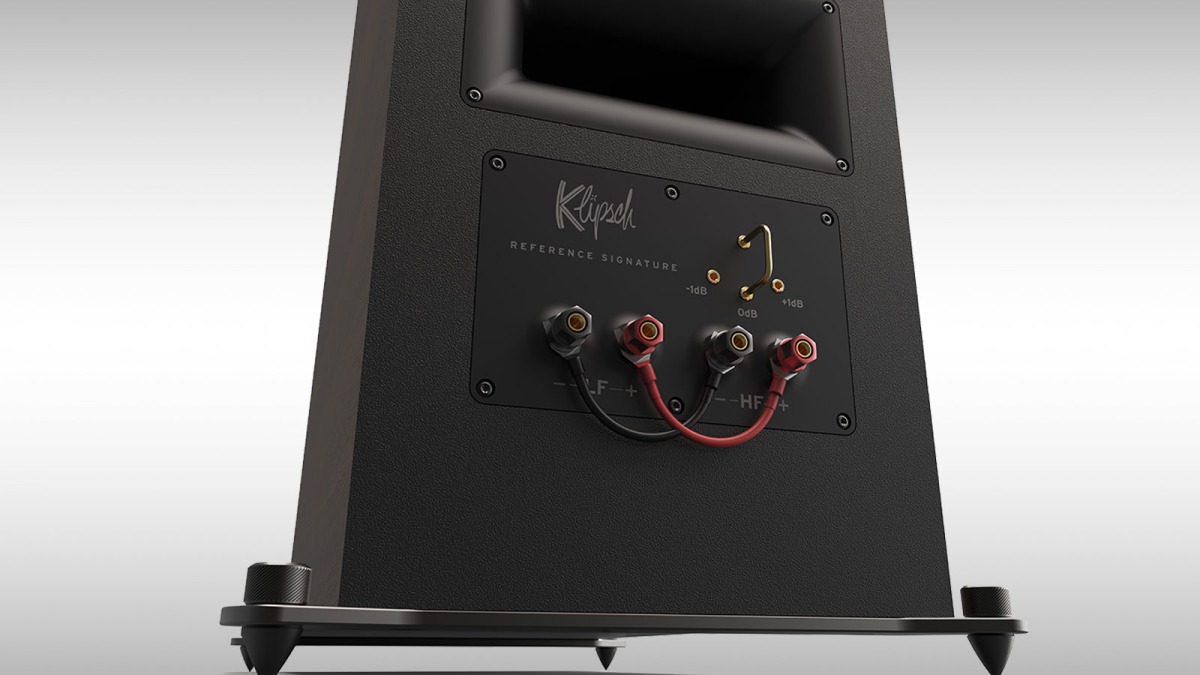 Klipsch Reference Signature rear panel
The back panel is unusually well equipped for the money. Separate low and high frequency terminals with jumper links, and a small gold jumper that sets the tweeter to +1 dB, 0 or -1 dB. A bright room and a dull one need different things, and a 1 dB switch is a sensible way to give people that without a full tone control.
The other announcement, which is a different thing entirely
Klipsch showed a second product at the same event and it is easy to confuse with the above. The RP-500PM is a powered monitor: a 5.25-inch Cerametallic woofer, an axial Tractrix horn, and a socket for nearly everything. HDMI ARC, Bluetooth 5.3, USB-C, optical, RCA, a phono input and a subwoofer output.
Klipsch call it the first powered monitor in the Reference Premiere line, and our data agrees. We hold 32 Reference Premiere models. Twenty-eight are passive and the four powered ones are all subwoofers. Klipsch has made plenty of powered speakers before, but they were Reference, not Reference Premiere.
Its phono input also puts it in a small club. Of the 129 powered speakers we list, only 22 take a turntable without a separate preamp, and nine of those are already Klipsch.
What we still do not know
Quite a lot, and it is worth being straight about that.
Klipsch has given a price range for the whole family and no individual prices. There is no published sensitivity, no frequency response, no dimensions and no weight for any of the six. For a brand whose whole pitch is horn efficiency, the missing sensitivity figure is the one we actually want.
"This winter" and "select models" is also doing some work. And the RP-500PM has no price at all yet.
So none of this is in our database yet. Once Klipsch publishes real numbers we will add all seven and you will be able to put them next to the Heritage models they are undercutting.
Would a 1,600 dollar three-way horn tempt you away from a Heresy, or is Heritage the whole point?