KEF announced the LS LUXE on July 30 this year. It is a $4,000 pair of wireless speakers, the first KEF wireless model shaped by Ross Lovegrove, and the driver in the middle of it is a 12th generation Uni-Q. That driver family first shipped in 2018.
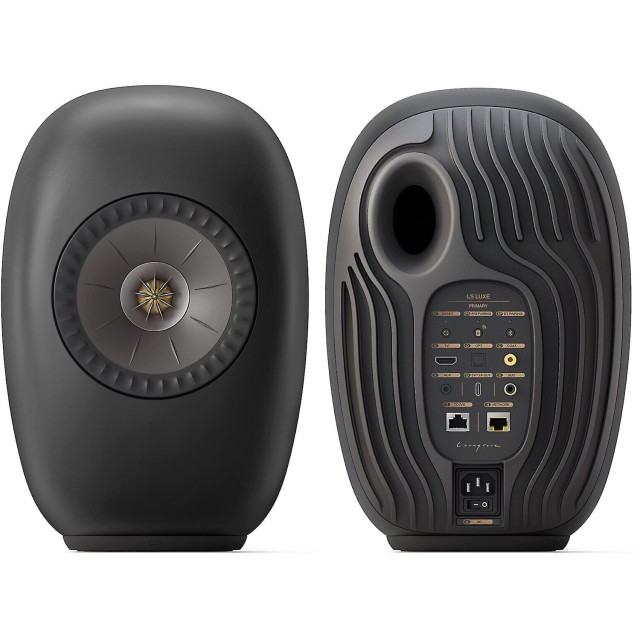 KEF LS LUXE
Eight years is a long run for one design. It also means the label has spread across a lot of very different speakers, and two of them can both say 12th generation while being built quite differently. So here is the whole list from our database, and the part that actually decides what you are buying.
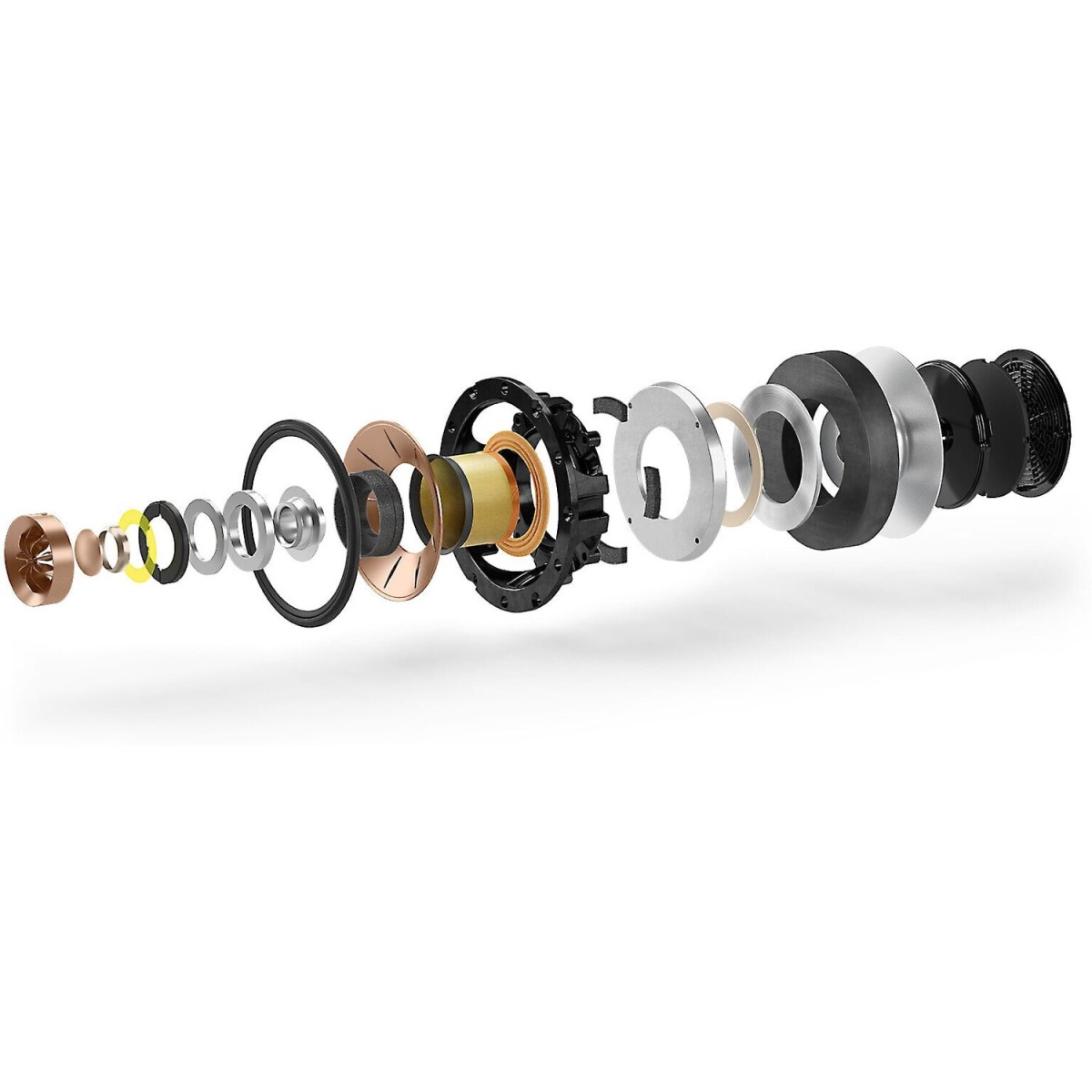 KEF 12th gen Uni-Q driver array with MAT
Quick facts
- 32 KEF models we hold use a 12th generation Uni-Q, from the $600 Q1 Meta to the $22,000 Reference 5 Meta.
- The 12th generation arrived in 2018. MAT arrived in 2020. Six of the 32 are 12th generation with no MAT.
- 21 of the 23 passive MAT models are 4 ohm speakers with a 3.2 ohm minimum.
- Across all the passive speakers on the site, 4 ohm is the exception, at 23 percent. 8 ohm is 55 percent.
What Uni-Q is, quickly
A normal speaker puts the tweeter above the woofer. The two are in slightly different places, so what reaches your ear changes as you move around the room. Uni-Q sits the tweeter in the middle of the mid and bass cone, so both come from the same point. KEF has built speakers this way since 1988, and the current version is the twelfth.
The payoff is that the sound holds together when you are not sitting in the middle of the sofa. That is worth more in a real living room than most numbers on a spec sheet, and it is the reason people keep coming back to this brand.
What the 12th generation actually changed
It happened in two steps, three years apart, and this is where the confusion starts.
2018, with the R Series. KEF added a tweeter gap damper, a small piece of damping that soaks up sound leaking into the ring between the tweeter and the cone. The midrange motor was redesigned, and the Shadow Flare, the moulded ring around the driver, carries the waveguide out onto the front of the cabinet.
2020, with the LS50 Meta. This is the version people mean when they say Meta. KEF added MAT, or Metamaterial Absorption Technology, which is a disc behind the tweeter filled with a maze of tuned channels. Sound going backwards off the tweeter goes into the maze and mostly does not come out. KEF says 99 percent of it is absorbed, against roughly 60 percent for the foam everybody used before. The same update brought ribs behind the Tangerine Waveguide, a redesigned gap damper, and a second version of the cone neck control.
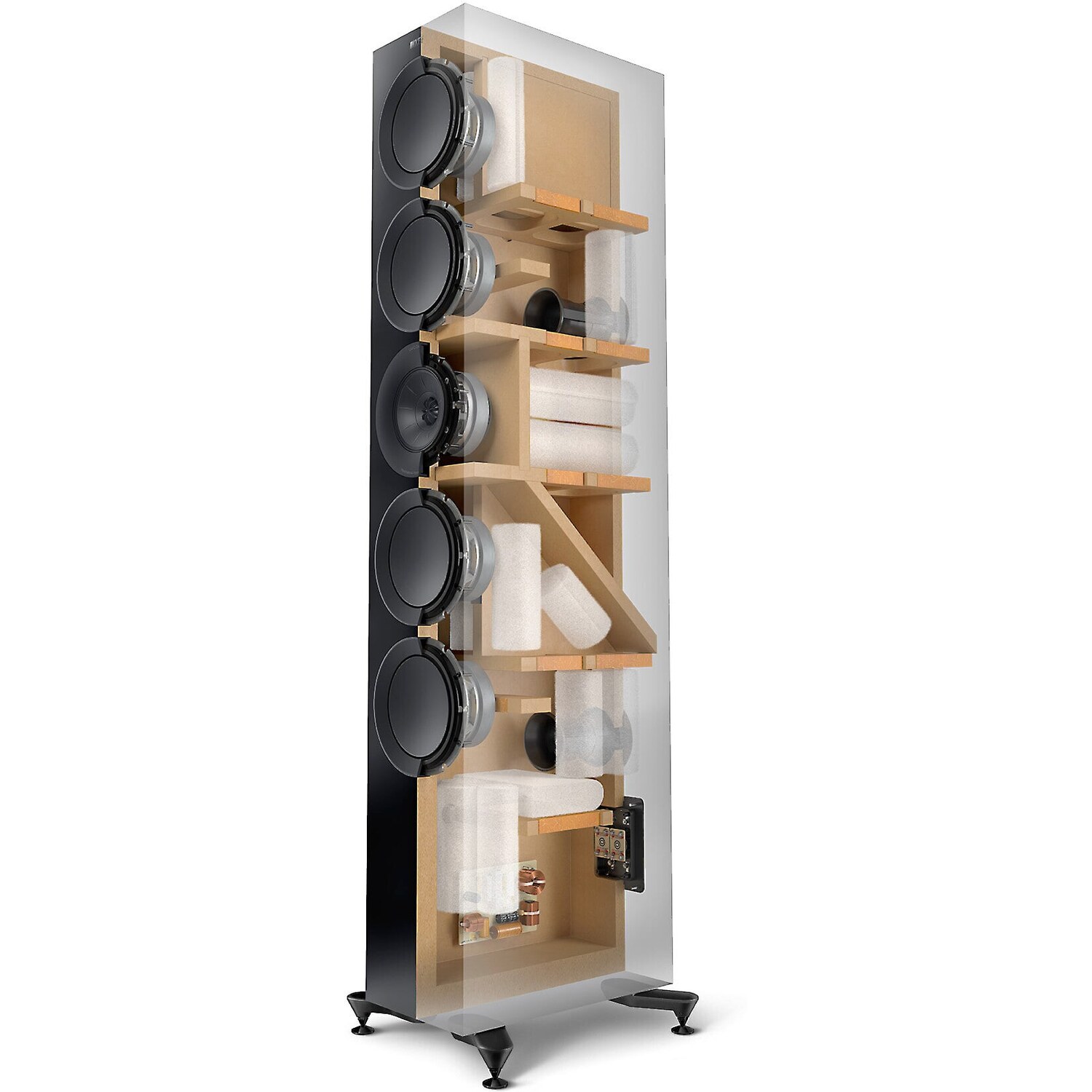 KEF R11 Meta cutaway showing the Uni-Q driver in the middle of the cabinet with four bass drivers around it
Twelfth generation and MAT are not the same thing. Every Meta model has both. The 2018 R Series and the new Coda W are twelfth generation with no MAT. If the ring around the driver does not say Metamaterial Absorption Technology, it is not in there.
The full list, by series
| Series | Models we hold | MAT | Price a pair |
|---|
| Q Meta, 2024 | Q1, Q3, Q Concerto, Q4, Q6, Q7, Q8, Q11 | Yes | $600 to $2,200 |
| R Meta, 2022 to 2023 | R2, R3, R5, R6, R7, R8, R11 | Yes | $1,399 to $3,249 |
| Reference Meta, 2022 | Reference 1, 2, 3, 4, 5 | Yes | $6,000 to $22,000 |
| LS models | LS50 Meta, LS50C Meta, LS50 Wireless II, LS60 Wireless, LS LUXE | Yes | $900 to $4,999 |
| Ci architectural | Ci3160RLM-THX | Yes | $2,300 each |
| R Series, 2018 | R2c, R3, R5, R7, R11 | No | $1,300 to $3,000 |
| Coda W, 2025 | Coda W | No | $999 |
The 12 KEF models we hold with an 11th generation Uni-Q are the older Q Series, the Q150, Q350, Q550, Q750, Q950, Q250c and Q650c, plus the original LS50 and LS50 Wireless, the LSX, LSX II and LSX II LT. Two models, the EGG and the Ci200QL, do not have a generation published anywhere we could find, so we have left them blank rather than guess.
Q Meta is where most people should start
The Q Series with MAT landed in 2024 and it is the cheapest way into this driver by a wide margin. Eight models, $600 to $2,200 a pair, and the same MAT disc behind the tweeter that the $22,000 Reference gets.
| FEATURE and SPECS COMPARISON | |  |  |  |  |  |
| Model | KEF Q1 Meta | KEF Q3 Meta | KEF Q Concerto Meta | KEF Q7 Meta | KEF Q11 Meta |
| Speaker Type | Passive Bookshelf | Passive Bookshelf | Passive Bookshelf | Passive Floor-standing | Passive Floor-standing |
| Enclosure Type | Ported | Ported | Ported | Ported | Ported |
| Driver Setup | 2-way | 2-way | 3-way | 3-way | 3-way |
| Tweeter | 1" Hard dome Tweeter | 1" Hard dome Tweeter | 0.75" Hard dome Tweeter | 0.75" Hard dome Tweeter | 0.75" Hard dome Tweeter |
| Mid-Range | - | - | 4" aluminum cone Midrange | 4" aluminum cone Midrange | 4" aluminum cone Midrange |
| Woofer | 1 x 5.25" Aluminum Woofer | 1 x 6.5" Aluminum Woofer | 1 x 6.5" Aluminum Woofer | 2 x 6.5" Aluminum Woofer | 3 x 6.5" Aluminum Woofer |
| Frequency Range / Low | 51Hz | 49Hz | 48Hz | 46Hz | 44Hz |
| Frequency Range / High | 20kHz | 20kHz | 20kHz | 20kHz | 20kHz |
| Impedance Nominal | 4Ω | 4Ω | 4Ω | 4Ω | 4Ω |
| Impedance Minimum | 3.2Ω | 3.2Ω | 3.2Ω | 3.2Ω | 3.2Ω |
| Sensitivity | 86dB | 87dB | 85dB | 87dB | 89dB |
| Max Power (RMS) | 150w | 150w | 180w | 200w | 225w |
| Crossover Frequency | 2.1 kHz | 2.0 kHz | 430 Hz, 2.9 kHz | 440 Hz, 2.3 kHz | 480 Hz, 2.7 kHz |
| Port Position | rear | rear | rear | rear | rear |
| Available Colors | Satin Black,Satin White,Walnut | Satin Black,Satin White,Walnut | Satin Black,Satin White,Walnut | Satin Black,Satin White,Walnut | Satin Black,Satin White,Walnut |
| Grille | Yes | Yes | Yes | Yes | Yes |
| Height | 302.0mm | 357.0mm | 415.0mm | 1001.0mm | 1112.0mm |
| Width | 180.0mm | 210.0mm | 210.0mm | 317.0mm | 317.0mm |
| Depth | 277.0mm | 305.0mm | 315.0mm | 315.0mm | 380.0mm |
| Weight | 6.09kg | 8.23kg | 9.50kg | 18.45kg | 22.55kg |
| MSRP(pair) | 600USD | 800USD | 1300USD | 1800USD | 2200USD |
| Check Current Price | Amazon | Amazon | Amazon | Amazon | Amazon |
Reading down that table, the Q3 Meta at $800 is the value pick. It gives up 2Hz of bass to the Q Concerto at $1,300, and the Concerto spends its extra $500 on a three way layout with a separate 4 inch midrange in the Uni-Q. That is a real engineering difference, and whether you hear $500 of it in a normal room is another question.
The Q11 Meta versus R11 Meta question, honestly
This is the comparison I would want if I were spending this kind of money, so here are the numbers side by side. The Q11 Meta is $2,200 a pair. The R11 Meta is $3,249. Both are three way towers with the same MAT.
| FEATURE and SPECS COMPARISON | | |  |
| Model | KEF Q11 Meta | KEF R11 Meta |
| Speaker Type | Passive Floor-standing | Passive Floor-standing |
| Enclosure Type | Ported | Ported |
| Driver Setup | 3-way | 3-way |
| Tweeter | 0.75" Hard dome Tweeter | 1" Vented dome Tweeter |
| Mid-Range | 4" aluminum cone Midrange | 5" aluminum cone with Uni-Q Technology Midrange |
| Woofer | 3 x 6.5" Aluminum Woofer | 4 x 6.5" Hybrid Aluminum Woofer |
| Frequency Range / Low | 44Hz | 46Hz |
| Frequency Range / High | 20kHz | 28kHz |
| Impedance Nominal | 4Ω | 4Ω |
| Impedance Minimum | 3.2Ω | 3.2Ω |
| Sensitivity | 89dB | 90dB |
| Max Power (RMS) | 225w | 300w |
| Crossover Frequency | 480 Hz, 2.7 kHz | 330Hz and 2500Hz |
| Port Position | rear | rear |
| Available Colors | Satin Black,Satin White,Walnut | Black Gloss, White Gloss, Walnut |
| Height | 1112.0mm | 1296.0mm |
| Width | 317.0mm | 312.0mm |
| Depth | 380.0mm | 385.0mm |
| Weight | 22.55kg | 36.59kg |
| MSRP(pair) | 2200USD | 6498USD |
| Check Current Price | Amazon | Amazon |
On paper the cheaper one goes lower. The Q11 Meta is rated 44Hz at the bottom, the R11 Meta 46Hz, both to the same plus or minus 3dB. What you get for the extra $1,049 is a bigger Uni-Q, a 1 inch tweeter with a 5 inch midrange instead of 0.75 inch and 4 inch, a fourth bass driver, a top end published to 28kHz instead of 20kHz, and a cabinet that weighs 36.6kg against 22.6kg. The weight is not vanity. It is bracing, and it is most of what you are paying for.
My honest read: if the room is normal sized and the amplifier is normal sized, the Q11 Meta is the better buy and the difference goes into a subwoofer or a better amp. The R11 Meta earns its money in a big room, driven properly. And if you are shopping this bracket you may also want our size and specs comparison of every Meta and Reference Meta floorstander, which lays out the whole ladder.
The catch nobody puts on the box
Here is the part I would want somebody to tell me before I bought.
Almost all of these are 4 ohm speakers. Of the 23 passive models we hold with a 12th generation Uni-Q and MAT, 21 are rated 4 ohms with a 3.2 ohm minimum. Only the LS50 Meta and LS50C Meta are 8 ohm. For context, across every passive speaker on this site, 4 ohm is the exception at 23 percent, while 8 ohm accounts for 55 percent.
Pair that with sensitivity figures in the 85 to 90dB range and you have speakers that want real current. A budget receiver rated into 8 ohms will play them, and it will run out of steam before they do. This is not a KEF flaw, it is a design choice, but it means the amplifier is not the place to save money here. Nothing about the price of the speaker changes this: the $600 Q1 Meta is 4 ohms and 86dB, exactly like its expensive cousins.
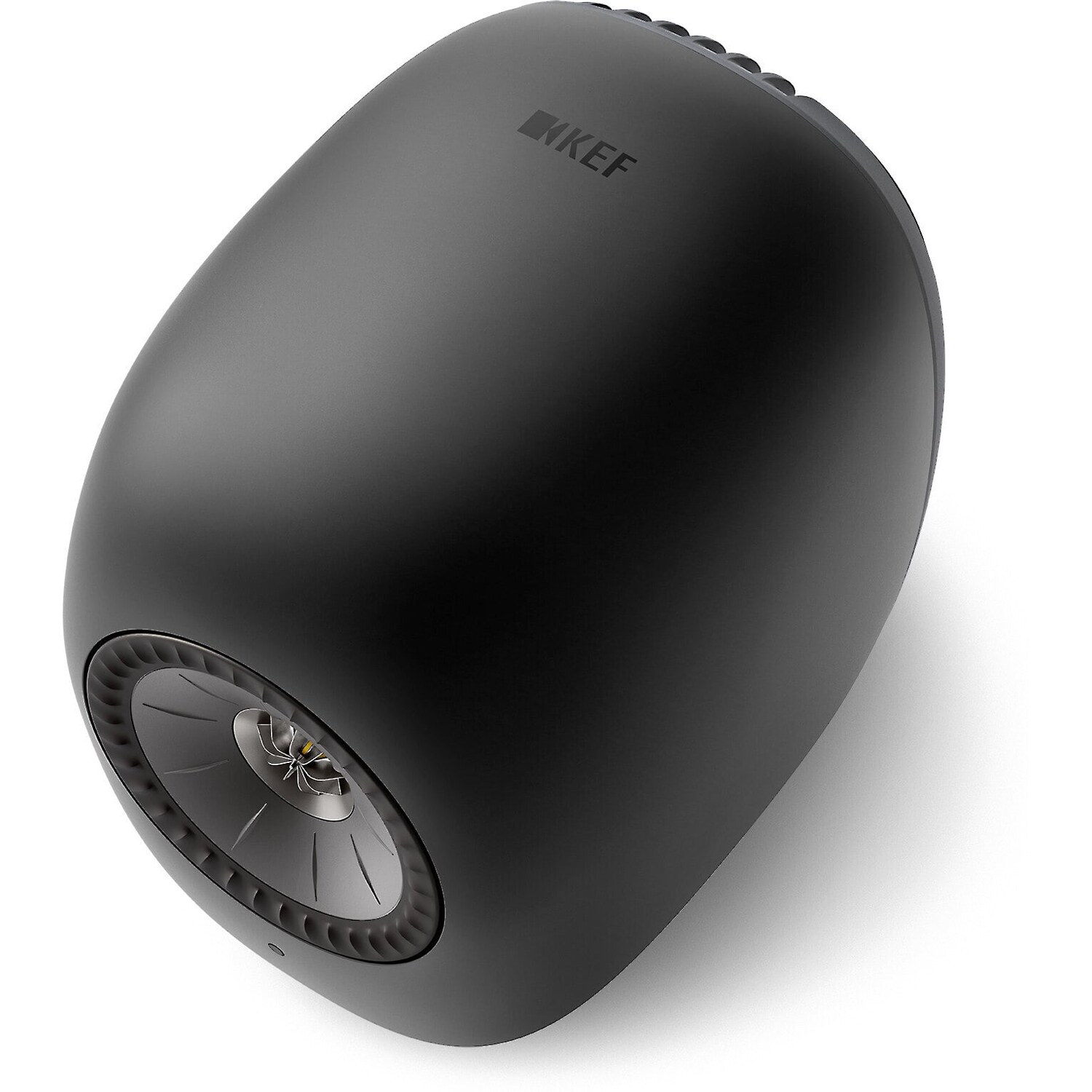 KEF LS LUXE in black, showing the 12th generation Uni-Q driver on the front of the curved cabinet
And twelfth generation is a family, not a part number. The Uni-Q in a Q7 Meta is a 0.75 inch tweeter in a 4 inch midrange. The one in an R3 Meta or a Reference 5 Meta is a 1 inch tweeter in a 5 inch midrange, with different cone materials and a different motor. Same generation, different driver. Read the driver sizes, not the badge.
One more, in KEF's favour this time. The published top end climbs with the price, 20kHz for Q Meta, 28kHz for R Meta, 35kHz for Reference. Almost nobody can hear above 20kHz, so do not let that line move you up a range. It tells you the tweeter is built differently, which is true and which shows up in ways that are harder to put in a table.
Questions answered
Which KEF speakers have the 12th generation Uni-Q?
In our database, 32 of them: the whole Q Meta range, the whole R Meta range, all five Reference Meta models, the LS50 Meta, LS50C Meta, LS50 Wireless II, LS60 Wireless and LS LUXE, the Ci3160RLM-THX in-wall, plus the 2018 R Series and the Coda W. The last six of those are 12th generation without MAT.
Is the 12th generation Uni-Q the same as MAT?
No. The 12th generation started in 2018 and MAT was added to it in 2020 with the LS50 Meta. A 2018 R3 has a 12th generation Uni-Q and no MAT. An R3 Meta has both. That is the single most useful thing to know when you are looking at a used listing.
Do I need a special amplifier for these?
Not special, but not weedy either. Most of them are 4 ohms with a 3.2 ohm minimum and sensitivity in the 85 to 90dB band, so they want an amplifier that is happy driving 4 ohms. If your amp only quotes a power figure into 8 ohms and nothing else, that is a warning sign.
Is the 11th generation Uni-Q much worse?
Worse is too strong. The original LS50 sold on that driver for years and people still love it. The 12th generation with MAT measures cleaner behind the tweeter, and the older Q Series models are frequently discounted hard, which can make an 11th generation speaker the better value even now.
So what would I buy
If it were my money and a normal room, the Q3 Meta on good stands, with whatever was left over going into the amplifier. The whole point of Uni-Q is that it stays coherent when you move around, and you get that in the $800 pair just as much as in the $22,000 pair. The rest of the ladder buys you bass, output and cabinet, which are all real, and all things a room can either use or waste.
You can see every KEF model we hold in one place if you want to go through the specs yourself. What I am curious about is the other side of it: has anyone here gone from an 11th generation KEF to a Meta model in the same room, and did you actually hear the difference?
FIND THIS INTERESTING? SHARE IT WITH YOUR FRIENDS!
Magico A3 2027 at $25,000: What Else That Buys in a Floor-Standing Speaker Wharfedale Diamond 12i vs Diamond 12: All Six Pairs, Same UK Price, More in the US Audioengine's HD4 Next Gen Is One of Only Two Powered Speakers We Hold With aptX Adaptive Edifier MR4.5 Added: What 250 Dollars Buys Against the 19 Powered Speakers We Held Under 300 Esoteric F-01 vs F-02: Same 21,000 Dollars, 30 Watts of Class A or 120 Watts Castle Tintagel and Walmer: Four New British Speakers, and the Amp Each One Needs Yamaha's R200A Replaces a Ten-Year-Old Receiver, and Keeps the Same 100 Watts Paradigm Premier v2 vs the Original Premier: All Six Models, What Changed Which Speaker Brands Keep Their Shoppers, and Which Get Shopped Against Harbeth XD2 Range: All Five Compared, Which Size and What Amp What You Compared Most in September: The Old Speaker or Its Replacement 30 Tips to Better Sound Before You Buy New Speakers REL No.35 and No.36: 10,000 and 12,000 Dollar Subwoofers With the Same Watts as a 2,199 Dollar REL Audioengine A2+ Gen 3: What Changed Since the A2+ Wireless, and What It Still Cannot Do Sonos Beam Ultra: Real Atmos Height Drivers in a Soundbar Under 80 cm, for 699 Dollars JBL's Summit Series Is Five Speakers, and the Cheapest Needs the Biggest Amplifier We Built 11 Free Speaker and Amplifier Tools, and Every One Shows Its Working Michi X430 vs Rotel RA-6000: 500 Dollars More Buys an HDMI Socket Soundbars Are Now on Speaker Decision: 60 Models, Comparisons and a TV Size Simulator Fosi's DISC Nano Is a 100 Dollar Pocket CD Player. The Cheapest CD Drive in Our Amplifiers Is 650.