A powered speaker with an HDMI input is the shortest path from a television to proper stereo sound. One cable, no receiver, no soundbar, and your TV remote still controls the volume.
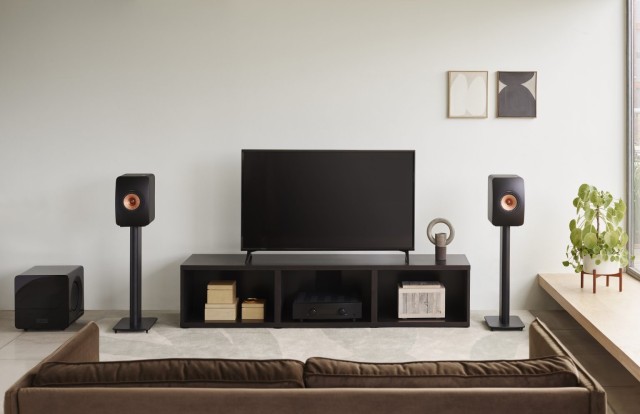 Klipsch The Fives beside a television, with one HDMI cable doing all the work
When this list was first written there were ten such speakers in our database. There are now 31. The category has roughly tripled, the prices now start at 349 dollars, and five of the 31 are full floor-standing towers rather than bookshelf boxes.
Quick facts
- 31 speakers in our database have an HDMI input. The list ran to 10 when this page was first written.
- 15 handle eARC, which carries lossless film soundtracks. The other 16 are ARC only.
- Prices run from 349 dollars to 69,000.
- 13 of the 31 came out in 2025 or later, so most of this category is new.
- Only three have an HDMI input as well as an output, so only three can take a games console.
What the HDMI socket actually buys you
HDMI ARC stands for Audio Return Channel, and eARC for Enhanced Audio Return Channel. Both send sound backwards down an HDMI cable, from the television to the speakers, which is the opposite of what HDMI normally does.
Three practical things follow from that.
One cable. Everything already plugged into the television, the streaming apps, the set-top box, the console, comes out of the one HDMI socket. You are not running a separate optical or analogue lead for each source.
Your TV remote works. HDMI carries a control channel called CEC, so volume, mute and standby follow the remote you already use. This is the part people underestimate. A speaker you have to control with a second remote gets used less.
Lip sync is handled. The television and the speakers negotiate the delay between them, which optical connections do not do reliably.
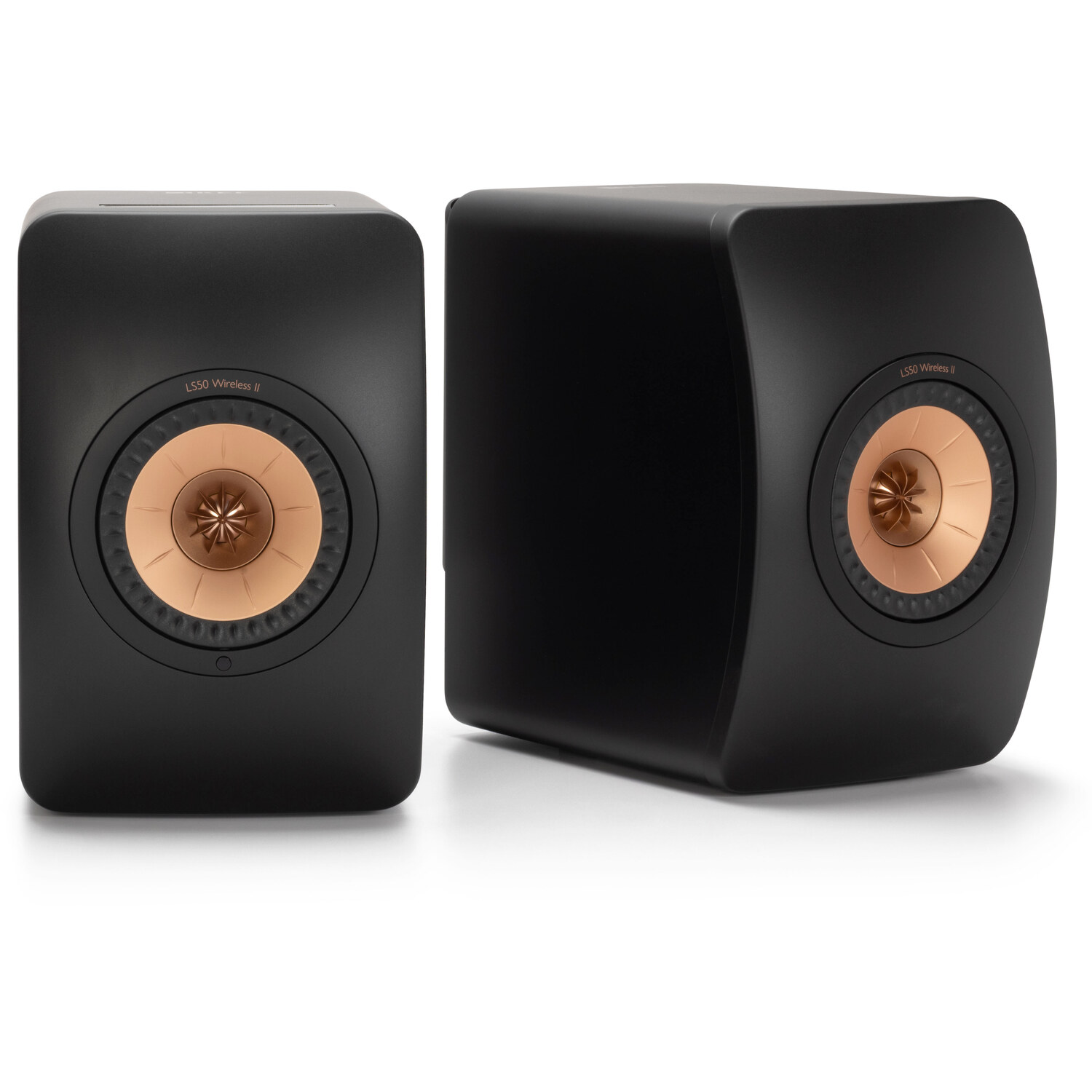 The KEF LS50 Wireless II, the speaker this category has been measured against since 2020
If your television has an HDMI socket labelled ARC or eARC, and almost every set sold since about 2018 does, a speaker on this list will work with it. If it does not, an optical input is the fallback, and 30 of these 31 have one.
ARC or eARC, and when the difference matters
Fifteen of the 31 do eARC. Sixteen are ARC only.
ARC has enough bandwidth for stereo and for compressed surround. That covers music apps, ordinary television and most of what people actually watch.
eARC has roughly ten times the bandwidth. It carries uncompressed and lossless formats, which in practice means Dolby TrueHD and DTS-HD from a Blu-ray disc, and lossless Dolby Atmos. If your television is passing through a disc player or a high-end streaming box, eARC is the one to hold out for.
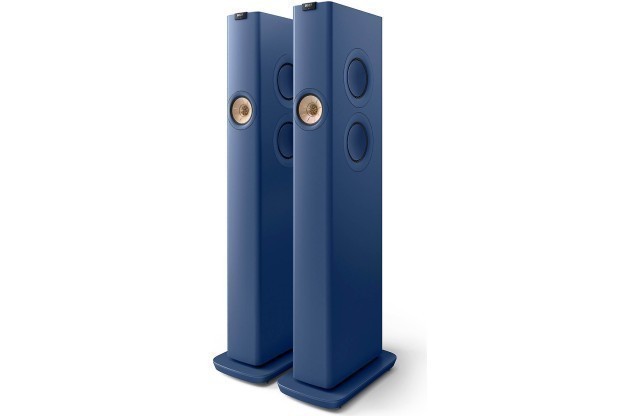 KEF LS60 Wireless features an HDMI eARC Input
If you are connecting the speakers to a normal television for normal viewing and music, ARC is not a compromise worth paying to avoid.
All 31, cheapest first
Every powered speaker with an HDMI input in our database, with the price for the pair.
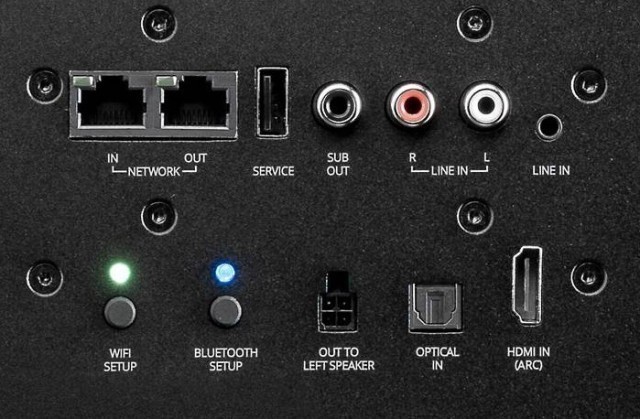 SVS Prime Wireless Pro HDMI eARC Input
| Speaker | Price | HDMI | Released |
|---|
| Onkyo Creator Series GX-30ARC | $349 | ARC | 2024 |
| Fluance Ri71 | $500 | ARC | 2025 |
| ELAC Debut ConneX DCB41 | $599 | ARC | 2022 |
| Kanto REN | $599 | ARC | 2023 |
| ELAC Debut ConneX Adsum | $749 | ARC | 2023 |
| SVS Prime Wireless Pro | $899 | ARC and eARC | 2022 |
| ELAC Debut ConneX DCB61 | $899 | ARC | 2025 |
| Klipsch The Fives | $969 | ARC | 2020 |
| KEF LSX II LT | $999 | ARC | 2024 |
| KEF Coda W | $999 | ARC | 2025 |
| PSB iQ1 | $999 | eARC | 2026 |
| Fluance Ri91 (floor-standing) | $1,000 | ARC | 2025 |
| KEF LSX II | $1,299 | ARC | 2022 |
| Klipsch The Sevens | $1,299 | ARC | 2023 |
| Klipsch The Fives II | $1,399 | eARC, in and out | 2026 |
| PSB iQ2 | $1,399 | eARC | 2026 |
| PSB Alpha iQ | $1,499 | eARC | 2022 |
| Klipsch The Nines | $1,499 | ARC | 2022 |
| Klipsch The Sevens II | $1,999 | eARC, in and out | 2026 |
| Q Acoustics Q Active 200 | $2,098 | ARC | 2020 |
| Cambridge Audio L/R X | $2,299 | eARC | 2026 |
| Klipsch The Nines II | $2,399 | eARC, in and out | 2026 |
| KEF LS50 Wireless II | $2,999 | eARC | 2020 |
| Q Acoustics Q Active 400 (floor-standing) | $2,999 | ARC | 2020 |
| Yamaha NX-70A | $3,000 | eARC | 2026 |
| Technics SC-CX700 | $3,499 | ARC | 2024 |
| Sonus faber Duetto | $3,999 | eARC | 2023 |
| KEF LS Luxe | $4,000 | eARC | 2026 |
| KEF LS60 Wireless (floor-standing) | $4,999 | eARC | 2022 |
| Focal Diva Utopia (floor-standing) | $39,999 | eARC | 2024 |
| Focal Diva Mezza Utopia (floor-standing) | $69,000 | eARC | 2025 |
Two things about that table are worth saying out loud. The first is that this is no longer a bookshelf-only category. When the page was written the KEF LS60 Wireless was the only tower on it. There are now five, and the cheapest is the Fluance Ri91 at 1,000 dollars.
The second is that seven of the 31 arrived in 2026 alone. If you looked at this category two years ago and decided there was not enough choice, that is no longer the position.
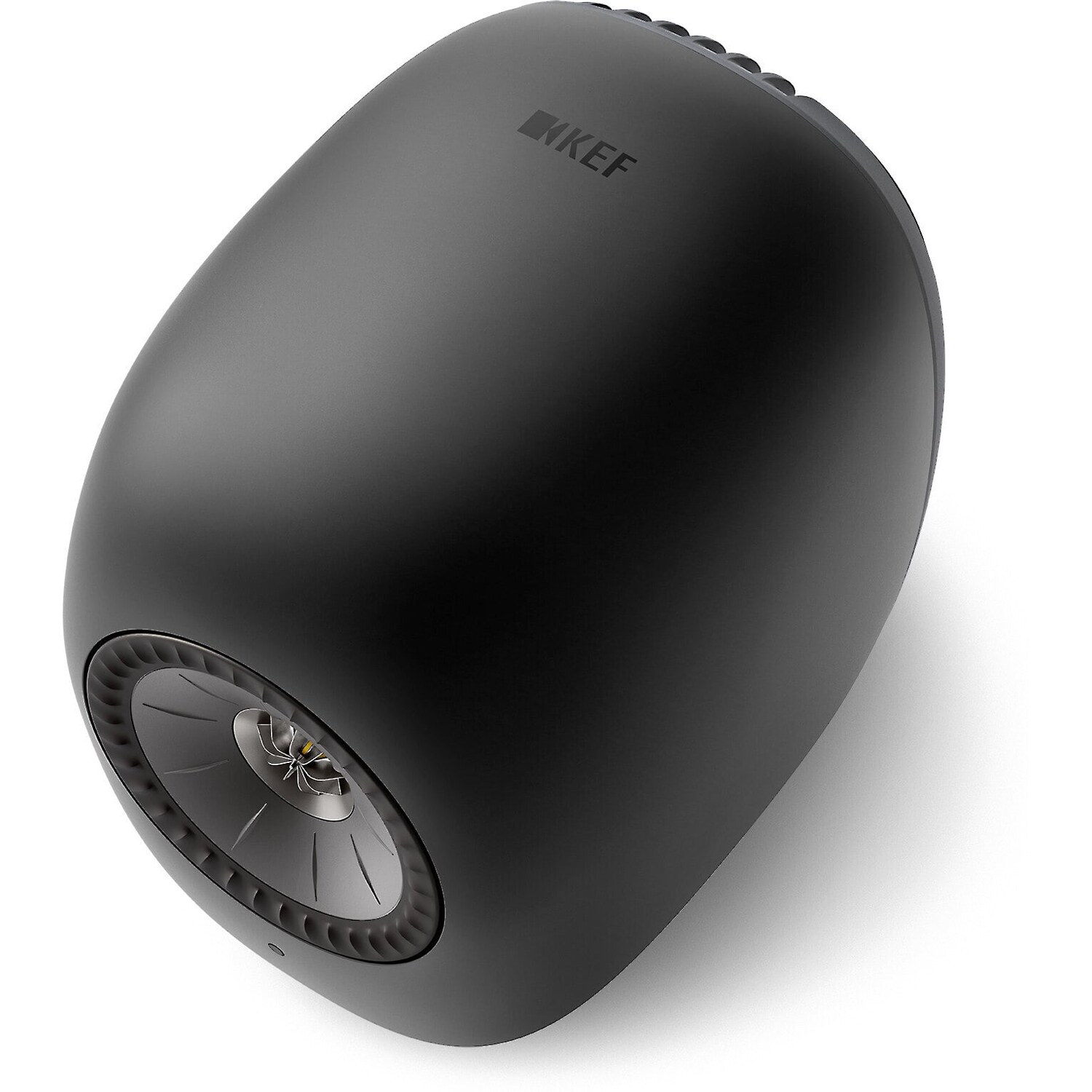 The KEF LS Luxe at 4,000 dollars, one of seven speakers on this list that arrived during 2026
The ten to start with
Not a ranking. Ten speakers that each answer a different question, cheapest first.
- Onkyo Creator Series GX-30ARC, 349 dollars - the cheapest way into the category, and it still has a subwoofer output and a phono input. ( Check Price)
- ELAC Debut ConneX DCB41, 599 dollars - proper hi-fi drivers at the bottom of the market, from a company that makes passive speakers for a living. ( Check Price)
- SVS Prime Wireless Pro, 899 dollars - the cheapest way to get eARC, and it reaches 42 Hz. ( Check Price)
- Klipsch The Fives, 969 dollars - the one most people end up buying, with a phono input for a turntable. ( Check Price)
- KEF Coda W, 999 dollars - reaches 41 Hz, the deepest bass on this list under 1,000 dollars. ( Check Price)
- PSB iQ1, 999 dollars - the cheapest of the 2026 arrivals, with eARC and a phono stage. ( Check Price)
- Fluance Ri91, 1,000 dollars - if you want floor-standing towers rather than boxes on stands, this is the cheapest way to get them. ( Check Price)
- Klipsch The Fives II, 1,399 dollars - the only kind on this list with an HDMI input as well as an output, so a games console can plug into the speaker. ( Check Price)
- KEF LS50 Wireless II, 2,999 dollars - six years old and still the speaker everything else in this category gets compared to. ( Check Price)
- Yamaha NX-70A, 3,000 dollars - the newest, and the only one here that ships a room calibration microphone in the box. ( Check Price)
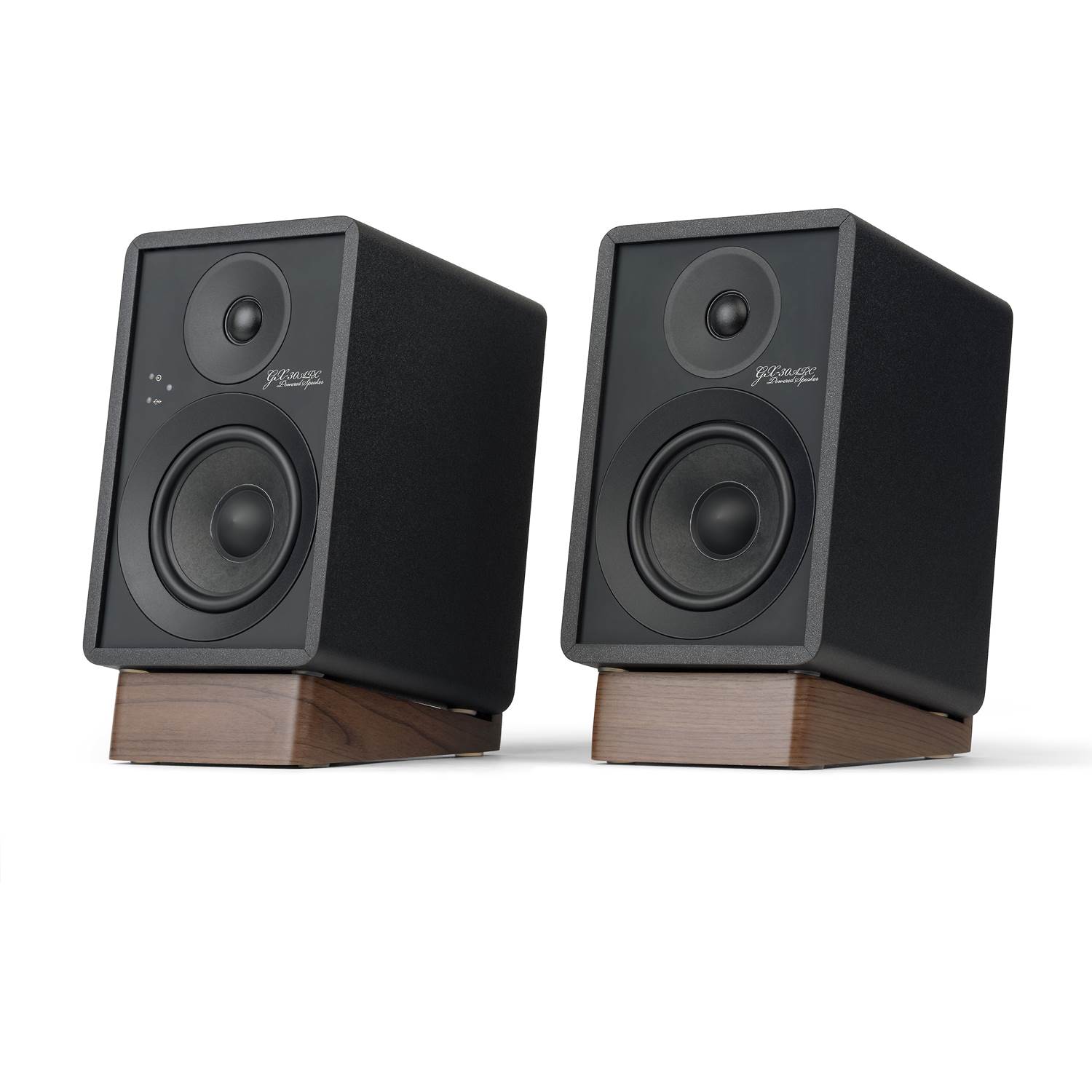 The Onkyo Creator Series GX-30ARC at 349 dollars, the cheapest speaker on this list with an HDMI input
Above these, the KEF LS60 Wireless at 4,999 dollars is the flagship of the category and reaches 31 Hz, which is genuinely subwoofer territory.
Comparison of the ten, side by side
Use the scroll bar to move right through the table.
| FEATURE and SPECS COMPARISON | |  |  |  |  |  |  |  |  |  |  |
| Model | Onkyo Creator Series GX-30ARC | ELAC Debut ConneX DCB41 | SVS Prime Wireless Pro | Klipsch The Fives | KEF Coda W | PSB iQ1 | Fluance Ri91 | Klipsch The Fives II | KEF LS50 Wireless II | Yamaha NX-70A |
| Speaker Type | Powered Bookshelf | Powered Bookshelf | Powered Bookshelf | Powered Bookshelf | Powered Bookshelf | Powered Bookshelf | Powered Floor-standing | Powered Bookshelf | Powered Bookshelf | Powered Bookshelf |
| Driver Setup | 2-way | 2-way | 2-way | 2-way | 2-way | 2-way | 3-way | 2-way | 2-way | 2-way |
| Tweeter | 0.75" Soft-Dome Tweeter | 0.75" Soft-Dome Tweeter | 1" Dome Tweeter | 1" Tractrix Horn Tweeter | 1" Hard-Dome Tweeter | 0.75" Hard-Dome Tweeter | 1.1" AMT Tweeter | 1" Tractrix Horn Tweeter | 1" Hard-Dome Tweeter | 1.25" Dome Tweeter |
| Woofer | 1 x 4" Woofer | 1 x 4.5" Polypropylene Woofer | 1 x 5.25" Polypropylen cone Woofer | 1 x 4.5" Fiber-composite Woofer | 1 x 5.25" Woofer | 1 x 4" Polypropylene Woofer | 2 x 6.5" Glass fibre Woofer | 1 x 5.25" Woofer | 1 x 5.25" Woofer | 1 x 5.25" Harmonious Diaphragm (ZYLON and spruce) Woofer |
| Frequency Range / Low | 55Hz | 66Hz | 42Hz | 50Hz | 41Hz | 64Hz | 40Hz | 50Hz | 45Hz | 50Hz |
| Frequency Range / High | 20kHz | 25kHz | 25kHz | 25kHz | 20kHz | 20kHz | 30kHz | 25kHz | 28kHz | 35kHz |
| Phono Input | | | | | | | | | | |
| Height | 269.0mm | 249.0mm | 295.0mm | 314.3mm | 286.0mm | 246.0mm | 1060.0mm | 335.0mm | 277.8mm | 333.0mm |
| Width | 148.0mm | 141.0mm | 180.0mm | 165.1mm | 169.0mm | 145.0mm | 216.0mm | 181.0mm | 200.0mm | 189.0mm |
| Depth | 212.0mm | 240.0mm | 228.0mm | 282.6mm | 301.0mm | 192.0mm | 260.0mm | 324.0mm | 322.3mm | 234.0mm |
| Ethernet Port | | | | | | | | | | |
| MSRP(pair) | 349USD | 599USD | 899USD | 969USD | 999USD | 999USD | 1000USD | 1399USD | 2999USD | 3000USD |
| Check Current Price | Amazon | Amazon | Amazon | Amazon | Amazon | Amazon | Amazon | Amazon | Amazon | Amazon |
Three of them can take a games console
This is the distinction almost nobody explains, and it decides whether these speakers can be the centre of a setup or only an accessory to one.
On 28 of the 31, the HDMI socket is an output only. Sound comes back from the television. Nothing else plugs into the speaker. Every source you own connects to the TV, and the TV sends the sound onward.
The three Klipsch II models are different. Klipsch describes them as an HDMI 2.1 In/Out solution: a source plugs into the speaker, video passes through to the television, and sound stays in the speaker. Klipsch quotes 4K at 120 Hz, VRR, ALLM, HDR and Dolby Vision through that path.
If your television is short of HDMI sockets, or you want the console feeding the speakers directly, that is a real reason to pay the extra.
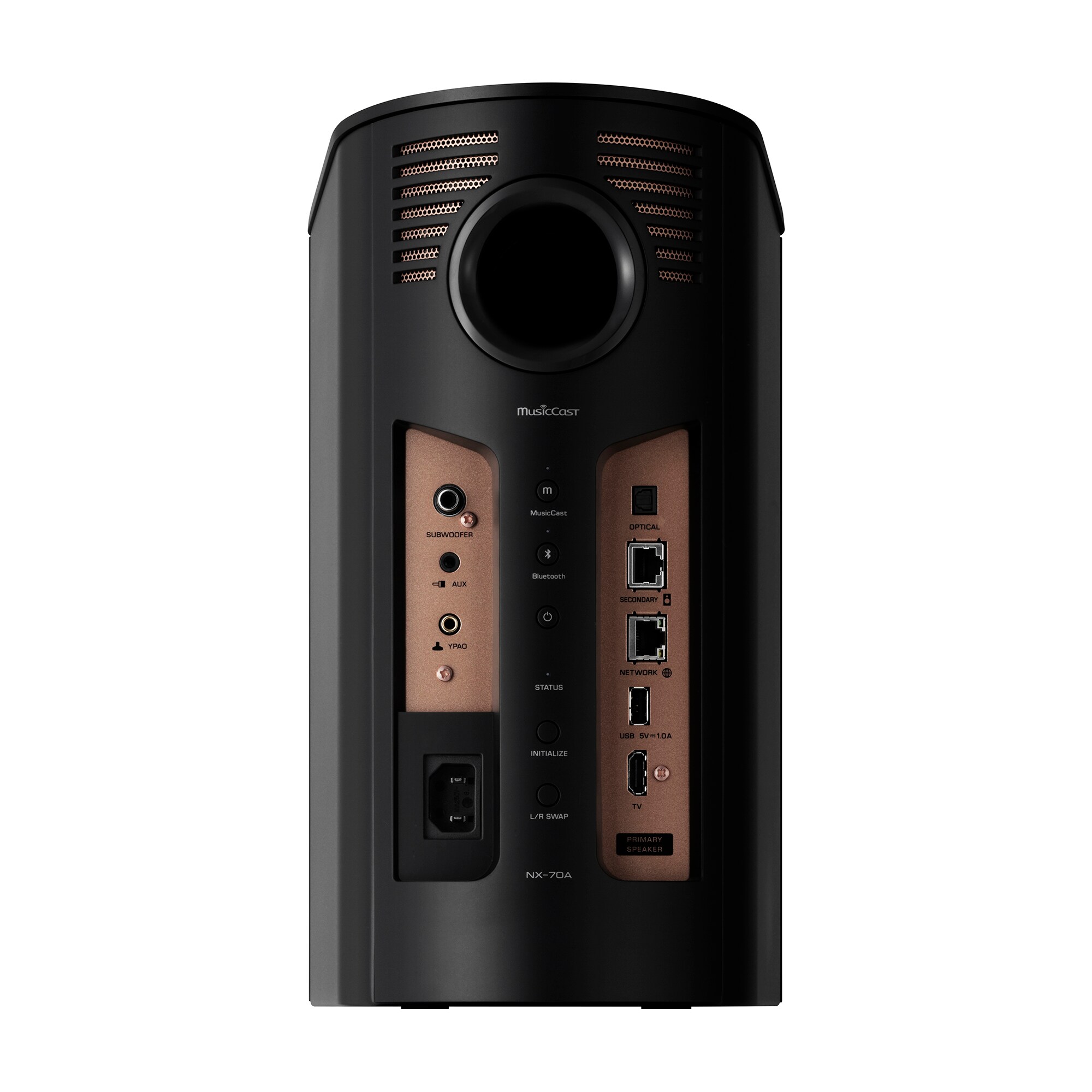 The back of the Yamaha NX-70A. The HDMI socket is labelled TV, which is the honest way to describe what it is for on most of these speakers
What this list still cannot do for you
Four honest limits, because a buying guide that only lists strengths is an advert.
These are stereo pairs, not surround systems. Some of them decode Dolby Atmos, which sounds impressive on a box. Two speakers cannot put sound behind you. If you want rear channels you want a receiver and more speakers, and this whole category is the wrong answer.
Sixteen of the 31 are ARC only. Plug a Blu-ray player into the television and its lossless soundtrack gets compressed before it reaches those sixteen. That is fine for television and streaming, and it is not fine if discs are the reason you are buying.
The wireless link between the two speakers costs something, and almost nobody says what. Yamaha is the exception: it publishes 50 Hz to 35 kHz for the NX-70A with the two speakers wired together and 50 Hz to 21 kHz with them linked wirelessly. Most makers publish one figure and do not tell you which connection it applies to. Where a cable is supplied, use it.
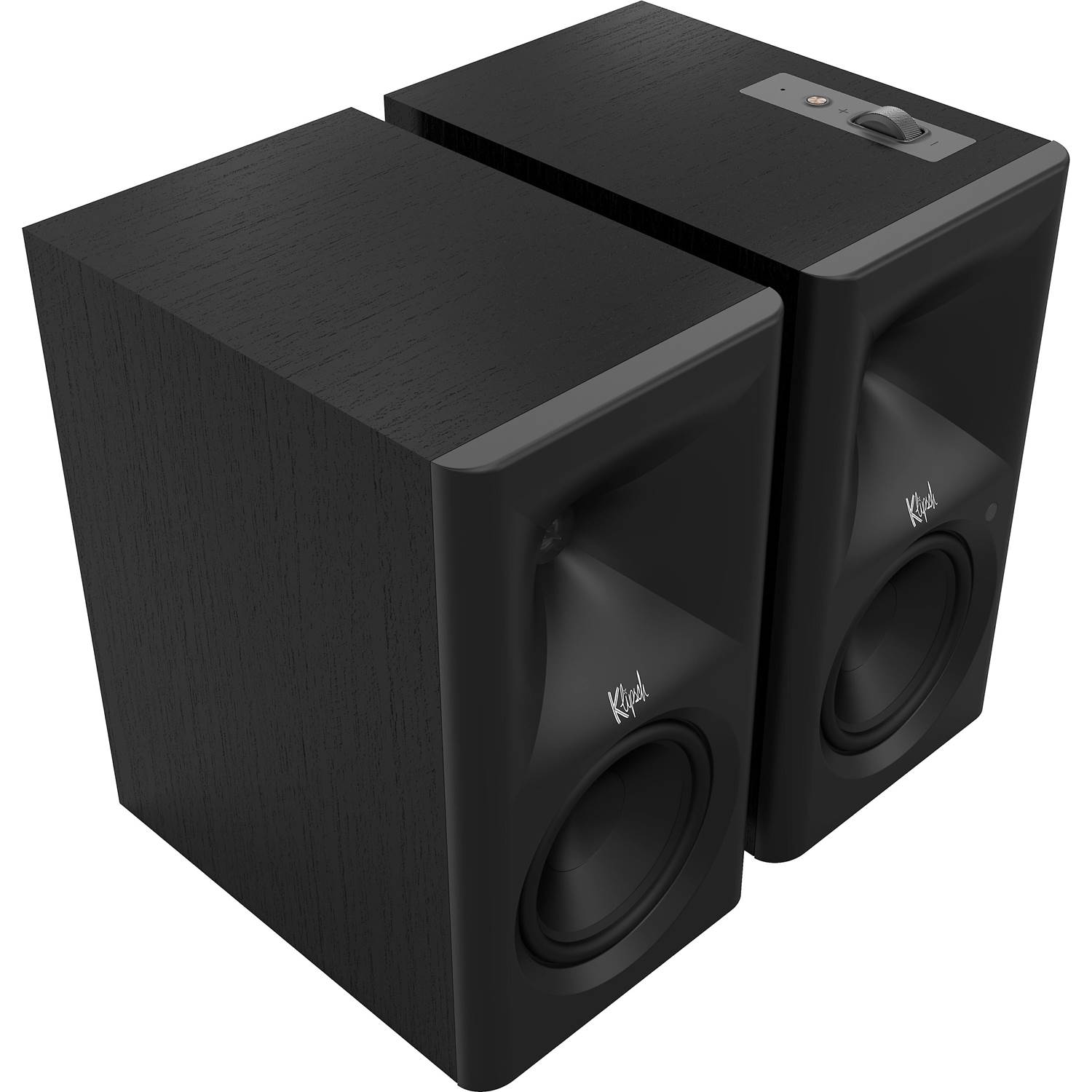 The Klipsch The Fives II, one of only three speakers here whose HDMI can take a source as well as feed a television
Our own data is not complete. We record a subwoofer output on 23 of the 31 and the other eight are blank, which means we have not checked them rather than that they lack one. That distinction matters: earlier this week we found six speakers missing from this very list because their HDMI field was blank rather than filled in, and a blank behaves exactly like a no.
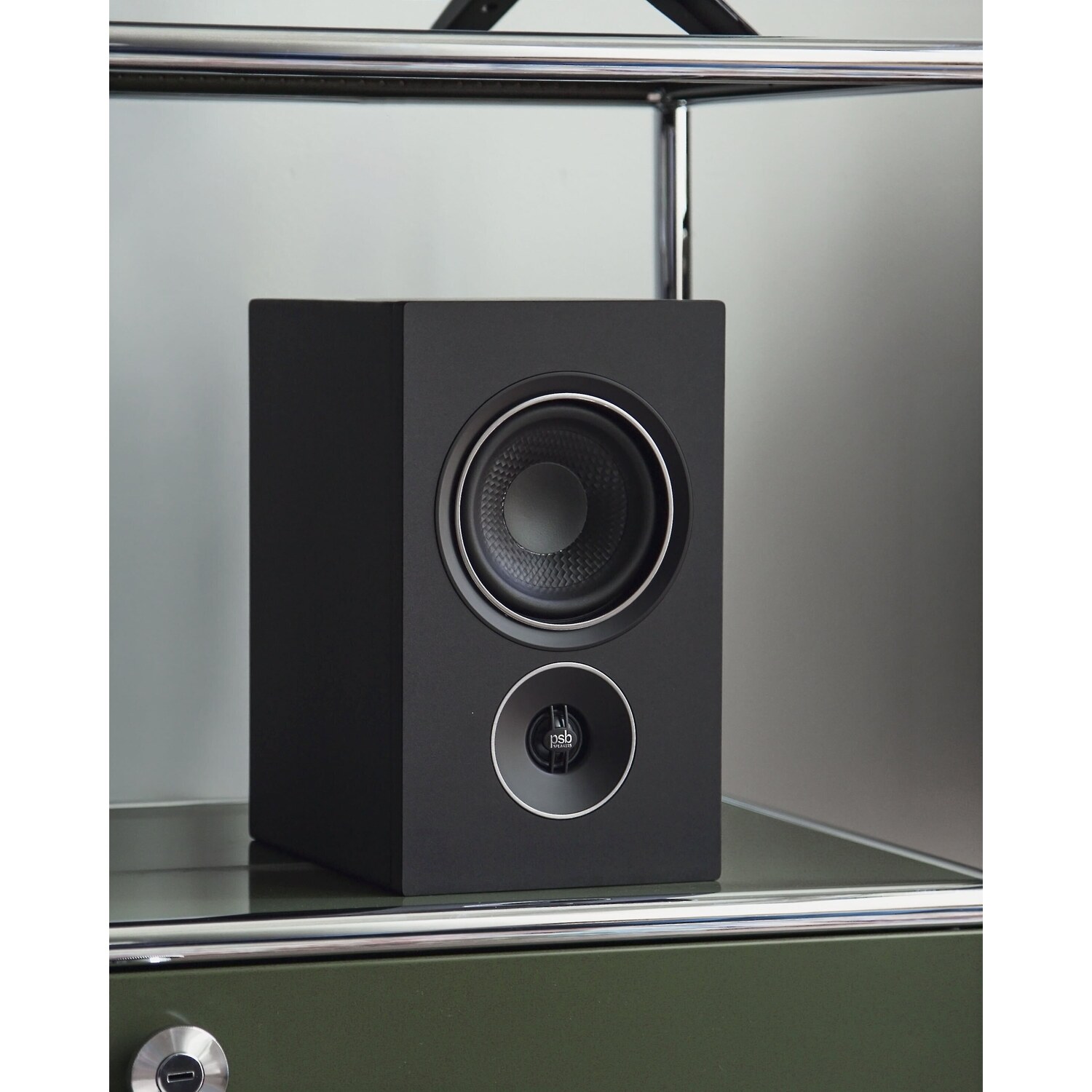 The PSB iQ1 at 999 dollars, one of the six speakers our own feature page was leaving out until this week
Questions answered
Will these work with my television?
If your TV has an HDMI socket marked ARC or eARC, yes. Almost every set sold since about 2018 has one. If it does not, use the optical input instead, which 30 of these 31 speakers have. You lose TV remote volume control unless the television supports CEC over optical, which most do not.
Do I need eARC, or is ARC enough?
ARC is enough for television, streaming apps and music. eARC has about ten times the bandwidth and carries lossless soundtracks such as Dolby TrueHD and DTS-HD. If you play Blu-ray discs, hold out for eARC. Fifteen of the 31 have it.
Can I plug a games console into the speakers?
Only into the three Klipsch II models, which have an HDMI input as well as an output and pass video through to the television. On the other 28 the HDMI socket only sends sound back from the TV, so the console plugs into the television as usual.
Are any of these floor-standing?
Five: the Fluance Ri91 at 1,000 dollars, the Q Acoustics Q Active 400 at 2,999, the KEF LS60 Wireless at 4,999 and the two Focal Diva models. When this page was first written the LS60 was the only one.
Do I still need a subwoofer?
It depends how low the speaker goes. The KEF LS60 Wireless reaches 31 Hz and the Klipsch The Nines II 31 Hz, which is deep enough that most people would not miss one. Under 1,000 dollars the deepest here is the KEF Coda W at 41 Hz, and at that end a subwoofer earns its place for films.
Why do I keep seeing these called a soundbar alternative?
Because they solve the same problem with one cable and the same remote, and they generally sound better for music because they are two real speakers with real space between them. What they will not do is fit invisibly under a wall-mounted television, and they need mains power in two places rather than one.
If you are replacing a soundbar with a proper stereo pair, is the ARC and eARC distinction going to decide it for you, or does one cable to the television settle the question on its own?
FIND THIS INTERESTING? SHARE IT WITH YOUR FRIENDS!