Sonos has released the Amp Multi, an eight-channel multi-zone amplifier at 3,500 dollars. It is a one-rack-unit box for people wiring a whole house, and it is a long way from the 699 dollar Sonos Amp we have listed since 2018.
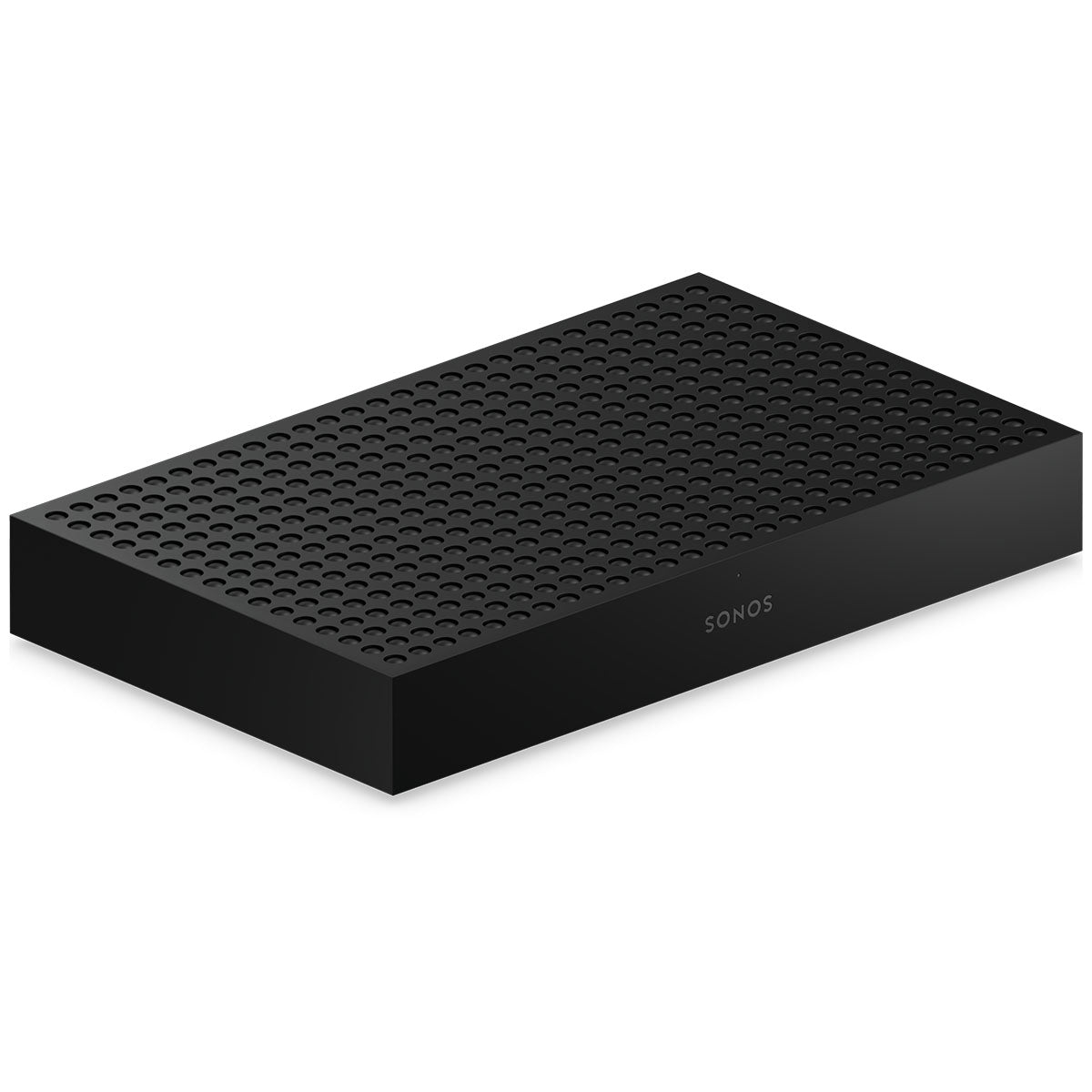 Sonos Amp Multi eight-channel multi-zone amplifier
The specification sheet has one line on it that is worth more than all the rest.
Quick facts
- 3,500 dollars. Eight channels, 125 watts each into 8 ohms.
- "All channels driven", to the FTC standard. That is the whole story, and it is explained below.
- Class D using GaN transistors and post-filter feedback. 0.005 percent distortion, 114 dB signal to noise, damping factor over 400.
- Eight banana-plug pairs, two RCA inputs routable to any zone, one RCA subwoofer output plus one Sonos Sub per zone.
- 437 x 65 x 265 mm, 5.06 kg, ethernet and WiFi 6, AirPlay 2. 5.4 watts at idle.
What "all channels driven" actually means
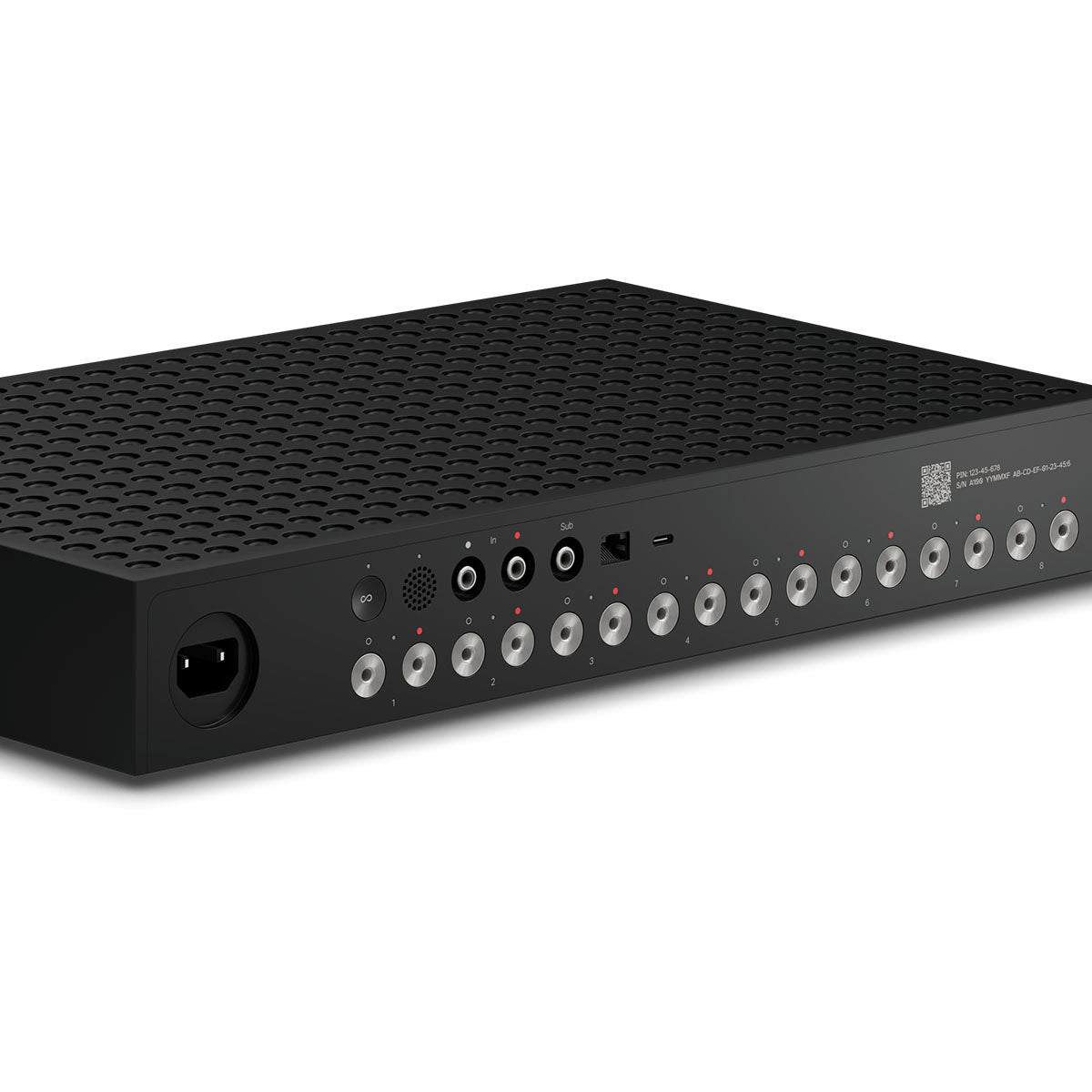 Eight numbered speaker outputs, RCA in, subwoofer out and ethernet on the rear panel
When a maker says an amplifier does 150 watts a channel, the obvious reading is that every channel can do 150 watts at the same time. That is usually not what the number means.
The convention for multichannel amplifiers is to measure with two channels driven and leave the rest idle. It is a legitimate test and every maker uses it, but it flatters a shared power supply. Ask all eleven channels for full output at once and the number falls, sometimes a long way. We wrote about this in detail when Denon printed two different power figures for the same receiver.
Sonos rates the Amp Multi at 125 watts on all eight channels simultaneously, to the FTC standard. That is 1,000 watts you can actually draw at once.
Here is how unusual that is, and the answer changed while we were writing this. We list 368 amplifiers. Among the 57 home theatre receivers we hold, exactly one publishes an all-channels figure: the McIntosh MHT300, at 9,500 dollars. Among stereo amplifiers, five say anything at all about how many channels were driven.
But go looking at the amplifiers this one actually competes with and the picture inverts. Adding the Sonos meant building it a category, and once we started filling that category, the strict rating turned out to be normal rather than remarkable. The Rotel C8+ is rated "100 watts per channel, 8 channels driven". The McIntosh MI254 carries an FTC rating. The Russound D890 goes the other way and says so plainly: 45 watts "at 1 kHz, one zone driven", which is a much weaker test than either.
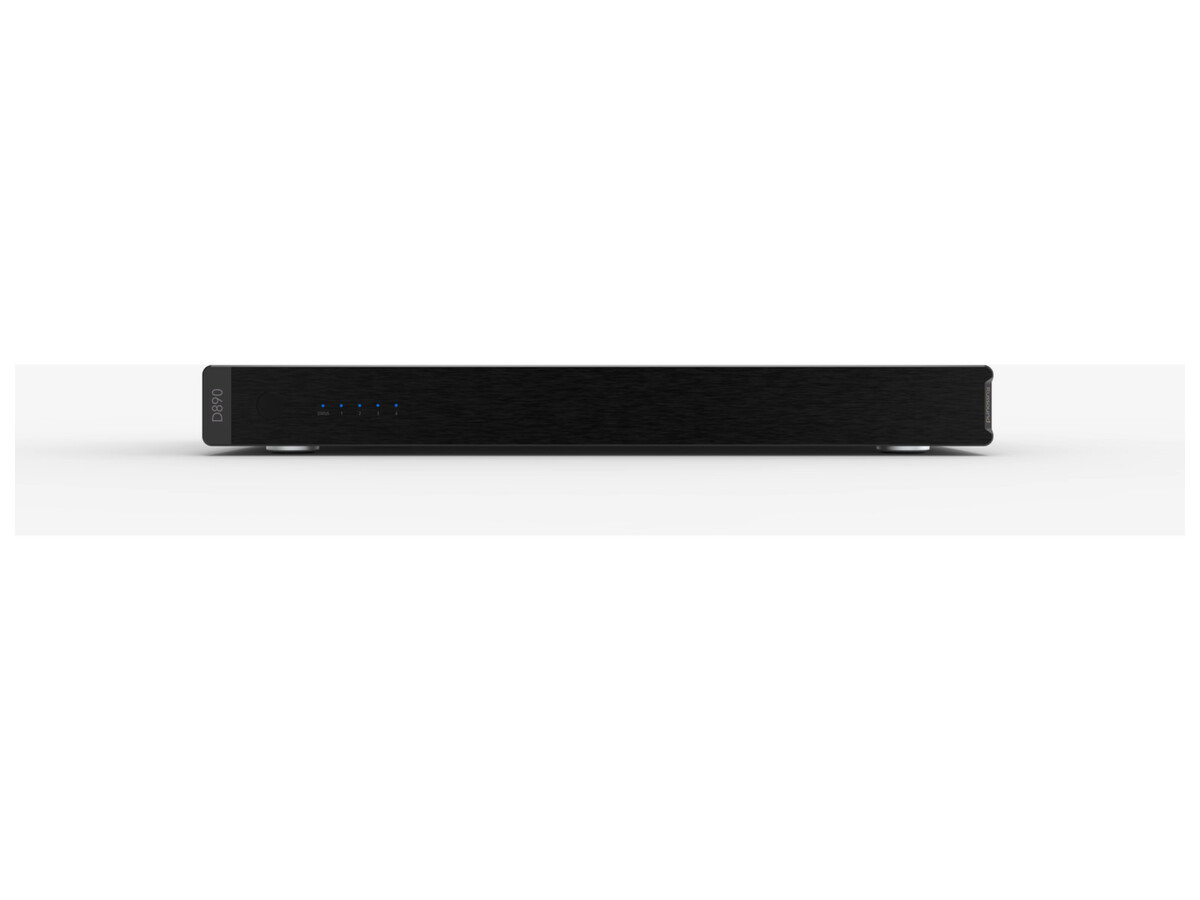 The Russound D890 goes the other way and says so: 45 watts at 1 kHz with one zone driven
The JBL DA850 is the one to read carefully, because it looks like a fourth. JBL rate it to the FTC band, 20 Hz to 20 kHz at 1 percent distortion, which is a strict test. But the same line says two channels driven. An FTC rating and an all-channels rating are not the same claim, and a summary that prints only "50 watts, FTC rated" throws away the part that matters.
So the real divide is not Sonos against everyone. It is that installer amplifiers state their measurement conditions and consumer AV receivers mostly do not. Of the ten multi-zone amplifiers we now list, four publish a genuine all-channels figure and the other six publish a narrower one and say which. The most complete of the lot is not the most expensive: the 763 dollar OSD Nero HTX4150 gives its output with one channel driven and with all four, each at 0.1 and at 1 percent distortion, which is four numbers where most makers print one. That is a more useful thing to know than the version we set out to write.
Which makes the like-for-like comparison possible, and it is the one that matters. The Rotel C8+ is 3,499 dollars against the Sonos at 3,500. Both are eight channels. Both quote all channels driven into 8 ohms. Rotel gives 100 watts a channel, Sonos 125. That is 800 total watts against 1,000, for a dollar less. On the only comparison here where both makers answered the same question, Sonos wins.
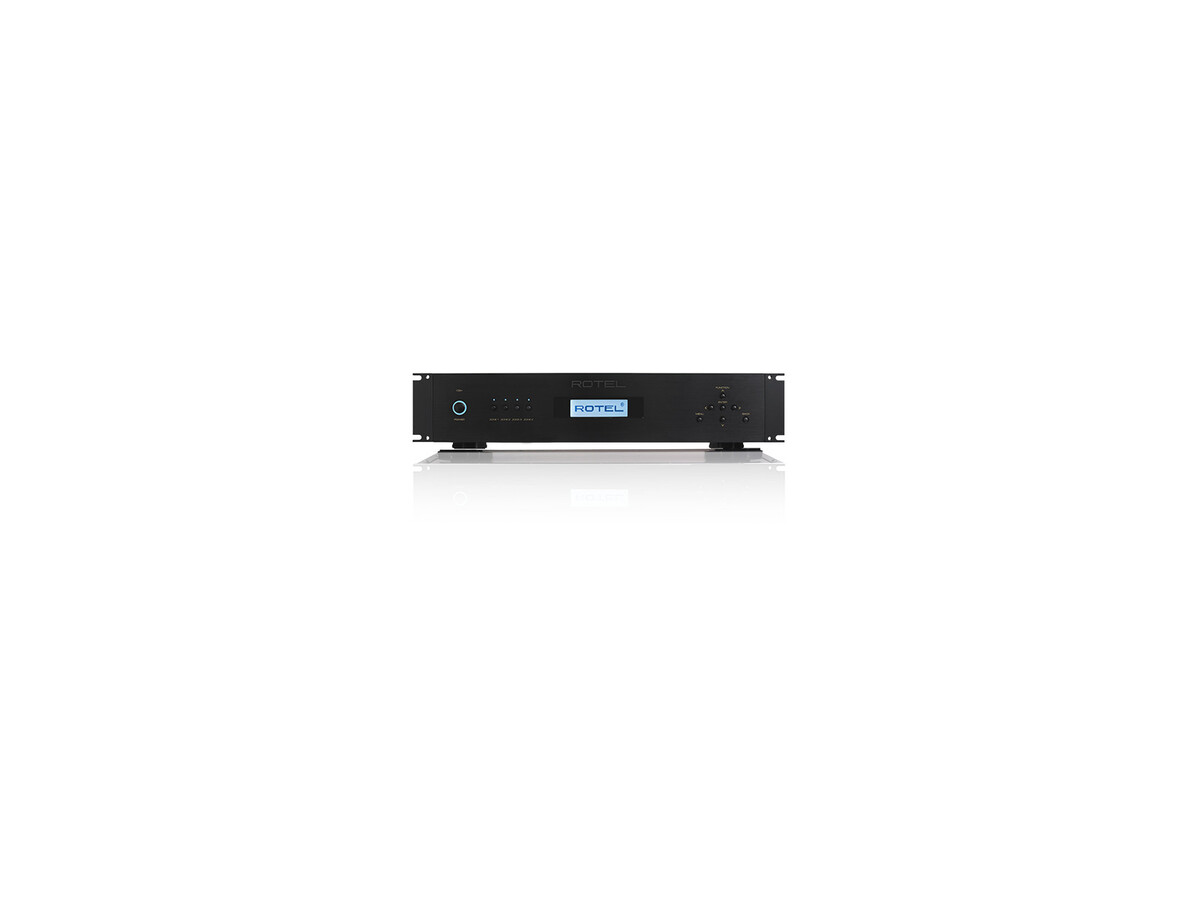 The Rotel C8+, eight channels at 3,499 dollars and the closest thing the Sonos has to a direct rival
Two caveats on that. The Rotel is Class AB with a toroidal transformer against the Sonos GaN Class D, and it has four analogue and four digital inputs matrixed to every zone where the Sonos has two analogue. Power is not the only axis. And the Rotel also publishes a 150 watt figure, which is its 4 ohm maximum, not a second opinion about 8 ohms.
And it makes the amp look worse, not better
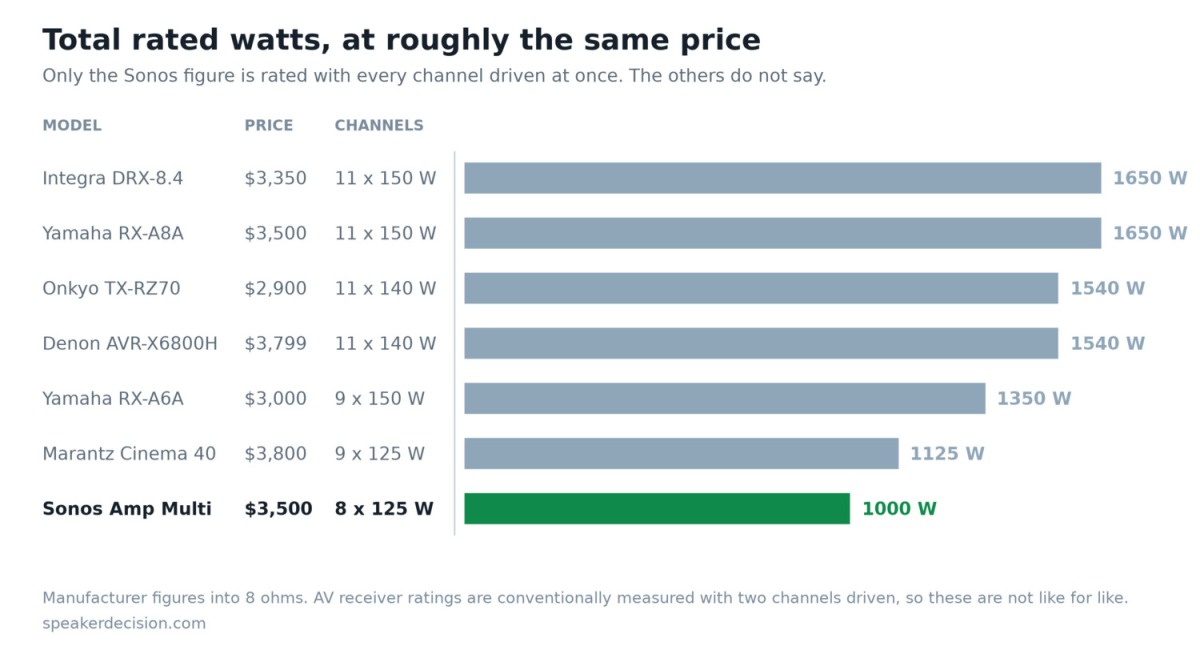 Total rated watts against similarly priced multichannel amplifiers
This is the uncomfortable part, and it is the reason honest specifications are rare.
At 3,500 dollars the Amp Multi offers 1,000 total watts. The Yamaha AVENTAGE RX-A8A is also 3,500 dollars and claims eleven channels at 150 watts, which is 1,650. The Integra DRX-8.4 claims the same 1,650 for 3,350. On a spec comparison the Sonos loses to both by a wide margin.
Except those are not the same measurement. Nobody knows what the Yamaha or the Integra do with every channel running, because neither says. The Sonos number is smaller because it is answering a harder question.
Sort our amplifier list by dollars per total watt and the Amp Multi lands at 3.50 dollars a watt, beaten by 63 of the 337 amplifiers we can rank. Read that literally and you would buy something else. Inside its own category the order is different again: the Russound looks cheapest at 2.78 dollars a watt, but that is the one-zone number, so it is the least comparable figure on the page. The Sonos at 3.50 and the Rotel at 4.37 are the two you can trust.
It is not an AV receiver, and it is not four Sonos Amps
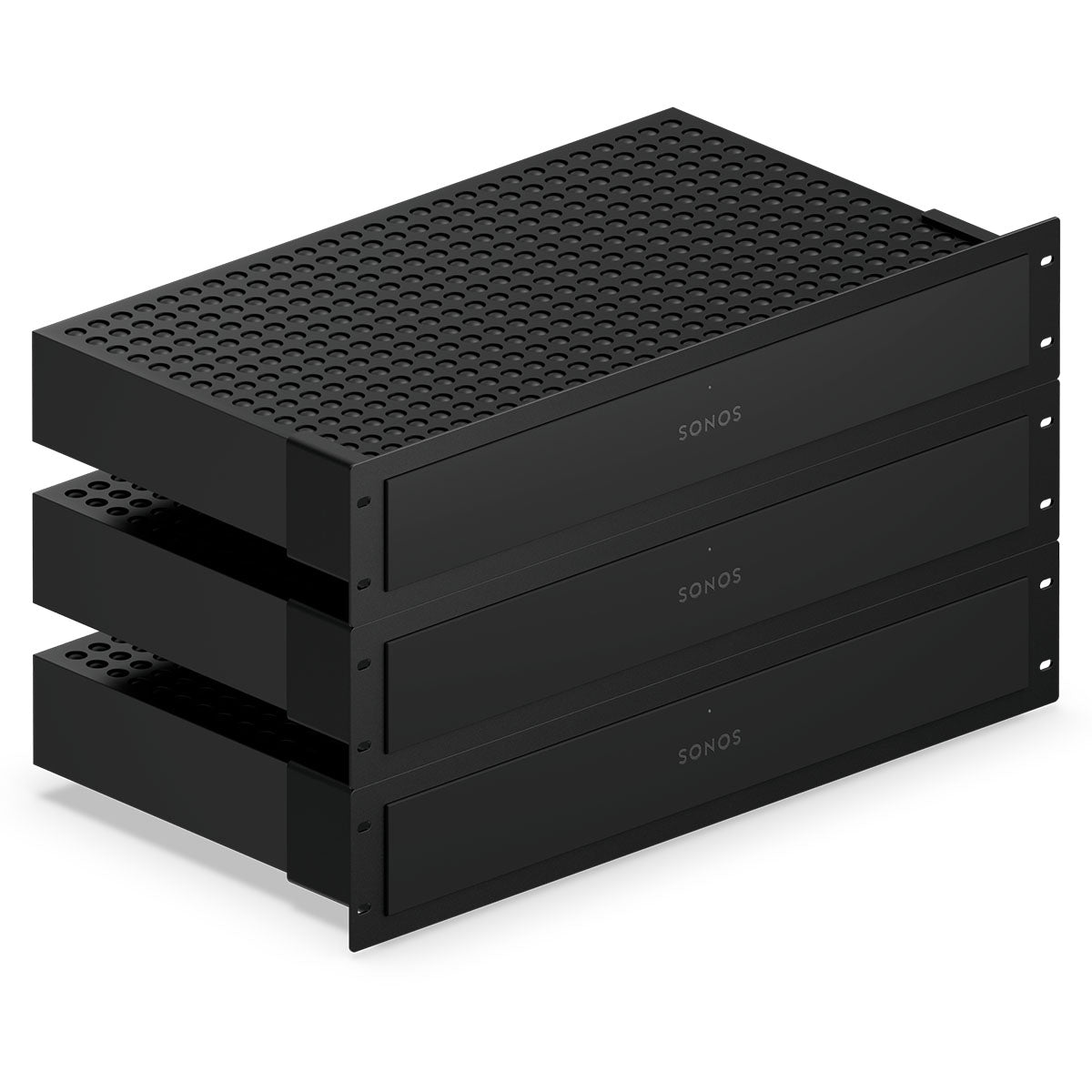 Three Amp Multi units racked together for twenty-four channels
Two things it is easy to mistake this for.
It is not a home theatre receiver. There is no HDMI, no surround decoding, no room correction, no Atmos. It is a distribution amplifier: eight zones of stereo, or four zones of two speakers, fed from streaming or from two RCA inputs. If you want a cinema, the Marantz Cinema 40 and its rivals are the products to look at.
And it is not obviously cheaper than the alternative. Four of the original Sonos Amps give you the same eight channels at the same 125 watts for 2,796 dollars, which is 704 dollars less. What the Amp Multi buys for that money is one rack unit instead of four boxes, one network device instead of four, a subwoofer output per zone, and a power rating you can trust. Whether that is worth 704 dollars depends entirely on whether you are installing this in a rack or a cupboard.
The things worth knowing
The engineering is more interesting than Sonos usually lets on. Class D with GaN output devices and post-filter feedback is a topology you normally read about on 5,000 dollar audiophile amplifiers, not on something sold to installers. The published figures back it up: 0.005 percent distortion, 114 dB signal to noise referenced to full output, damping factor above 400, and 15 Hz to 20 kHz within half a decibel.
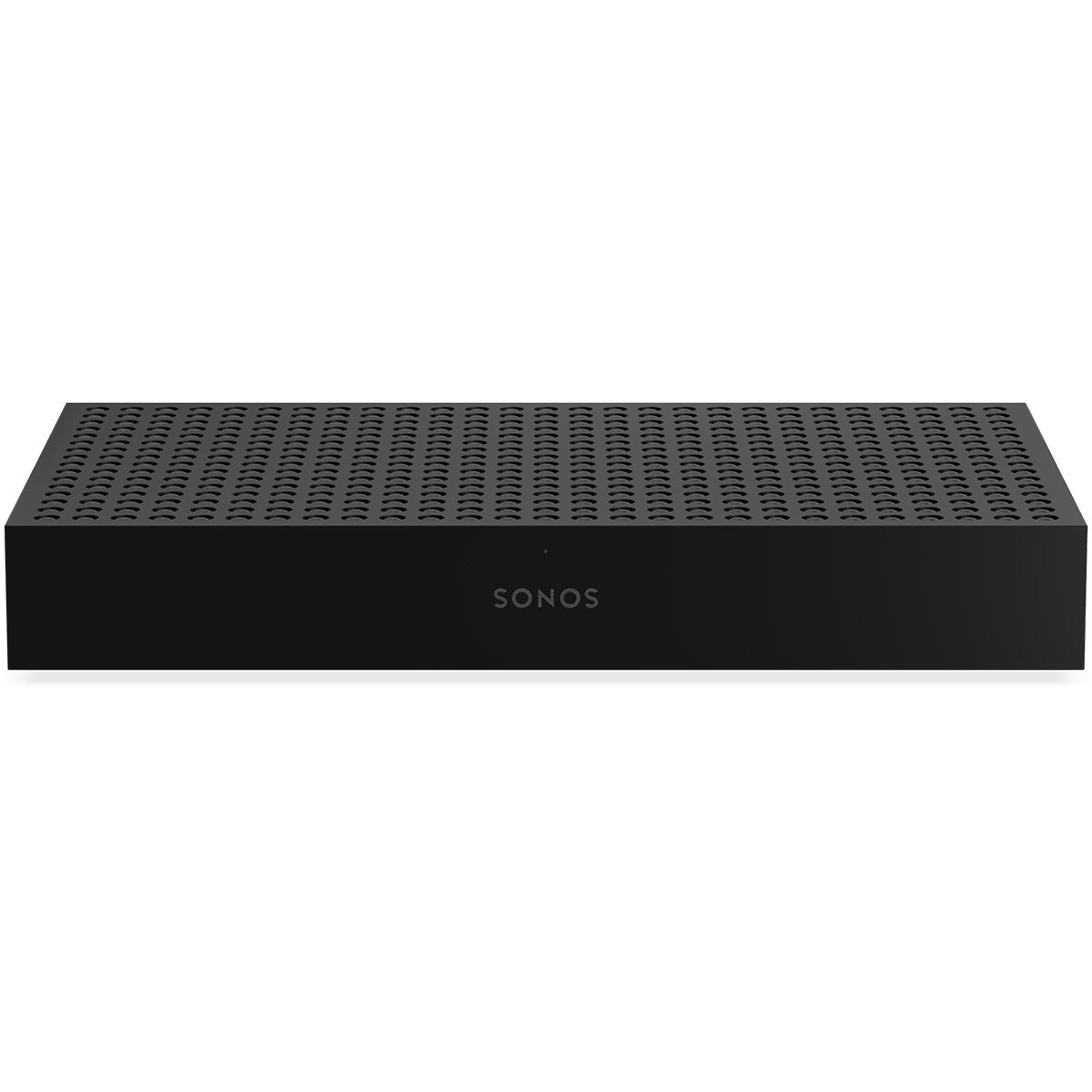 One rack unit, 5.06 kg, and 5.4 watts at idle. It is built to sit in a cupboard for a decade
Minimum impedance is 2.67 ohms, which Sonos quotes specifically with its own Architectural speakers. That is a low load, and it is the one figure here that deserves a raised eyebrow until somebody measures it.
Idle consumption is 5.4 watts. For a box that will sit powered up permanently in a cupboard for a decade, that matters more than most specs on the page.
The analogue input path has a limit worth noting. The two RCA inputs are analogue and unrestricted, but the optional USB-C line-in adapter digitises at 16-bit, 44.1 kHz. That is the same ceiling our seven-year-old Sonos Amp row carries, so it is a house convention rather than a slip.
It is in our database now, and adding it meant building it a home. It is not a stereo amplifier and not a home theatre receiver, which were the only two boxes we had, so it opens a new one: multi-zone amplifiers, for anything with four or more amplifier channels in a chassis feeding separate zones. There turned out to be far more of these than we expected. Crutchfield alone lists 44 products in the category, and the Rotel C8+ at 3,499 dollars is an almost exact rival to this one. Keeping them out of the stereo lists matters: our dollars-per-watt ranking multiplies watts by channels, so a 16-channel install amp at 50 watts would compute as 800 watts and out-rank real stereo amplifiers on a number that means something else entirely.
Would you pay 704 dollars more for one rack unit and a power rating you can trust, or run four separate Amps and spend the difference on speakers?