Bluesound has a new PULSE SUB, and it is not a refresh. The old one was a slim panel with a single driver and 100 watts. The PULSE SUB+ that replaced it used one 8 inch woofer and 150 watts. This one throws both shapes away: two opposed 6.5 inch woofers firing against each other inside a rounded cube, with 350 watts behind them. It is $1,299 and listed as coming soon.
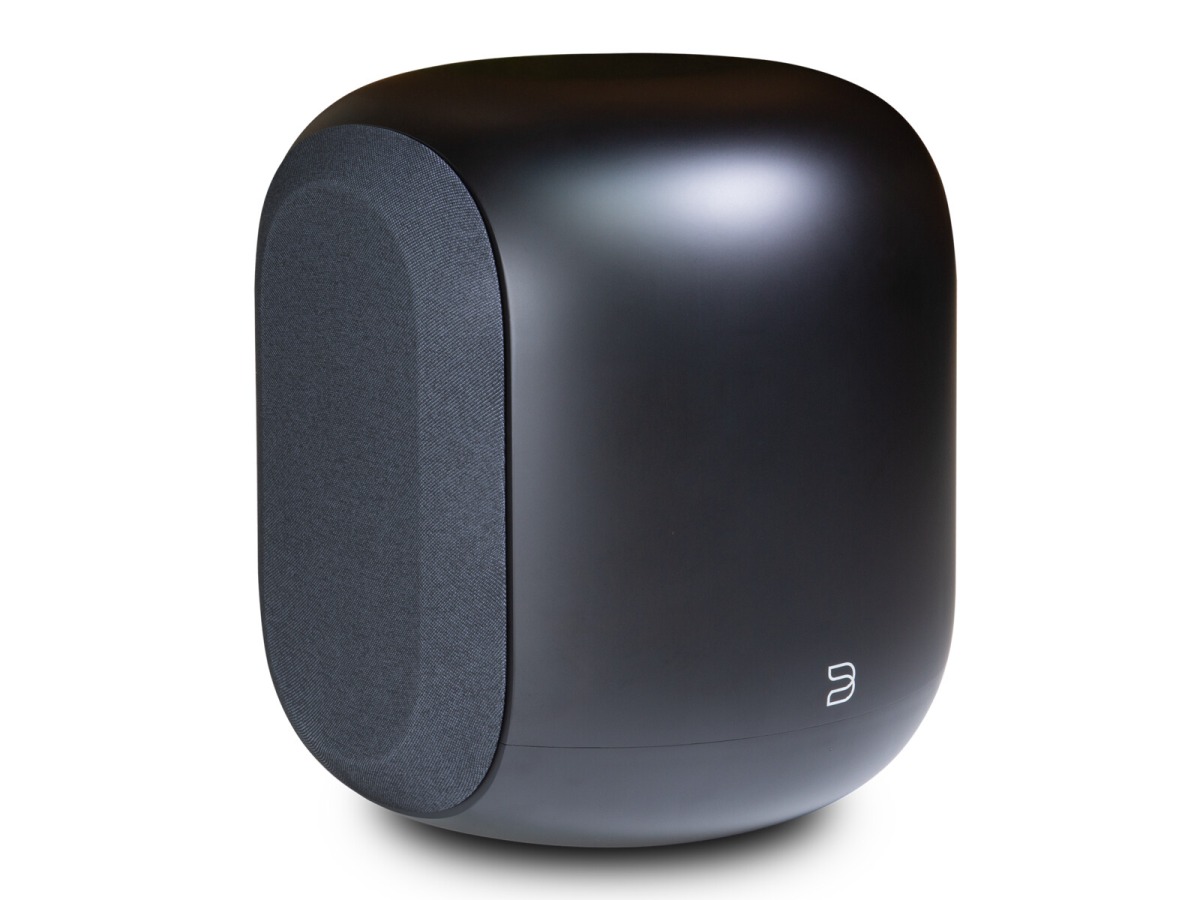 Bluesound PULSE SUB wireless powered subwoofer
Quick facts
- 350W total system power, dual-opposed 6.5in woofers.
- $1,299, black or white, coming soon.
- About a foot on every side. 330 x 292 x 315mm, 10kg.
- No frequency response published. None. Anywhere.
One warning before anything else, because the naming is a mess. The original PULSE SUB was replaced by the PULSE SUB+ in 2020, and now the newest model has gone back to being called plain PULSE SUB. So the product with the older-sounding name is the new one, and both it and the SUB+ are on sale at the same time. Check the driver count if you are unsure: two 6.5 inch woofers means the 2026 model, one 8 inch woofer means the SUB+.
What opposed drivers actually buy you
Two drivers mounted facing opposite directions push and pull in step, so the force each one exerts on the cabinet cancels the other out. The practical result is a box that does not walk across the floor or buzz the furniture it is standing on, which is what lets designers make a subwoofer this small without it shaking itself apart. Bluesound’s own words are that the arrangement is “designed to reduce unwanted vibration”.
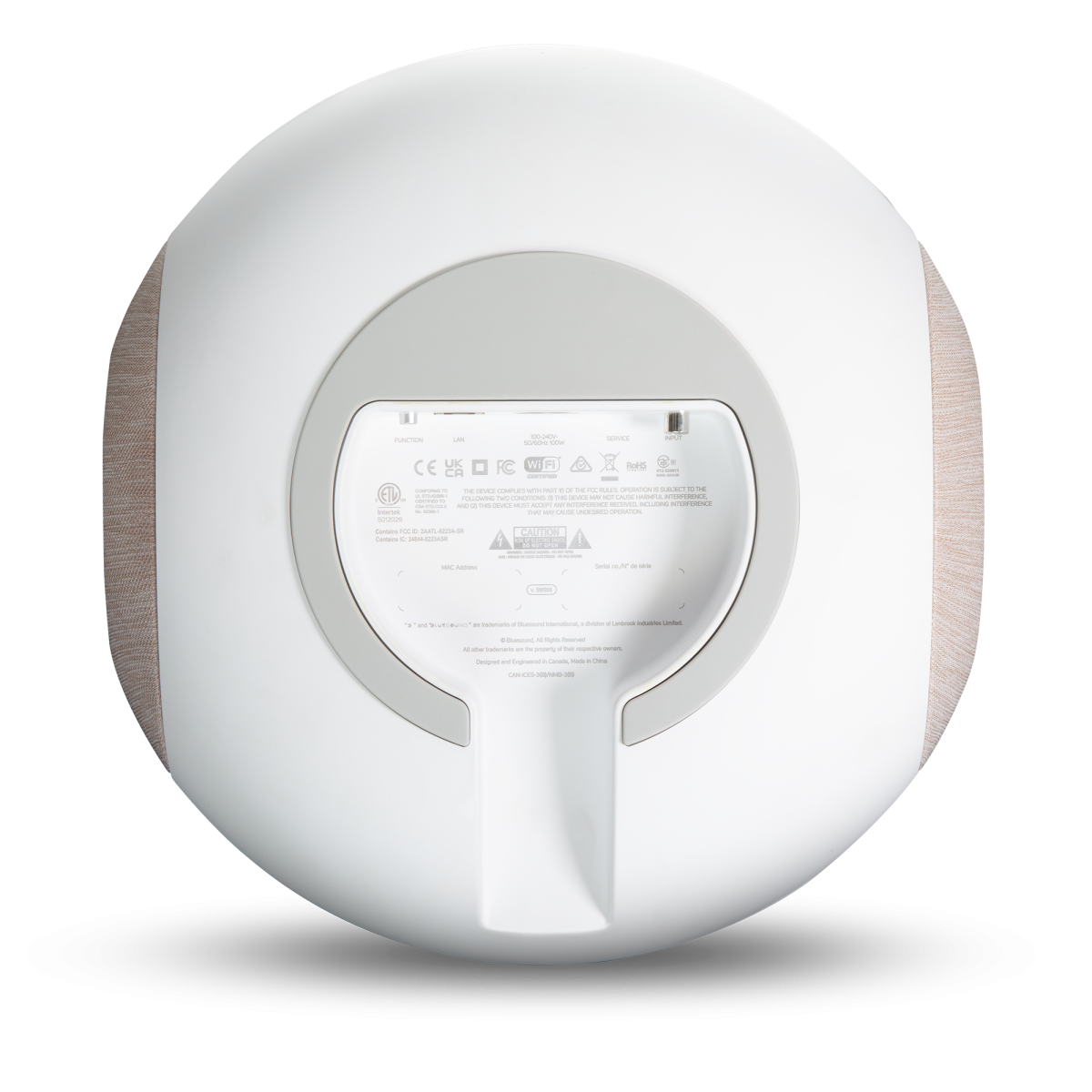 Rear View of Bluesound PULSE SUB in White Finish
It is not a new idea, and that matters when you are judging the price. SVS has been building dual-opposed micro subwoofers for years, and they are the obvious thing to weigh this against.
The number Bluesound has not published
Here is the part that made us stop while entering it. Bluesound does not publish a frequency response figure for this subwoofer. Not on the product page, and not in the preliminary datasheet, which lists the processor down to its ARM core and clock speed but has nothing at all about how low the thing goes.
That is a strange omission for a product whose entire job is low frequencies, and it is more noticeable because the PULSE SUB+ sitting below it in the range is specified at 22Hz to 150Hz, plus or minus 2dB, with a stated -10dB cutoff at 20Hz. So it is not that Bluesound never quotes the number. They quote it, in detail, on the older and cheaper model. Both are in our database now, so you can put the two side by side and see the gap for yourself.
A subwoofer without a published frequency response is asking you to buy on trust. It might well go deep. We just have no way to tell you, and neither does anybody else until units ship.
Our database entry has that field left empty rather than filled with a guess. If Bluesound publishes one when the sub actually ships, we will add it.
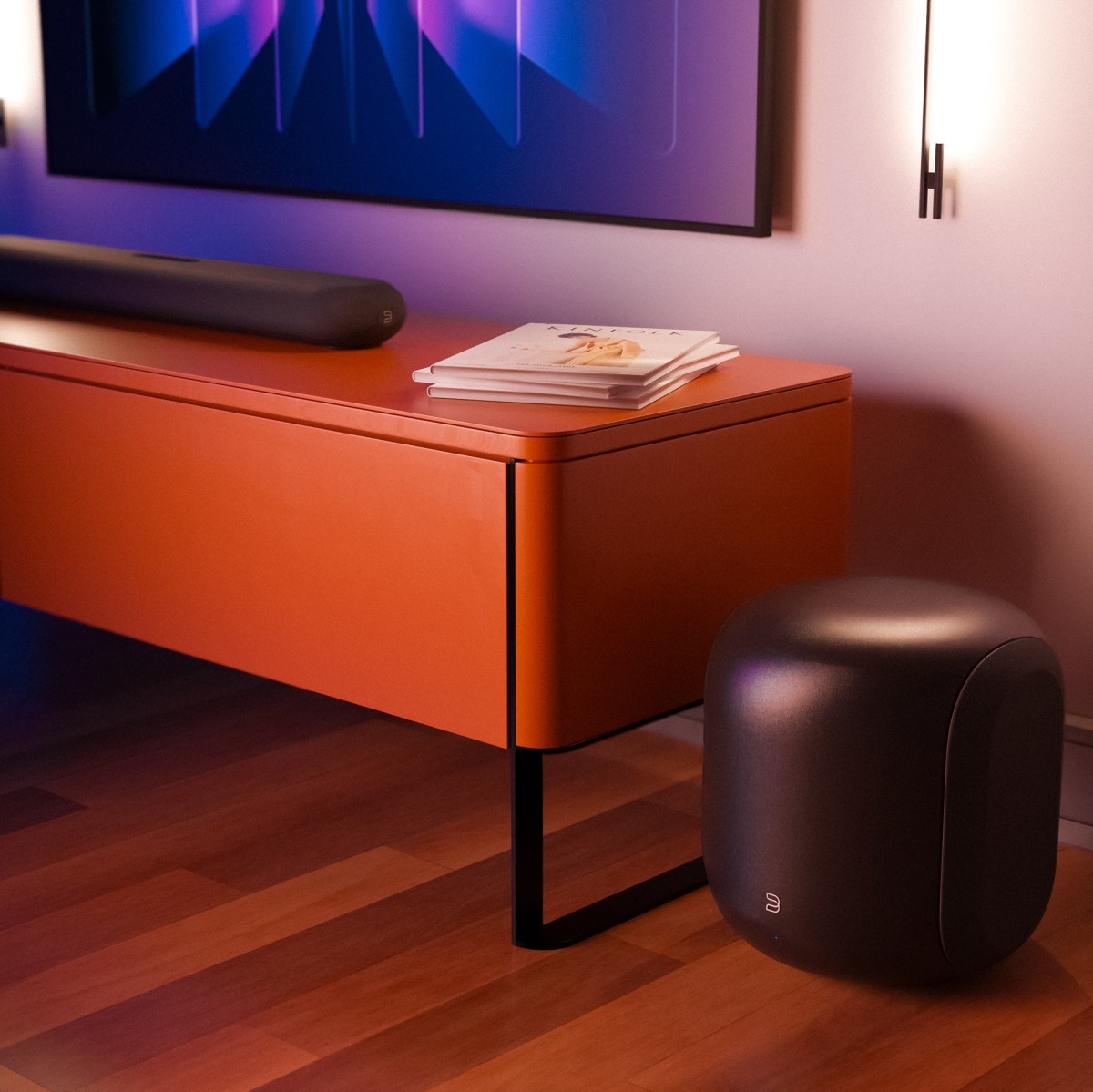 Bluesound PULSE SUB Lifestyle
How it compares with the obvious rivals
All four are on sale today. The two SVS models use the same dual-opposed idea, and the SUB+ is the one already in Bluesound’s own range.
Read that table and the Bluesound looks expensive. It is the biggest cabinet of the three, has the smallest drivers, the least amplifier power, the highest price, and the only unpublished bass extension. On the numbers alone there is no argument for it.
The argument is BluOS, and for the right buyer it is a strong one. If you already run a POWERNODE or a PULSE CINEMA, this pairs from the same app you already use, takes its audio wirelessly, and is set up in the same place as everything else you own. Neither SVS talks to BluOS at all. Buying into a closed ecosystem always costs something, and here the cost looks like roughly $300 and a couple of inches of driver.
What else is in the specification
- Wireless or wired. Wi-Fi 5 and Ethernet, plus a low and line level analog input, so it will work with a non-Bluesound source too.
- Crossover and phase are in the app, not on the back panel. Volume, variable crossover frequency and variable phase all live in BluOS Controller, which runs on iOS, Android, Windows and macOS.
- A dimmable status LED, which sounds trivial until you have a subwoofer glowing at you during a film.
- Magnetic grilles in matte satin paint, black or white and tan.
- 8 watts on network standby. That is the cost of always being ready to pair, and it is not nothing over a year.
- Pairs beyond home cinema. Bluesound lists the POWERNODE, PULSE M and PULSE FLEX as partners, not just the PULSE CINEMA soundbars.
Should you wait for it
If you are already inside BluOS and you want bass without running a cable across the room, this is the obvious answer and there is not really a competitor. Wireless subwoofer integration that works properly with the rest of your system is worth paying for, and Bluesound has been doing it longer than most.
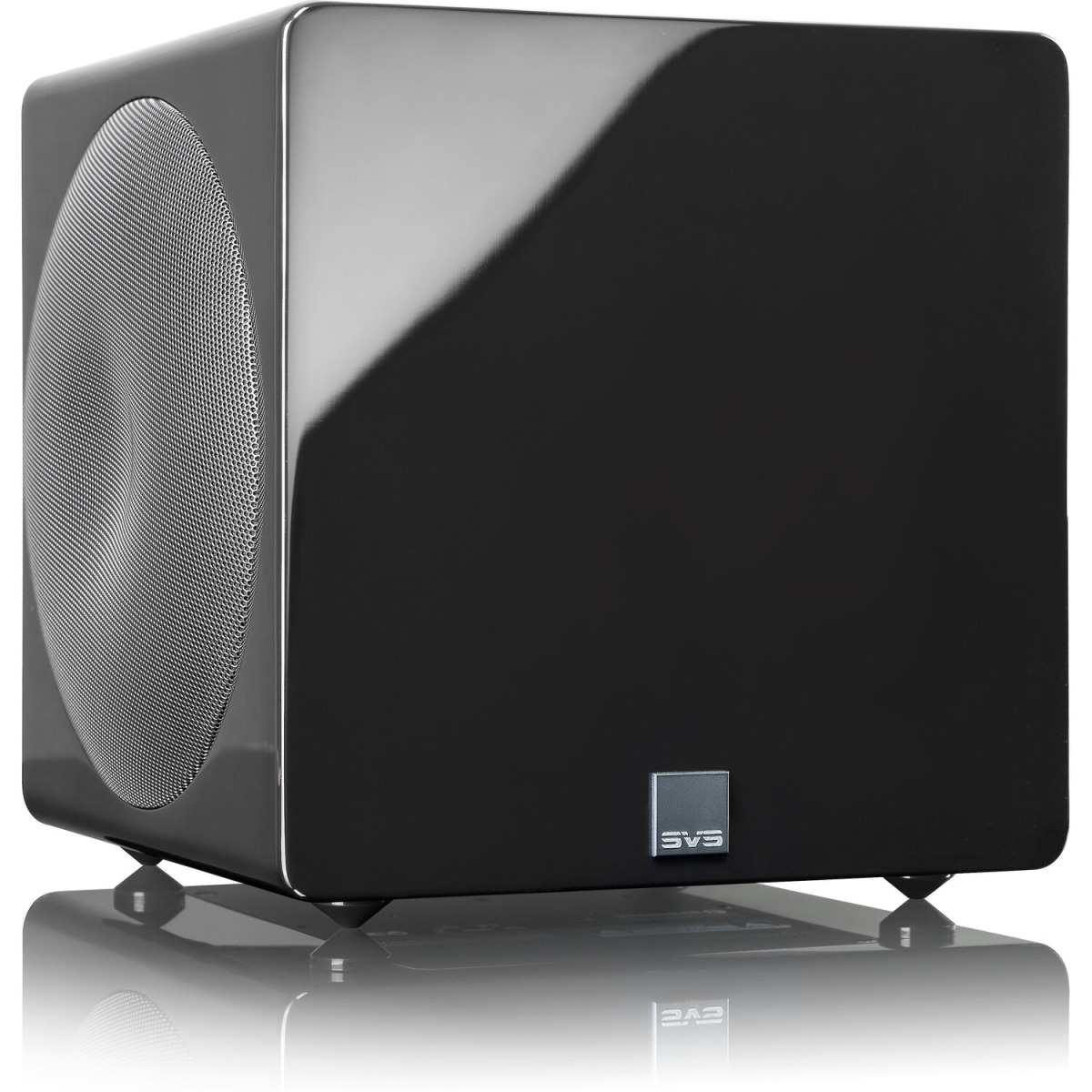 SVS 3000 Micro
If you are not in BluOS, this is a hard sell at $1,299 against the SVS 3000 Micro at $900. And whichever camp you are in, wait for the frequency response before committing. We hold 187 subwoofers and this is one of the very few that does not tell you how low it plays.
Questions answered
Questions answered
How much is the new Bluesound PULSE SUB and when can you buy it?
$1,299 in black or white. Bluesound has it listed as coming soon rather than in stock, so it has been announced but is not shipping at the time of writing.
How is it different from the PULSE SUB+?
Completely different. The SUB+ uses a single 8 inch woofer with a 150 watt amplifier and is specified at 22Hz to 150Hz. The new PULSE SUB uses two opposed 6.5 inch woofers with 350 watts, in a cube-shaped cabinet rather than a slim one, and publishes no frequency figure. Confusingly the newer model has the older name, since Bluesound dropped the plus. Both are on sale, and you can compare them here.
Does it work with non-Bluesound gear?
Partly. It has a low and line level analog input, so any amplifier with a subwoofer output can drive it by cable. The wireless pairing, the app control and the crossover and phase adjustment all run through BluOS, so you need a Bluesound player to get the full thing.
Why is there no frequency response in your specs for it?
Because Bluesound has not published one, on the product page or in the datasheet. We leave a field empty rather than estimate it. If they publish a figure when it ships, we will fill it in.
What I cannot decide is whether the missing frequency spec is a preliminary datasheet that simply is not finished, or a deliberate choice because the honest number is not flattering for a 6.5 inch driver. Two 6.5s in a sealed box will not reach what two 9s reach, and Bluesound knows the comparison people will make. Which do you think it is?