PS Audio spent forty years making electronics before they made a speaker. The aspen line is what came out of that, and it is odd enough that it took us a while to file it properly. It is all in now.
Five products, which is the entire loudspeaker range: the Aspen FR5, FR10, FR20 and FR30, plus the Foundry F12 subwoofer.
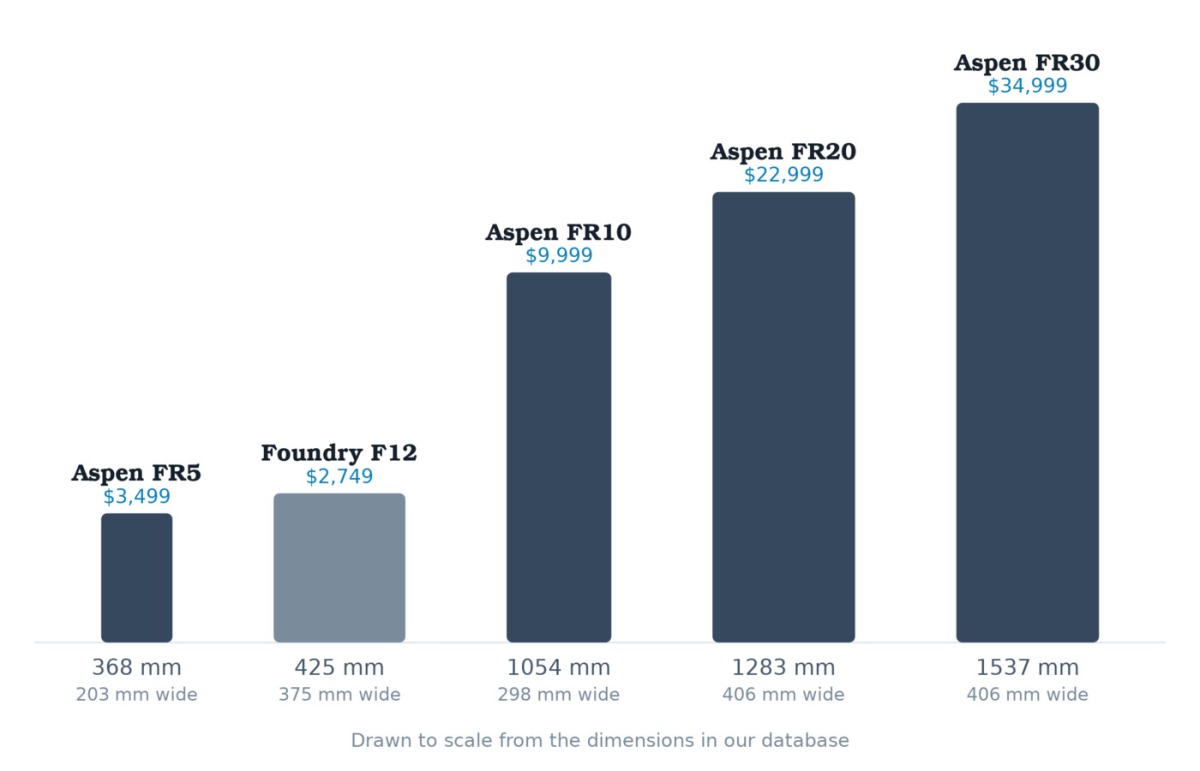 PS Audio Aspen lineup drawn to scale
Quick facts
- The full range is in: four aspen speakers and one subwoofer, 3,499 to 34,999 dollars a pair.
- Only three speakers in our whole database use a planar-magnetic midrange. All three are these.
- No ports anywhere. Every one uses passive radiators instead, which 62 of the 1,319 speakers we hold do.
- They are hard to drive. The FR5 is 83.5 dB sensitive, and the towers are 4 ohm with minima down to 3.3.
- The FR30 weighs 104.5 kg, which puts it in the heaviest 20 speakers we list.
The thing that makes them genuinely unusual
Plenty of speakers use a planar-magnetic or ribbon tweeter. We hold 133 of them, so that alone is not news.
Using a planar-magnetic driver for the midrange is a different matter. Of the 1,319 passive and powered speakers in our database, exactly three do it, and all three are the PS Audio towers. The FR10 runs an 8 inch planar midrange, the FR20 and FR30 use a 10 inch one. That is a big flat diaphragm doing the job a cone normally does, right where voices live.
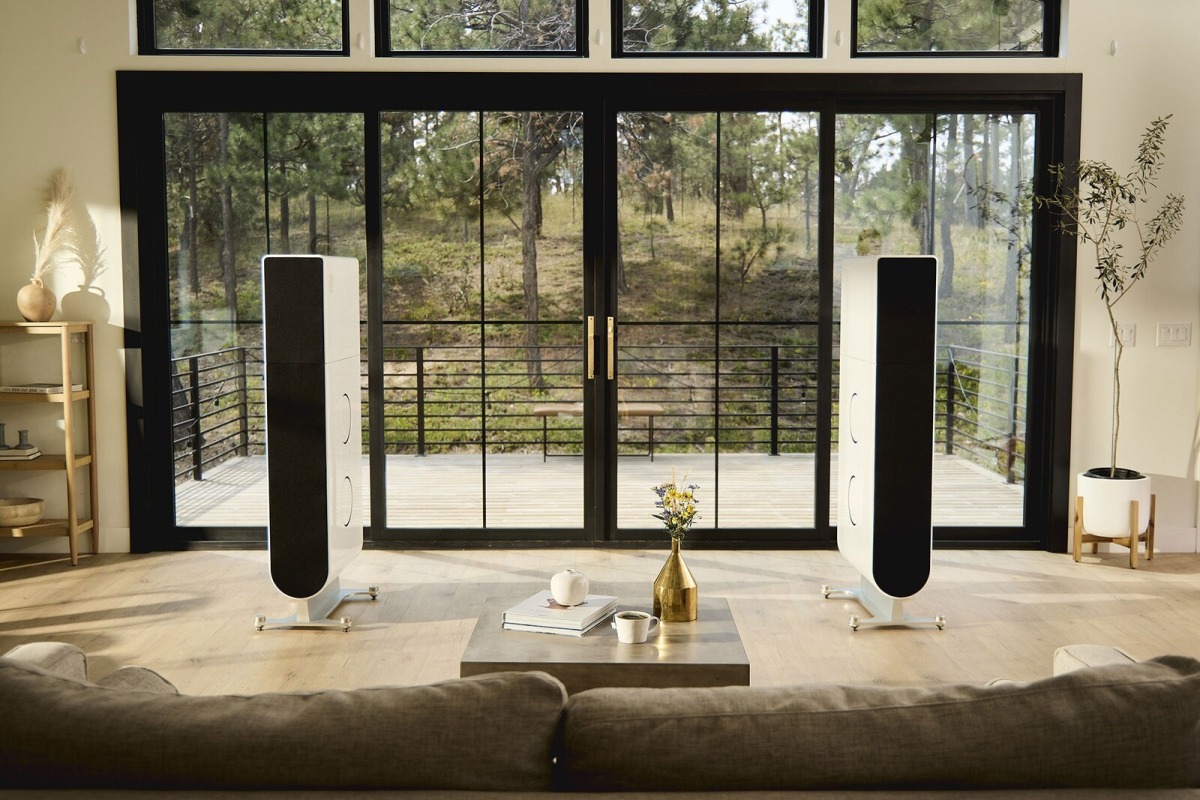 PS Audio Aspen FR30 in a listening room
They also skip the port entirely. Every model uses passive radiators instead, from a single 6x9 inch oval on the FR5 to four 10 inch side-firing ones on the FR30.
The part you need to plan for
These are not easy loads, and it is worth knowing before you get attached.
The FR5 is quoted at 83.5 dB. Of the 1,194 speakers we hold with a sensitivity figure, only twelve are lower. The three towers are 4 ohm nominal with minimum impedances of 3.3, 3.5 and 3.6 ohms. PS Audio ask for 50 to 200 watts on the FR10 and 100 to 600 on the FR30.
So budget for the amplifier at the same time as the speaker. Our amplifier and speaker matcher will do the sum for you, including the impedance safety check.
One more thing worth flagging, because it is easy to miss. PS Audio quote their frequency response at -6 dB, half space, not the +/-3 dB most makers use. The FR30's 23 Hz is a real number, it is just not measured the same way as the 23 Hz on the next spec sheet you read. Keep that in mind when you line them up against rivals.
Put them side by side
Here are the four aspens against each other, straight from the database:
FIND THIS INTERESTING? SHARE IT WITH YOUR FRIENDS!