The Marantz Cinema 70s Series 2 ships on September 15. It is the last of the three Series 2 receivers to arrive. The Cinema 50 Series 2 and Cinema 60 Series 2 went on sale in August.
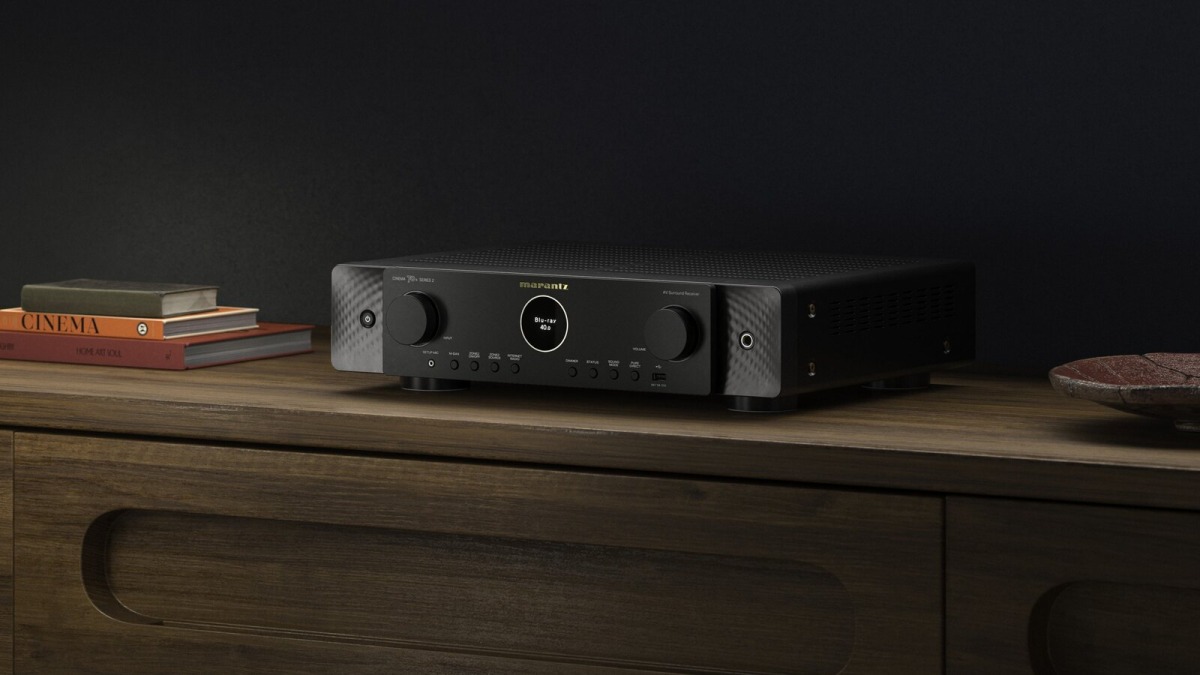 The Marantz Cinema 70s Series 2, the slimline model in the range. It goes on sale on September 15 at 1,500 dollars.
Marantz priced all three the same way. Each one costs 200 dollars more than the model it replaces. And the old models are still on Marantz's US store, at their old prices, right next to the new ones.
So if you are buying a Marantz receiver this autumn, you have a real choice to make. I went through Marantz's own specification tables for all six models to see what the extra 200 dollars actually gets you.
Quick facts
- Each Series 2 model costs 200 dollars more. That is 15.4 percent on the 70s, 11.1 percent on the 60 and 7.1 percent on the 50.
- On Marantz's spec sheets, power, weight and dimensions are identical in all three pairs.
- The Cinema 70s Series 2 gains the most: a better Audyssey tier and the option to buy Dirac Live, which the old 70s cannot run at all.
- The Cinema 50 Series 2 gains the least. Its room correction was already the top Audyssey tier with a Dirac option.
- Checking this found three wrong rows on our own site. They are fixed.
Same box, new badge
Start with what did not change, because it is most of the list.
The Cinema 70s and the Cinema 70s Series 2 both make 50 watts per channel into 8 ohms across seven channels. Both weigh 19.2 lb. Marantz lists both at 17.4 by 14.7 by 4.3 inches, and both draw 250 watts. The front panels are the same apart from the words SERIES 2.
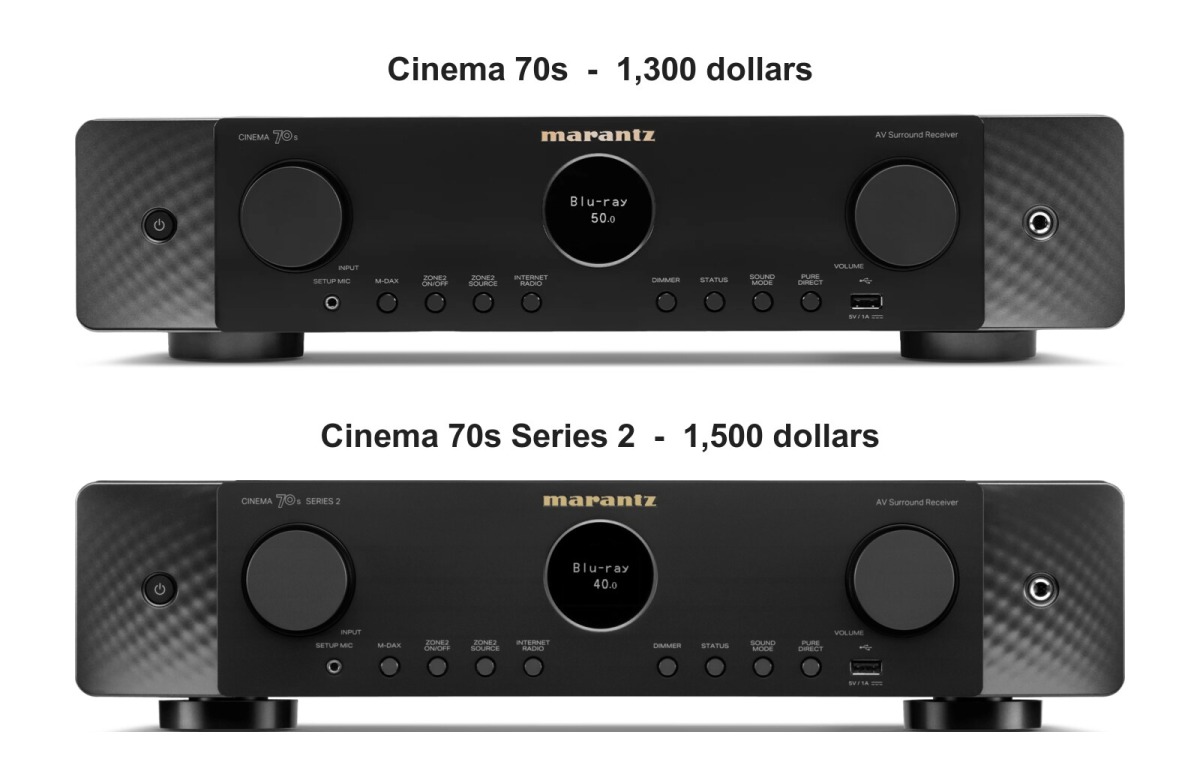 The Cinema 70s and the Cinema 70s Series 2 from the front. The badge is the only visible difference.
The other two pairs look the same. The Cinema 60 and its Series 2 both make 100 watts and weigh 24 lb. The Cinema 50 and its Series 2 both make 110 watts across nine channels and weigh 29.8 lb.
| Model | Price | 8 ohms | Channels | Weight | Audyssey | Dirac Live |
|---|
| Marantz Cinema 70s | 1,300 dollars | 50 W | 7 | 19.2 lb | MultEQ | Not supported |
| Marantz Cinema 70s Series 2 | 1,500 dollars | 50 W | 7 | 19.2 lb | MultEQ XT | Paid upgrade |
| Marantz Cinema 60 | 1,800 dollars | 100 W | 7 | 24 lb | MultEQ XT | Not supported |
| Marantz Cinema 60 Series 2 | 2,000 dollars | 100 W | 7 | 24 lb | MultEQ XT | Paid upgrade |
| Marantz Cinema 50 | 2,800 dollars | 110 W | 9 | 29.8 lb | MultEQ XT32 | Paid upgrade |
| Marantz Cinema 50 Series 2 | 3,000 dollars | 110 W | 9 | 29.8 lb | MultEQ XT32 | Paid upgrade |
| FEATURE and SPECS COMPARISON | |  |  |
| Model | Marantz Cinema 70s | Marantz Cinema 70s Series 2 |
| Type | Home Theater Receiver | Home Theater Receiver |
| Amplifier Class | AB | AB |
| Power into 8 ohms | 50 watts | 50 watts |
| Minimum Impedance | 4 ohms | 4 ohms |
| Analog Inputs | 3 | 3 |
| Phono Input | | |
| Optical Digital Inputs | 1 | 1 |
| Coaxial Digital Inputs | 1 | 1 |
| USB Input | Yes | Yes |
| HDMI Input | 6 | 6 |
| Preamp Outputs | 7.2-channel | 7.2-channel |
| Subwoofer Output | Dual | Dual |
| Room Correction System | Audyssey MultEQ | Audyssey MultEQ XT, with Dirac Live as a paid upgrade |
| Height | 106.4mm | 109.2mm |
| Width | 441.5mm | 442.0mm |
| Depth | 407.9mm | 373.4mm |
| Weight | 8.71kg | 8.71kg |
| MSRP | 1300 USD | 1500 USD |
| Check Current Price | Amazon, B&H Photo | Amazon, B&H Photo |
What all three get
Marantz says every Series 2 model has a new 32-bit, eight-channel DAC. That is the headline change, but it is hard to judge from a spec sheet. There are no new measured figures for it.
The rest is easier to pin down. All three add 1440p pass-through and AMD FreeSync for gaming, on HDMI inputs 4 to 6. The Series 2 spec tables list Roon Ready, where the old models say Roon tested. Installers get Web Control 2.0 and a new HDMI diagnostics tool. A firmware update later will add Bluetooth LE Audio for lower delay with compatible headphones.
None of that changes how loud the receiver plays or how many speakers it can drive.
The 70s gets the most for its 200 dollars
Room correction is where the three pairs split apart.
The old Cinema 70s uses the basic version of Audyssey, called MultEQ. Its spec table says Dirac Live support: No. The Series 2 moves up to MultEQ XT, the middle tier, and it can run Dirac Live if you buy a licence.
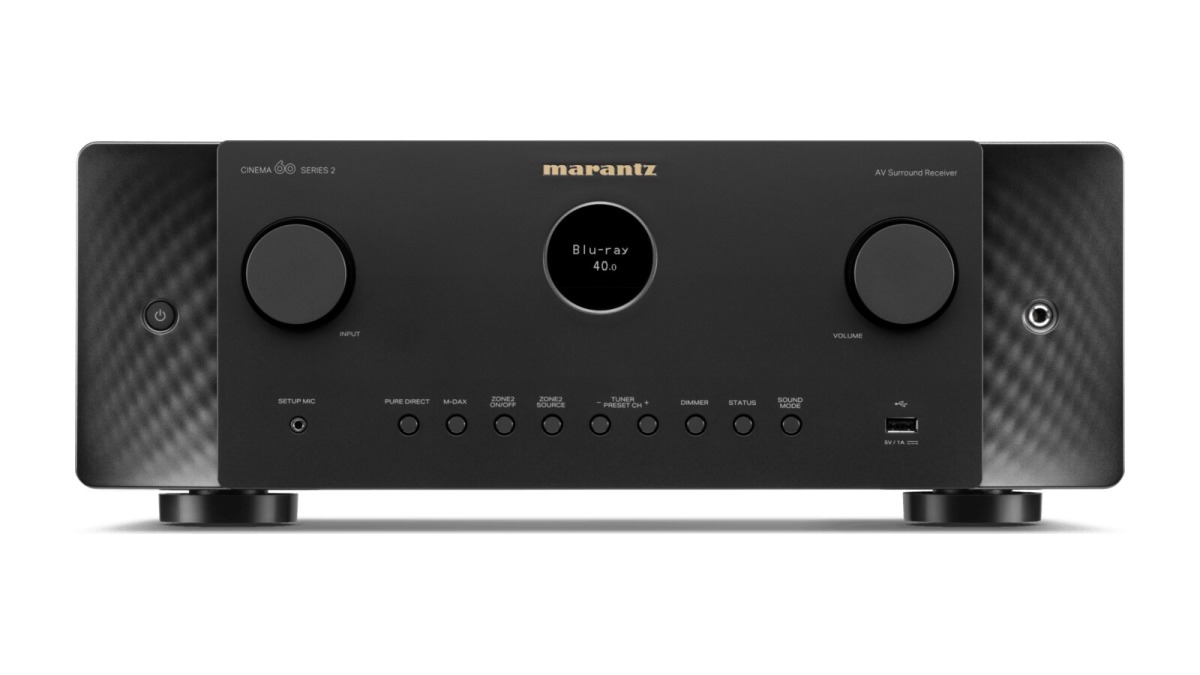 The Marantz Cinema 60 Series 2. Seven channels at 100 watts, 2,000 dollars, and the same Audyssey tier as before.
The Cinema 60 Series 2 gets half of that. It already had MultEQ XT, so the only room correction change is the Dirac option. And the Cinema 50 Series 2 gets none of it. The old 50 already had MultEQ XT32 and could already be upgraded to Dirac. Its extras are two home cinema features that only the 50 Series 2 gets: an Atmos mode that uses all your speakers for channel-based Atmos, and bi-amping for the center speaker.
So the price step runs the wrong way round. The cheapest model pays the biggest percentage and gets the most for it. The dearest model pays the smallest percentage and gets the least. If you were choosing between old and new on one of these, the 70s is where Series 2 is easiest to justify, and the 50 is where the old model makes the most sense.
The catch on the 70s Series 2
Dirac is not in the price. The 1,500 dollars gets you a receiver that can run Dirac Live, not one that does. Dirac sells its room correction licence for 99 to 349 dollars, depending on the version, according to its pricing page. With the full version, a Cinema 70s Series 2 costs close to 1,850 dollars.
It is still 50 watts. We list 10 AV receivers between 1,000 and 1,600 dollars. Only three make 50 watts per channel: the two Cinema 70s models and the five-channel Anthem MRX SLM. The other seven make 70 to 125 watts. That is fine for efficient speakers in a normal living room. It is not the receiver for 4 ohm towers in a big room.
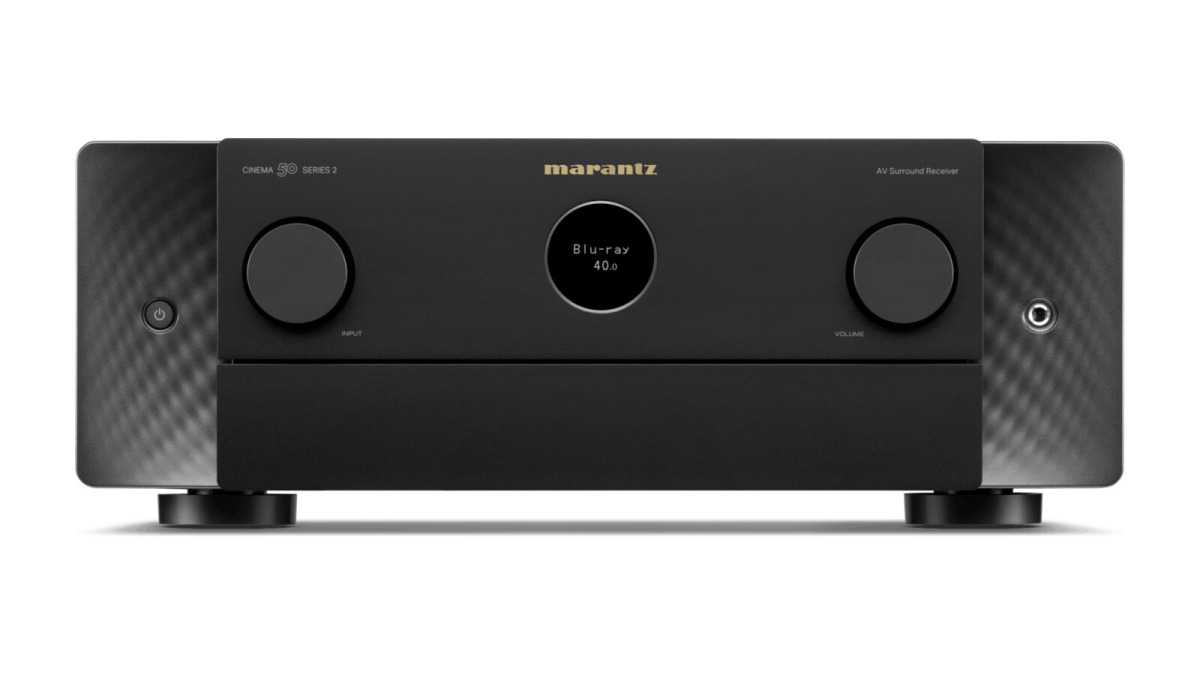 The Marantz Cinema 50 Series 2, the top of the range at 3,000 dollars. Nine channels at 110 watts, more than twice the 70s.
A same-family rival costs less and makes more power. The Denon AVR-X2900H is 1,349 dollars on Denon's US store. It has the same MultEQ XT, the same paid Dirac upgrade and seven channels, and it makes 95 watts. It is 151 dollars cheaper. The Onkyo TX-RZ30 at 1,250 dollars has Dirac Live included and nine channels at 100 watts.
What neither of them has is the shape. The Denon is 166.6 mm tall in our data and the Onkyo is 177.8 mm. The 70s is 4.3 inches, about 109 mm. If your receiver has to fit a low shelf, that is the whole reason to buy a 70s, and the rival list gets very short.
What we fixed while checking this
Our pages for the old Cinema 70s and Cinema 60 said they included Dirac Live. Marantz's own spec tables say neither one supports it, and the Series 2 announcement says the new 60 and 70s are joining the 50 in offering it. Our Cinema 40 page also said Dirac was included. It is a paid upgrade, like the 50. All three rows now match Marantz.
That changes a post we published this week. Our Dirac Live count said 35 of our amplifiers run Dirac and nine charge extra. With these rows corrected it is 33, and ten charge extra. All ten are still a Denon or a Marantz.
Marantz Cinema 70s Series 2 Key Specs
- 50W into 8 ohms (AB)
- Home Theater Receiver
- Minimum Impedance: 4 ohms
- Phono Input
- 6 HDMI Input
- Dual Subwoofer Output
- Weight: 8.71 kg
- Dimensions (H x W x D): 109.2 x 442.0 x 373.4 mm
- Replaced Marantz-Cinema-70s Compare
- Read the Review
Questions answered
What is the difference between the Marantz Cinema 70s and the Cinema 70s Series 2?
Power, weight, size and channel count are the same. The Series 2 goes on sale on September 15, 2026, and adds a new 32-bit DAC, moves from Audyssey MultEQ to MultEQ XT, can be upgraded to Dirac Live, and adds 1440p and FreeSync pass-through for gaming. It costs 1,500 dollars against 1,300 for the original.
Does the Marantz Cinema 70s support Dirac Live?
The original Cinema 70s does not. Marantz's specification table lists Dirac Live support as No. The Cinema 70s Series 2 does, as a paid upgrade. You buy the licence from Dirac, at 99 to 349 dollars depending on the version.
Is the Cinema 50 Series 2 worth 200 dollars more than the Cinema 50?
It is the hardest of the three to argue for. The original Cinema 50 already has MultEQ XT32 and a Dirac upgrade path. The Series 2 adds the new DAC, the gaming features, an Atmos channel expander mode and center bi-amping. If you do not need those, the original is the same power and chassis for less.
How powerful is the Marantz Cinema 70s Series 2?
50 watts per channel into 8 ohms, measured from 20 Hz to 20 kHz with two channels driven, across seven amplified channels. That is the same as the original Cinema 70s. Of the 10 AV receivers we list between 1,000 and 1,600 dollars, only three are this low, and the other seven make 70 to 125 watts.
So here is my question. If you want a slim receiver and you do not plan to buy Dirac, would you pay the extra 200 dollars for the Series 2, or take the original 70s while Marantz still sells it?