SpeakerDecision
  • SPEAKERS
    • By Type
      Passive Bookshelf Speakers Passive Floor-standing Speakers Passive Center Channel Speakers Passive In-wall Speakers All Passive Speakers Powered Subwoofers Powered Stereo Speakers
      By Feature
      HDMI Input Room Correction Subwoofer Output Front Firing Port Handheld Remote Roon Ready
      By Brand
      Acoustic Energy Aperion ATC Audio-Technica Audioengine Bluesound Bowers Wilkins Buchardt Cambridge Audio Canton DALI Definitive Technology Dynaudio ELAC Emotiva Fluance Focal Fyne Audio Genelec GoldenEar Harbeth Jamo JBL Kanto KEF KLH Klipsch Leak Mackie Magnepan MartinLogan McIntosh Mission MoFi Monitor Audio Nuvo Onkyo OSD Paradigm Perlisten Polk Audio PS Audio PSB Q Acoustics REL Revel Russound Sennheiser Sonos Sonus faber Sony Spendor SVS Tannoy Technics Triangle Velodyne Victrola Wharfedale Wilson Audio Yamaha
  • AMPLIFIERS
    • By Type
      All Amplifiers Integrated Amplifiers Stereo Receivers Streaming Amplifiers Power Amplifiers Compact Amplifiers
      By Power
      Up to 60 watts 61 to 90 watts 91 to 120 watts 121 to 180 watts Over 180 watts
      By Feature
      HDMI Input Room Correction Subwoofer Output Handheld Remote Roon Ready
      Home Theater
      All Home Theater Receivers Anthem ARCAM Denon Integra JBL Marantz McIntosh NAD Onkyo Sony Yamaha
      Headphone Amps
      All Headphone Amplifiers Cambridge Audio iFi Audio McIntosh Naim Pro-Ject Rotel Schiit Audio Sennheiser Yamaha
      Multi-Zone
      All Multi-Zone Amplifiers JBL McIntosh OSD Rotel Russound Sonos
      By Brand
      Accuphase Advance Paris Anthem Arcam Audio Research AudioControl Audioengine Audiolab Bluesound Bose Buchardt Cambridge Audio Cayin Denon Devialet ELAC Emotiva Eversolo FiiO Fosi Audio Hegel HiFi Rose Integra JBL Layer Audio Design LEAK Luxman Marantz Mark Levinson McIntosh Michi MISSION MOON Musical Fidelity NAD Naim Onkyo OSD Parasound Pass Labs Peachtree PrimaLuna Primare PS Audio Rega Rogue Audio Roksan Rotel Schiit Audio Sonos Sony SVS T+A TEAC Technics Vincent WiiM Yamaha
  • SMART FIND
  • TOOLS
  • BLOG
  1. Home
  2. DALI Oberon On-Wall vs KEF R3

DALI Oberon On-Wall vs KEF R3 Comparison

x
Speaker to replace
Change

DALI Oberon On-Wall

Passive On-wall | 55-26k Hz

DALI Oberon On-Wall
Check price atAmazon›
Change
    
KEF R3

Passive Bookshelf | 52-28k Hz

KEF R3
Check price atAmazon›
DALI Oberon On-Wall DALI Oberon On-Wall
Check price atAmazon›
KEF R3 KEF R3
Check price atAmazon›
DALI Oberon On-Wall
See at AMAZON
KEF R3
See at AMAZON

DALI Oberon On-Wall vs KEF R3 Speaker Comparison

In this review, we will be comparing two different types of speakers. DALI Oberon On-Wall is a On-wall speaker whereas the R3 is a Bookshelf speaker.

Let's have a brief look at the main features of DALI Oberon On-Wall and KEF R3 first before getting into our more detailed comparison.

Key SpecsDALI Oberon On-WallKEF R3
BrandDALI
Denmark · founded 1983
KEF
United Kingdom · founded 1961
Design2-way3-way
Uni-Q driver—12th Generation Uni-Q
Tweeter1.14" Soft-Dome1" Dome
Midrange—5"
Woofer5.25" Wood fibre6.5" Hybrid aluminum
Frequency response55-26k Hz52-28k Hz
Sensitivity87 dB87 dB
Impedance6 ohms8 ohms
Power range25-100 watts15-180 watts
Weight—13.55kg / 29.8lbs
Dimensions (H x W x D)15.16" x 9.65" x 4.72"
385 x 245 x 120 mm
16-5/8" x 7-13/16" x 13-1/4"
423.0 x 199.0 x 337.0mm

The sections below take each area in turn: drivers, frequency response, physical size and what you get in the box.


Drivers

One of the fundamental differences between these two speakers is that Oberon On-Wall is a 2-way design whereas the R3 is a 3-way speaker. 3-way designs utilize a midrange driver in addition to the tweeter and woofer on 2-way designs. Designing a crossover for a 3-way speaker is a complicated process and generally increases the overall cost of the speaker.

Tweeter - 1.14 inchWoofer - 5.25 inch
DALI Oberon On-Wall
Tweeter - 1 inchMidrange - 5 inchWoofer - 6.5 inch
KEF R3

TweeterMidrangeWoofer

Front view, drawn to scale - cabinets and drivers share one scale, so sizes are directly comparable. Hover a driver for its size.

Driver DALI Oberon On-Wall KEF R3
Driver Setup 2-way 3-way
Tweeter 1.14-inch 1-inch
Midrange - 1 x 5-inch
Woofer 1 x 5.25-inch 1 x 6.5-inch

Oberon On-Wall features a 1.14" Soft-Dome Tweeter and 1 x 5.25" Wood fibre Woofer with a Crossover frequency at 2100Hz. On the other hand, the R3 features a 1" aluminum Dome Tweeter, a 5" Midrange and 1 x 6.5" Hybrid aluminum Woofer with a Crossover frequency at 400Hz and 2900Hz.

DALI Oberon On-Wall driver frequency bandsDALI Oberon On-WallKEF R355-2.1k52-400Woofer400-2.9kMidrange2.1k-26k2.9k-28kTweeter20501002005001k2k5k10k20k40kHz, log scale

Frequency Response

Oberon On-Wall has a frequency range of 55-26k Hz whereas R3 has a frequency range of 52-28k Hz. With a minimum frequency of 52Hz, the R3 can go slightly deeper then the Oberon On-Wall's min frequency of 55Hz.

The graph below depicts how these two speakers compare with the max, min and average Low Frequency values of other speakers in the On-wall class in our database.

Low Frequency

On-wall Speakers

Oberon On-Wall
R3
Min
Average
Median

Neither pair reaches down to 20Hz, the usual definition of full-range, which is normal for speakers of this size. If you want the bottom octave for movies or bass-heavy music, add a subwoofer to whichever you choose. Visit our Powered Subwoofers section to find out more about the available options.

Impedance and Sensitivity

Oberon On-Wall is a 6 ohms speaker compared to the R3 which has a nominal impedance of 8 ohms.

On the other hand, they have the same sensitivity of 87 dBdB.

Sensitivity

On-wall Speakers

Oberon On-Wall
R3
Min
Average
Median

Power Range

Power range is the range of input power in watts RMS that a loudspeaker is designed to handle. Staying within that range gives nominal performance; driving the speaker beyond its maximum wattage can damage it.

R3 can handle a max power of 180 watts RMS, whereas Oberon On-Wall has a max power handling value of 100 watts RMS, 80 watts less than the R3.

Note that higher power handling does not make a speaker louder: that depends mainly on sensitivity and impedance. The calculator below shows how loud each of these actually plays on a real amplifier.

Which plays louder on your amplifier?

Starting with a popular amplifier - change it to the one you own, or any you are considering, and watch both numbers move.

DALI Oberon On-Wall
 
KEF R3
 

Input Type and Bi-Amping / Bi-Wiring

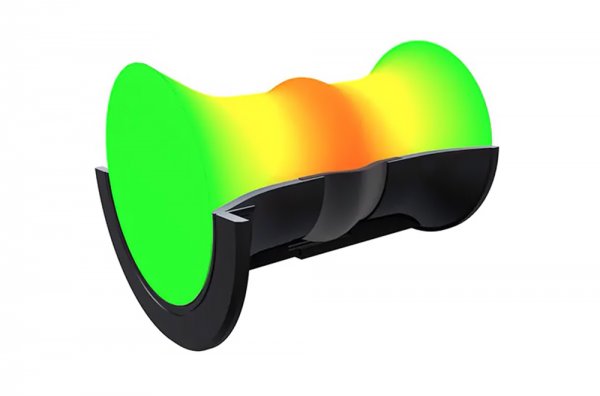
R3 features Binding post posts which make bi-amping or bi-wiring possible. Oberon On-Wall has a Binding post which doesn't feature bi-amping/bi-wiring.
KEF R3  Port
KEF R3 Port

Physical Specs

The size of a speaker can sometimes be an important decision factor due to space constraints or in some cases purely for esthetic reasons. In this section, we are going to compare DALI Oberon On-Wall's and KEF R3's external dimensions. DALI Oberon On-Wall has external dimensions of 385 x 245 x 120 mm () whereas KEF R3 has external dimensions of 423.0 x 199.0 x 337.0mm (16-5/8 x 7-13/16 x 13-1/4inch).

DALI Oberon On-Wall is 38mm shorter and 217mm less deeper than KEF R3 but it is also 46mm wider.

Size, drawn to scale

FRONTDALI Oberon On-Wall front: 245 x 385 mm (9.6 x 15.2 in)KEF R3 front: 199 x 423 mm (7.8 x 16.7 in)DALI Oberon On-Wall245 × 385 mmKEF R3199 × 423 mmTOP / FOOTPRINTDALI Oberon On-Wall footprint: 245 x 120 mm (9.6 x 4.7 in)KEF R3 footprint: 199 x 337 mm (7.8 x 13.3 in)DALI Oberon On-Wall245 × 120 mmKEF R3199 × 337 mm
Both speakers and both views share one scale, so everything here is directly comparable. Hover a box for its dimensions.

One scale for both, standing on the same surface and pushed back to the same wall, so the deeper one visibly sticks out further.

KEF R3 needs about 128% more floor or shelf area. KEF R3 is 217mm deeper, so it stands that much further out from the wall. KEF R3 is 38mm taller.

Base Surface Area Comparison
Base surface area of a loudspeaker may become a determining factor when the space in your room or desk is limited. The base surface area of the DALI Oberon On-Wall is approximately 294.0cm2 / 45.6inch2 and base area of the KEF R3 is approximately 670.6cm2 / 103.9inch2. The Oberon On-Wall requires 56% less surface area than the R3 which gives it a small advantage on placement in tight spaces.

What's in the Box of KEF R3?

Here are the items that come with the R3:
  • 2 Bookshelf loudspeakers
  • 2 Grilles
  • 2 Foam port plugs
  • 8 Self-adhesive rubber feet
  • User Manual
  • Warranty Information


Reasons to choose DALI Oberon On-Wall over KEF R3

Height 385mm vs 423mm Easier to fit in smaller spaces
Base Surface Area 294cm2 vs 670cm2 Takes less floor space
Price per pair* 1100USD vs 2200USD costs less (*prices may change depending on the seller, location and time)

Reasons to choose KEF R3 over DALI Oberon On-Wall

Max Input Power 180 watts vs 100 watts Handle more power from your amplifier
Driver Setup 3-way vs 2-way Have a dedicated mid-range driver
Nominal Impedance 8 ohms vs 6 ohms Less selective with amplifiers
Woofer Size 6.5 inches vs 5.25 inches Larger woofer
Low Frequency Response 52 Hz vs 55 Hz Generates deeper bass
High Frequency Response 28k Hz vs 26k Hz Generates higher frequency
Bi-Amping and Bi-Wiring Yes vs No Allows bi-amping and bi-wiring connections

DALI Oberon On-Wall vs KEF R3 Specs Table

Detailed comparison of specifications
General DALI Oberon On-Wall KEF R3
Brand DALI KEF
Speaker Type On-Wall speakers Bookshelf speakers
Power Range 25-100 watts 15-180 watts
Sensitivity 87 dB 87 dB
Impedance 6 ohms 8 ohms
Impedance n/a 3.2 ohms
Frequency Response 55-26k Hz 52-28k Hz
Drivers
Woofer Quantity 1 1
Woofer Size 5.25" 6.5"
Woofer Composition Wood fibre Hybrid aluminum
Woofer Surround Material n/a Rubber
Tweeter Size 1.14" 1"
Tweeter Type Soft-Dome Dome
Aimable Tweeter No No
Midrange Driver No 5"
Crossover Frequency 2100Hz 400Hz and 2900Hz
Firing Direction n/a rear
Physical Specs
Height 385.0mm (15.2") 423.0mm (16.7")
Width 245.0mm (9.6") 199.0mm (7.8")
Depth 120.0mm (4.7") 337.0mm (13.3")
Weight n/a 13.55kg (29.8lbs)
Enclosure Bass Reflex Bass Reflex
Finish n/a MDF/Lacquer
Available Colors n/a Black Gloss, White Gloss, Walnut
Mounting Bracket No
Grille Yes Yes
Moisture Resistancy No No
Connections
Biamp Inputs No Yes
Other
Parts Warranty 5 Years 5 Years
Labor Warranty 5 Years 5 Years

Verdict

An on-wall against a bookshelf. They are built for different places in a room, so start with where these have to go rather than which looks better on paper.

AreaBetterWhy
BassBKEF R3 digs deeper - 52Hz against 55Hz. A subwoofer would even that out.
Amplifier needsevenly matchedSimilar sensitivity (87dB vs 87dB) - both want much the same power.
Amplifier matchBKEF R3 is the easier load at 8 ohms.
HeadroomBKEF R3 takes more power (180W vs 100W) - more in hand in a big room.
SizedependsDALI Oberon On-Wall is easier to place; KEF R3 is bigger, which usually goes with fuller bass. Your room decides.
TypedependsA Passive On-wall against a Passive Bookshelf - a different job rather than a better one.
ExpandabilitydependsKEF R3: bi-amping. DALI Oberon On-Wall sits in a wider range (9 models), so a matched surround system is easier later.
PriceADALI Oberon On-Wall is cheaper - $1,100 against $2,200, about 50% less; arguably a different class.

A DALI Oberon On-Wall  B KEF R3
depends neither is better in the abstract - it turns on your room, your system or how you will use them. Only specs published for both speakers are judged; anything missing on either side is left out rather than guessed.

Which should you choose?

The usual trade-off: KEF R3 measures better, DALI Oberon On-Wall costs about about 100% more% less. Whether that gap is worth the money is the call only you can make - and in a normal room it is often smaller than the numbers suggest. In a large or open-plan room, KEF R3 has the cabinet volume to fill it more easily; in a small room, near a wall or at desk distance, DALI Oberon On-Wall is the easier speaker to get right. Think about the whole system, not just the speakers: the roughly $1,100 saved by taking the cheaper pair would buy a subwoofer or a better amplifier, and either usually does more for the sound than the difference between these two.

And remember what a spec sheet cannot show: how each looks in your room and whether the finish suits it, what dealer support and warranty are like where you live, and how they actually sound to you. If you can hear them first - ideally with your own music - that will tell you more than any number above.


Most Popular Speakers
Klipsch Reference R-51M
Klipsch R-51M
2-way | 93 dB | 8 ohms
ELAC Debut 2.0 B6.2
ELAC Debut 2.0 B6.2
2-way | 87 dB | 6 ohms
Wharfedale Elysian 2
3-way | 89 dB | 4 ohms
KEF Q150
KEF Q150
2-way | 86 dB | 8 ohms
Bowers & Wilkins 606 S2 Anniversary Edition
B&W 606 S2
2-way | 88 dB | 8 ohms
Klipsch Reference Premiere RP-500M
Klipsch RP-500M
2-way | 93 dB | 8 ohms
Wharfedale EVO5.1
Wharfedale EVO5.1
2-way | 87 dB | 4 ohms
Wharfedale EVO4.1
Wharfedale EVO4.1
2-way | 87 dB | 8 ohms
This site contains affiliate links. We may be compensated if you make a purchase after clicking through one of them. As an Amazon Associate we earn from qualifying purchases.
Copyright © 2026 by SpeakerDecision
About Privacy Contact US Camera Decision

Report a Correction