In this review, we will be comparing R600 and R-625FA, two Passive Floor-standing speakers from Polk Audio and Klipsch.
Let's have a brief look at the main features
of Polk R600 and Klipsch R-625FA first before getting into our more
detailed comparison.
| Key Specs | Polk R600 | Klipsch R-625FA |
|---|
| Brand | Polk Audio
United States · founded 1972 | Klipsch
United States · founded 1946 |
|---|
| Design | 2-way | 2-way |
|---|
| Tweeter | 1" Pinnacle Ring Radiator | 1" |
|---|
| Woofer | 2 x 6.5" Polypropylene Turbine Cone | 2 x 6.5" Copper-spun IMG |
|---|
| Frequency response | 43-38k Hz | 38-21k Hz |
|---|
| Sensitivity | 87.5 dB | 96 dB |
|---|
| Impedance | 8 ohms | 8 ohms |
|---|
| Power range | 25-200 watts | up to 100 watts |
|---|
| Weight | 21.50kg / 47.3lbs | 22.20kg / 48.8lbs |
|---|
| Dimensions (H x W x D) | 41.9" x 11" x 15"
1063.8 x 280.7 x 381.6mm | 40-3/16" x 9-3/8" x 16-3/4"
1021.0 x 239.0 x 426.0mm |
|---|
What size room are the Polk R600 and Klipsch R-625FA speakers good for?
The size of the room in which you are planning to use these loudspeakers is an important decision
factor. Here we have compared their suitability to various sizes of environments considering their size
and max power parameters:
| Listening Environment* |
Polk R600 |
Klipsch R-625FA |
| Near-field |
Bad |
Poor |
| Small Room |
Poor |
Average |
| Mid-size Room |
Good |
Good |
| Large Room |
Good |
Poor |
| Very Large Room |
Poor |
Bad |
(* Approximate Room sizes: Small < 100sq. ft / 9 m2,
Mid-size: 100-220 sq. ft / 9-20 m2, Large 220-400 sq. ft / 20-36 m2, Very Large: >
400 sq. ft / 36 m2.
Average Floor Height: 9" / 2.7m. Typical room sizes differ from country to country, and the actual
listening experience changes depending on floor height, room shape, surface materials, listening
position, speaker locations, etc.)
The sections below take each area in turn: drivers, frequency response, physical size and what you get in the box.
Drivers
Both R600 and R-625FA are 2-way speakers.
Polk R600Klipsch R-625FA
TweeterWoofer
Front view, drawn to scale - cabinets and drivers share one scale, so sizes are directly comparable. Hover a driver for its size.
| Driver |
Polk R600 |
Klipsch R-625FA |
|
Driver Setup
|
2-way
|
2-way
|
|
Tweeter
|
1-inch
|
1-inch
|
|
Midrange
|
- |
- |
|
Woofer
|
2 x 6.5-inch
|
2 x 6.5-inch
|
R600 features a 1" Pinnacle Ring Radiator Tweeter and 2 x 6.5" Polypropylene Turbine Cone Woofer with a Crossover frequency at 2700Hz. On the other hand, the R-625FA features a 1" Tweeter and 2 x 6.5" Copper-spun IMG Woofer with a Crossover frequency at 2000Hz.
Frequency Response
R600 has a frequency range of 43-38k Hz whereas R-625FA has a frequency range of 38-21k Hz. With a minimum frequency of 38Hz, the R-625FA can go significantly deeper on the low side and provide stronger bass compared to the R600's min frequency of 43Hz.
The graph below depicts how these two speakers compare with the max, min and average Low Frequency values of other speakers in the Floor-standing class in our database.
Low Frequency
Floor-standing Speakers
Neither pair reaches down to 20Hz, the usual definition of full-range, which is normal for speakers of this size. If you want the bottom octave for movies or bass-heavy music, add a subwoofer to whichever you choose. Visit our Powered Subwoofers section to find out more about the available options.
Impedance and Sensitivity
R600 and R-625FA have the same Impedance of 8 ohms but where they differ is the sensitivity levels. R600 sensitivity is rated at 87.5 dB and the R-625FA's is at 96 dB. This 8 dB difference makes the Klipsch R-625FA a more sensitive speaker compared to Polk R600, hence will play louder with the same amount of watts.
Sensitivity
Floor-standing Speakers
Power Range
Power
range is the range of input power in watts RMS that a loudspeaker is designed to handle. Staying
within that range gives nominal performance; driving the speaker beyond its maximum wattage can damage it.
R600 can handle a max power of 200 watts RMS, whereas R-625FA has a max power handling value of 100 watts RMS, 100 watts less than the R600.
Note that higher power handling does not make a speaker louder: that depends mainly on
sensitivity and impedance. The calculator below shows how loud each of these actually plays
on a real amplifier.
Which plays louder on your amplifier?
Starting with a popular amplifier - change it to the one you own, or any you are
considering, and watch both numbers move.
Input Type and Bi-Amping / Bi-Wiring
R600 features Post type posts and R-625FA has a Post type posts. None of these speakers feature bi-amping/bi-wiring.
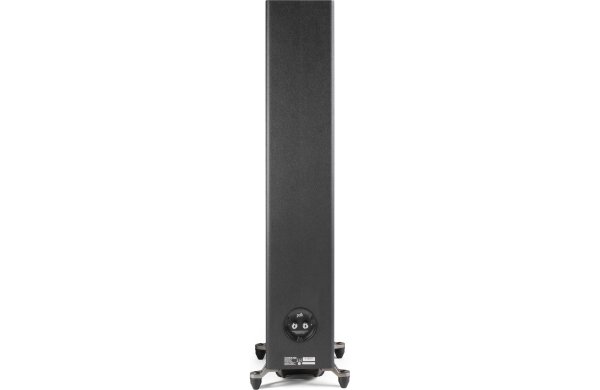 Polk R600's Post terminals
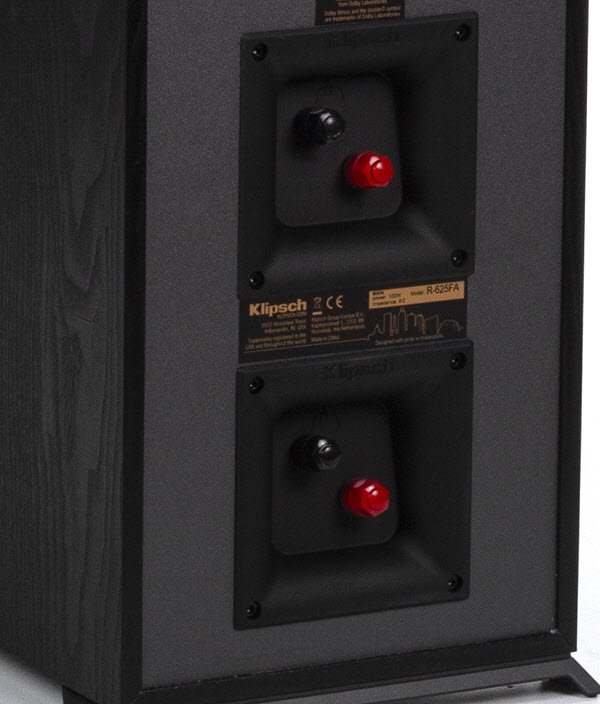 Klipsch R-625FA's Post terminals
Cabinet Type and Port Position
R600 has a bottom firing port whereas R-625FA has a rear firing ports. Polk R600's bottom-firing port gives more flexibility in placement in regards to proximity to walls compared to Klipsch R-625FA with its rear-firing port.
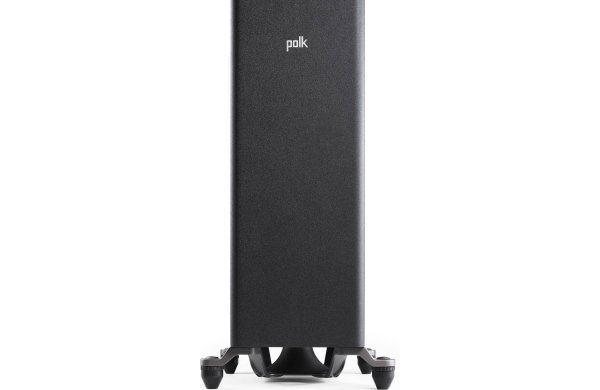 Polk R600 Port
Physical Specs
The size of a speaker can sometimes be an important decision factor due to space constraints or in some cases purely for esthetic reasons. In this section, we are going to compare Polk R600's and Klipsch R-625FA's external dimensions. Polk R600 has external dimensions of 1063.8 x 280.7 x 381.6mm (41.9 x 11 x 15inch) whereas Klipsch R-625FA has external dimensions of 1021.0 x 239.0 x 426.0mm (40-3/16 x 9-3/8 x 16-3/4inch).
Klipsch R-625FA is 41.7mm narrower and 42.8mm shorter than Polk R600 but it is also 44.4mm deeper.
Below you can see the front view size comparison of Polk R600 and Klipsch R-625FA in scale.
 Comparison image of Polk R600 and Klipsch R-625FA Size and External Dimensions
Base Surface Area Comparison
Base surface area of a loudspeaker may become a determining factor when the space in your room or desk is limited.
The base surface area of the Polk R600 is approximately 1071.2cm2 / 166.0inch2 and base area of the Klipsch R-625FA is approximately 1018.1cm2 / 157.8inch2. The R600 requires 5% more surface area than the R-625FA which gives it a small disadvantage on placement in tight spaces.
Weight Comparison The weight of a loudspeaker can become an important factor if you need to move and reposition the unit often. Weight of a speaker can also "sometimes" be an indicator of the rigidity of the enclosure and the quality of the internal components used. The Polk R600 weighs 21.50kg / 47.3lbs and the Klipsch R-625FA weighs 22.20kg / 48.8lbs. This makes the R-625FA 3% heavier than the R600.
Here is a comparison of how R600 and R-625FA's weights compare with the average, max and min weights in Passive Floor-standing class.
Weight
All Floor-standing Speakers
What's in the Box of Polk R600?
Here are the items that are included inside the box of R600:
- Floorstanding loudspeaker
- 4 Outrigger feet (pre-installed)
- 4 Rubber feet (pre-installed)
- 4 Spike feet (pre-installed)
- Grille
- Hex-key
- Owner's Manual
- Online Registration
What's in the Box of Klipsch R-625FA?
Here are the items that come with the R-625FA:
- Floorstanding loudspeaker
- 2 Grilles (installed)
- 2 Feet
- 4 Screws
- Quick Setup Guide
- Important Safety Instructions
- Warranty Information
- Loudspeaker Feet note
 Max Input Power |
200 watts
vs
100 watts
|
Handle more power from your amplifier |
 High Frequency Response |
38k Hz
vs
21k Hz
|
Generates higher frequency |
 Sensitivity |
96 dB
vs
88 dB
|
Play louder with same amount of amplification power |
 Low Frequency Response |
38 Hz
vs
43 Hz
|
Generates deeper bass |
 Dolby Atmos Drivers |
Built-in 1 x 5.25
vs
No
|
Dolby Atmos Compatibility |
 Height |
1021mm
vs
1063mm
|
Easier to fit in smaller spaces |
 Base Surface Area |
1018cm2
vs
1071cm2
|
Takes less floor space |
 Price per pair* |
1658USD
vs
1698USD
|
costs less (*prices may change depending on the seller, location and time) |
| General |
Polk Audio Reserve R600 |
Klipsch Reference R-625FA |
| Brand |
Polk Audio |
Klipsch |
| Speaker Type |
Floor-standing speaker |
Floor-standing speaker |
| Power Range |
25-200 watts |
up to 100 watts |
| Sensitivity |
87.5 dB |
96 dB |
| Impedance |
8 ohms |
8 ohms |
| Impedance |
4 ohms |
n/a |
| Frequency Response |
43-38k Hz |
38-21k Hz |
Drivers |
|
|
| Woofer Quantity |
2 |
2 |
| Woofer Size |
6.5" |
6.5" |
| Woofer Composition |
Polypropylene Turbine Cone |
Copper-spun IMG |
| Woofer Surround Material |
Rubber |
Rubber |
| Tweeter Size |
1" |
1" |
| Tweeter Type |
Pinnacle Ring Radiator |
n/a |
| Aimable Tweeter |
No |
No |
| Midrange Driver |
No |
No |
| Crossover Frequency |
2700Hz |
2000Hz |
| Firing Direction |
bottom |
rear |
Physical Specs |
|
|
| Height |
1063.8mm (41.9") |
1021.0mm (40.2") |
| Width |
280.7mm (11.1") |
239.0mm (9.4") |
| Depth |
381.6mm (15") |
426.0mm (16.8") |
| Weight |
21.50kg (47.3lbs) |
22.20kg (48.8lbs) |
| Enclosure |
Bass Reflex |
Bass Reflex |
| Finish |
MDF/Vinyl |
MDF/Wood-grain vinyl |
| Available Colors |
Black, Walnut, White |
Black |
| Grille |
Yes |
Yes |
| Moisture Resistancy |
No |
No |
Connections |
|
|
| Biamp Inputs |
No |
No |
Other |
|
|
| Parts Warranty |
5 Years |
5 Years |
| Labor Warranty |
5 Years |
5 Years |
No single best speaker here - they are built to different priorities, and the right one depends on your room, your amplifier and what you listen to.
| Area | Better | Why |
|---|
| Bass | B | Klipsch R-625FA digs deeper - 38Hz against 43Hz. A subwoofer would even that out. |
| Amplifier needs | B | Klipsch R-625FA is more sensitive (96dB vs 88dB), so it goes louder on the same amplifier. |
| Headroom | A | Polk R600 takes more power (200W vs 100W) - more in hand in a big room. |
| Size | depends | Similar cabinet size - neither is easier to fit. |
| Expandability | depends | Klipsch R-625FA: Atmos drivers. Polk R600 sits in a wider range (10 models), so a matched surround system is easier later. |
| Price | evenly matched | Much the same money ($1,698 vs $1,658 a pair). |
A Polk R600 B Klipsch R-625FA
depends neither is better in the abstract - it turns on your room, your system or how you will use them. Only specs published for both speakers are judged; anything missing on either side is left out rather than guessed.
Which should you choose?
Klipsch R-625FA has the edge on paper, though the margin is not large. The rows marked "depends" may matter more to you than the score does. If a subwoofer is in your plans, the bass gap largely stops mattering - you would be crossing over above 43Hz anyway, so judge these on the other rows instead. Match it to your room: we rate Polk R600 the better fit for a large room, and Klipsch R-625FA for a small room.
And remember what a spec sheet cannot show: how each looks in your room and whether the finish suits it, what dealer support and warranty are like where you live, and how they actually sound to you. If you can hear them first - ideally with your own music - that will tell you more than any number above.